

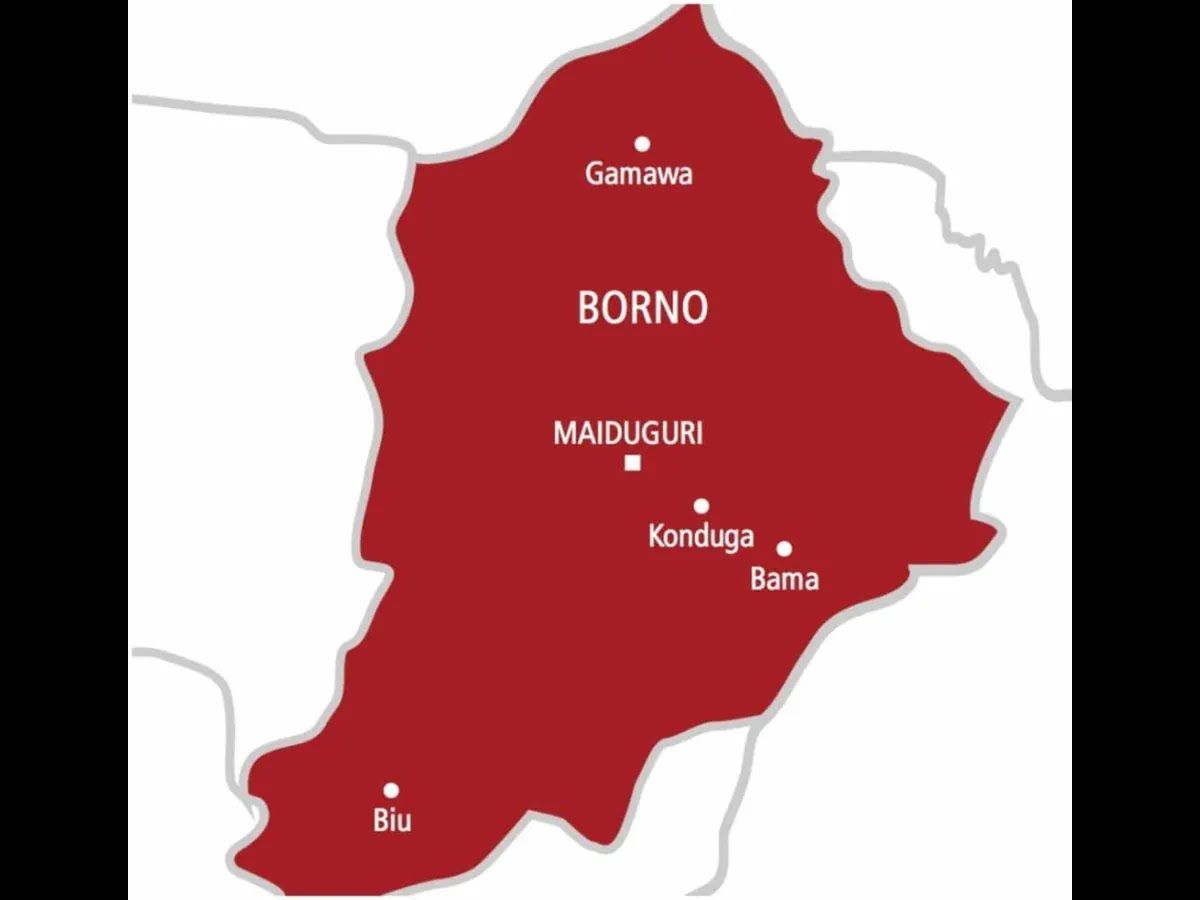
A Federal High Court in Abuja has sentenced a Boko Haram member to death by hanging for his role in the 2015 Maiduguri attacks and related terrorism offences.
A Federal High Court in Abuja has sentenced a member of the Boko Haram terrorist group, Alkali Yarima, also known as La’ari, to death by hanging for his involvement in the devastating attacks carried out in Maiduguri, the capital of Borno State, in 2015.
The judgment, delivered by Justice James Omotosho on Friday, marks another significant milestone in Nigeria’s ongoing efforts to prosecute individuals linked to terrorism and insurgency.
The court found the defendant guilty on multiple charges related to terrorism, including participation in violent attacks, membership of a banned terrorist organisation, and receiving weapons training to facilitate future acts of violence.
The case was brought before the court by the Federal Government through the Director of Public Prosecutions of the Federation, Rotimi Oyedepo, who filed a seven-count charge against the convict.
The prosecution argued that Yarima had maintained active involvement with Boko Haram for several years and played a role in activities that threatened national security.
According to court records, the defendant was a resident of Lawanti Area in Mafa Local Government Area of Borno State.
Prosecutors told the court that he became associated with Boko Haram between 2009 and 2015 and remained committed to the group’s ideology until his eventual arrest.
Evidence presented during the trial indicated that the convict accepted the teachings and recruitment efforts of Mohammed Yusuf, the founder of Boko Haram.
The court heard that he continued to identify as a member of the extremist organisation despite government efforts to dismantle the insurgent network.

For maintaining membership in the outlawed group, the court sentenced Yarima to 35 years imprisonment. Justice Omotosho held that the evidence before the court established beyond reasonable doubt that the defendant knowingly belonged to a terrorist organisation prohibited under Nigerian law.
The court also examined allegations that the defendant travelled outside Nigeria to receive specialised training in arms handling and weapon operations.
Prosecutors argued that the training was intended to prepare him for participation in terrorist activities.
After considering the evidence, the judge convicted him on the charge and imposed a life sentence.
The court ruled that receiving military-style training for the purpose of carrying out terrorist operations constituted a serious offence under the Terrorism (Prevention Amendment) Act, 2013.
In addition, the court sentenced the convict to 30 years imprisonment on another terrorism-related count.
Justice Omotosho further imposed separate jail terms of 10 years each on counts two, three and four, reflecting the gravity of the offences committed.
However, the most severe punishment was reserved for the charge relating to the 2015 Maiduguri attacks.
Prosecutors successfully established that the defendant participated in acts of terrorism during the assault on the Borno State capital, one of the major incidents linked to the Boko Haram insurgency during that period.
The court consequently sentenced him to death by hanging, finding him guilty of direct involvement in terrorist operations that caused widespread destruction and loss of life.
The ruling underscores the Nigerian judiciary’s determination to hold accountable individuals found responsible for violent extremist activities.
The Boko Haram insurgency has remained one of Nigeria’s most serious security challenges for more than a decade.
The group has been blamed for thousands of deaths, mass displacement of communities, destruction of infrastructure, and repeated attacks on both civilian and military targets across the North-East region.
Maiduguri, often regarded as the epicentre of the insurgency, has experienced numerous attacks over the years.
Security agencies have continued to intensify counterterrorism operations aimed at weakening the operational capacity of Boko Haram and restoring lasting peace to affected communities.
The trial itself drew attention because it was conducted at the Federal High Court in Abuja rather than the Kainji detention facility in Niger State, where many terrorism-related cases are usually heard.
The relocation highlighted the significance attached to the prosecution and the government’s determination to ensure the case proceeded efficiently.
Speaking after the judgment, Attorney-General of the Federation and Minister of Justice, Lateef Fagbemi, reaffirmed the Federal Government’s commitment to combating terrorism and protecting citizens from violent extremism.
Fagbemi stated that authorities would continue to utilise all legal and institutional mechanisms available to dismantle terrorist networks and bring perpetrators to justice.
He stressed that national security remains a top priority and assured Nigerians that the government would not relent in its efforts to defeat Boko Haram and other extremist groups operating within the country.
Related news:
Sokoto court sentences three men to death over terrorism

Two teenage girls linked to ISWAP families surrender to troops in Borno

Two ISWAP members, including bomb makers, surrender to Nigerian troops in Yobe

Operation Hadin Kai neutralises 38 ISWAP terrorists

Nigerian Army intercepts ISWAP logistics courier supplying tyres
About The Author

https://shorturl.fm/ROHzi