The Arab League welcomes Sudanese government peace plan presented at UN, signalling rare regional backing for a Sudan-led initiative aimed at ending the country’s devastating civil war.
Arab League Secretary-General Ahmed Aboul Gheit said the 22-member organisation strongly supported the proposal unveiled by Sudanese Prime Minister Kamil Idris at the UN Security Council.
Gheit described the peace plan as carrying “highly important political, humanitarian and security messages” and urged all parties to engage positively with its provisions.
The endorsement comes as Sudan remains locked in a brutal conflict between the national army and the Rapid Support Forces paramilitary group.
The war, which erupted in April 2023, has killed tens of thousands and displaced more than 14 million people, according to United Nations estimates.
Prime Minister Idris presented the peace plan earlier this week during a Security Council session focused on worsening violence and humanitarian collapse in Sudan.
He stressed that the proposal was “homemade” and not imposed by foreign powers, distancing it from international truce efforts led by external actors.
The Arab League welcomes Sudanese government peace plan presented at UN partly because it reinforces Sudanese ownership of any future political settlement.
Idris argued that sustainable peace would only be possible if armed groups respected state authority and civilians were shielded from continued violence.
Central to the proposal is a call for an immediate ceasefire monitored by international observers to prevent violations by either side.
The plan also calls for humanitarian corridors to allow aid delivery to besieged cities and displacement camps across Darfur, Kordofan and Khartoum regions.
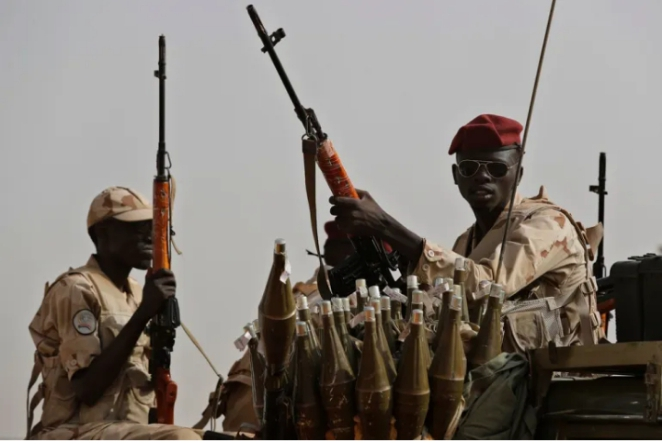
Another key demand involves the withdrawal, confinement and disarmament of the Rapid Support Forces, which Idris said was essential for any lasting truce.
He warned Security Council members that peace would have “no chance of success” without addressing the RSF’s military presence in civilian areas.
However, the RSF swiftly rejected the proposal, dismissing the idea of withdrawal as unrealistic and politically motivated.
Al-Basha Tibiq, adviser to RSF commander Mohamed Hamdan “Hemedti” Dagalo, said the plan was “closer to fantasy than to politics”.
In a statement posted on social media, the RSF accused the civilian-led government of recycling “outdated exclusionary rhetoric”.
Tibiq claimed the proposal mirrored the position of Sudanese army chief General Abdel-Fattah al-Burhan rather than offering a neutral roadmap.
The RSF has previously supported a humanitarian truce proposed by the so-called Quad group comprising the US, Saudi Arabia, Egypt and the UAE.
Idris appeared to distance himself from the Quad initiative, insisting Sudan’s future could not be shaped by externally driven agreements.
The Arab League welcomes Sudanese government peace plan presented at UN despite these divisions, reflecting growing alarm among Arab states over regional instability.
Sudan’s conflict has already spilled across borders, fuelling refugee flows into Chad, South Sudan, Ethiopia and Egypt.
Arab League officials fear prolonged fighting could deepen security threats, disrupt trade routes and intensify humanitarian emergencies across North Africa and the Sahel.
General al-Burhan has previously rejected the Quad’s truce proposal, arguing that UAE involvement biased the plan in favour of the RSF.
The UAE has consistently denied accusations that it arms or funds the RSF, calling such claims politically motivated.
Earlier this year, Abu Dhabi dismissed Sudan’s move to file a case at the International Court of Justice as a “cynical publicity stunt”.
While diplomats argue over mediation frameworks, fighting on the ground continues to intensify, particularly in Sudan’s Kordofan and Darfur regions.
In October, RSF fighters captured el-Fasher after an 18-month siege that cut residents off from food, medicine and essential supplies.
Rights groups and UN experts have accused the RSF of mass killings, kidnappings and widespread sexual violence during its takeover of the city.
The conflict has also pushed millions into displacement camps struggling with severe shortages of food, water and medical care.
Recent fighting in Kordofan forced at least 1,700 civilians to flee toward White Nile state, according to Sudanese officials.
Many of those displaced are heading to the city of Kosti, already hosting roughly two million refugees and internally displaced people.
Reporting from Kosti, Al Jazeera correspondent Mohamed Vall said the city was under “huge stress” due to the sudden influx.
“There is a lack of basic facilities and the authorities are appealing for urgent international support,” Vall said.
He warned that funding cuts affecting UN aid agencies had worsened conditions for displaced Sudanese families.
Amid the escalation, Sudan’s army claimed it destroyed an RSF convoy in North Darfur, while shelling injured civilians in South Kordofan.
The United States has renewed calls for both sides to accept a humanitarian truce to allow aid access to civilians.
US deputy ambassador to the UN Jeffrey Bartos urged “both belligerents” to immediately adopt the Quad’s ceasefire proposal.
UAE ambassador Mohamed Abushahab said there was a narrow window to deliver lifesaving assistance if fighting paused.
Despite these appeals, distrust between the army and RSF remains deeply entrenched after months of failed negotiations.
The Arab League welcomes Sudanese government peace plan presented at UN as a potential foundation for renewed diplomacy.
Analysts say regional backing could strengthen Idris’s position and pressure armed actors to re-engage politically.
However, they caution that without enforcement mechanisms, ceasefire commitments risk collapsing as previous deals have done.
For millions of Sudanese civilians, the plan represents another fragile hope in a conflict marked by repeated disappointment.
Read also: Libyan army Chief killed in plane crash near Turkiye’s capital Ankara
Aid agencies warn that without swift progress, famine-like conditions could spread further across war-torn regions.
As diplomatic manoeuvres continue in New York and Arab capitals, ordinary Sudanese remain trapped between rival forces.
Whether the Arab League’s endorsement can translate into tangible change on the ground remains uncertain.
For now, the peace plan has reopened debate over who should shape Sudan’s future and how the guns might finally fall silent.
About The Author