Apple has taken a decisive step to reset its artificial intelligence strategy after announcing a multi-year partnership with Google that will see Google’s Gemini technology power key next-generation AI features across Apple devices, including its long-awaited upgraded Siri assistant.
The collaboration marks one of the most significant strategic shifts in Apple’s modern history, underscoring both the urgency of the global AI race and the growing pressure on the iPhone maker to deliver competitive generative AI capabilities to users.
The announcement, confirmed in a joint statement by the two Silicon Valley giants, positions Google’s Gemini models as the backbone of Apple’s advanced AI ambitions, following what Apple described as a “careful evaluation” of available technologies across the rapidly evolving AI ecosystem.
A rare alliance between long-time rivals
Apple and Google have dominated the global smartphone market for over a decade through rival operating systems — Apple’s iOS and Google’s Android.
While the two companies have traditionally competed fiercely on hardware, software, and services, they have also maintained one of the most lucrative partnerships in tech history, with Google paying Apple billions of dollars annually to remain the default search engine on iPhones, iPads, and Mac devices.
This new AI alliance takes that relationship into far more strategic territory.
Industry analysts say the deal signals a pragmatic shift by Apple, which has historically preferred to build core technologies internally rather than rely on third parties.
However, the explosive pace of generative AI development appears to have altered that calculus.
Apple-Google Gemini AI partnership reshapes Apple’s AI roadmap
The Apple-Google Gemini AI partnership is expected to play a central role in powering advanced conversational capabilities, contextual understanding, and generative features within Siri — an area where Apple has faced mounting criticism for lagging behind rivals such as Google Assistant, Microsoft Copilot, and OpenAI’s ChatGPT.
Apple first introduced Siri in 2011 as a breakthrough voice assistant, but in recent years the platform has struggled to keep pace with competitors that have rapidly integrated large language models and multimodal AI systems into consumer products.
Last year, Apple delayed the rollout of an upgraded Siri, fueling speculation about internal challenges within its AI division.
That speculation intensified when the company confirmed that the head of its artificial intelligence team had stepped down, raising questions about leadership and direction.
By selecting Google’s Gemini technology, Apple appears to be prioritising speed, performance, and reliability as it works to stabilise its AI roadmap ahead of major software and hardware updates expected later in 2026.
Why Google’s Gemini won the deal
According to the joint statement, Apple chose Gemini after determining that Google’s AI stack provided “the most capable foundation” for its immediate and long-term AI ambitions.
While financial details of the agreement were not disclosed, sources familiar with the matter say Apple also explored potential partnerships with OpenAI, Anthropic, and Perplexity before settling on Google.
Dan Ives, Managing Director at Wedbush Securities, described the deal as “a major validation moment for Google” and a necessary reset for Apple.
“This is a stepping stone for Apple to get its AI strategy back on track into 2026 and beyond,” Ives said, noting that Gemini’s maturity and scale likely gave Google a decisive edge.
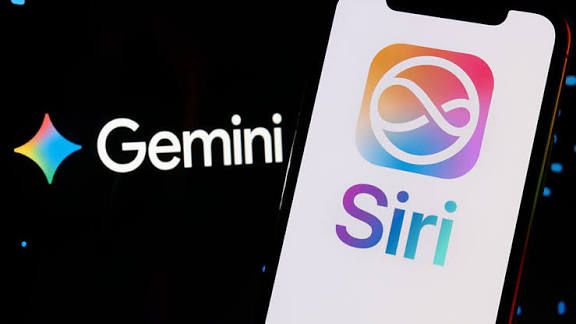
For Google, the agreement strengthens Gemini’s position as a leading enterprise-grade AI platform, extending its reach beyond Android and deep into Apple’s massive global device ecosystem.
Privacy assurances and Apple Intelligence
Despite the collaboration, Apple has been quick to reassure users and regulators that privacy remains central to its AI strategy.
The company stressed that its in-house system, branded Apple Intelligence, will continue to operate at the device level for many functions on iPhones and iPads.
Apple said this hybrid approach allows it to leverage Gemini’s advanced capabilities while maintaining what it describes as “industry-leading privacy standards,” a cornerstone of its brand identity.
Sensitive user data, Apple emphasised, will continue to be processed locally on devices wherever possible, limiting exposure to external servers — a key differentiator Apple has repeatedly highlighted in contrast to cloud-heavy AI models.
Regulatory scrutiny still looms
The partnership comes at a time of heightened regulatory scrutiny for both companies.
The long-standing search engine deal between Apple and Google is currently under examination in a major antitrust case brought by the US Department of Justice, which argues that the arrangement helps Google maintain an unlawful monopoly in online search.
Although a judge recently ruled that the existing agreement could continue for now, the expanded collaboration may draw additional attention from regulators concerned about market concentration and competitive fairness in the fast-growing AI sector.
Neither company addressed potential regulatory implications directly in Monday’s announcement.
A sign of the AI arms race intensifying
The Apple-Google Gemini AI partnership highlights the intensity of the global race to dominate artificial intelligence, as tech giants pour billions of dollars into model development, infrastructure, and talent acquisition.
Google, Microsoft, OpenAI, and Meta have all accelerated the release of increasingly powerful AI models, embedding them into consumer products, enterprise software, and cloud platforms at unprecedented speed.
For Apple, which has long relied on polished hardware and tightly integrated ecosystems, the challenge now is to prove it can compete at the frontier of AI innovation without sacrificing its core values.
With a revamped Siri expected later this year and deeper AI integration planned across Apple’s product lineup, the success of this partnership may determine whether Apple can reclaim its reputation as a technology trendsetter in the AI era — or remain in catch-up mode as rivals surge ahead.