Africa’s dependence on imported hydrocarbon products reached a staggering $120 billion in 2024, underscoring the continent’s heavy reliance on external refining capacity despite being richly endowed with natural energy resources.
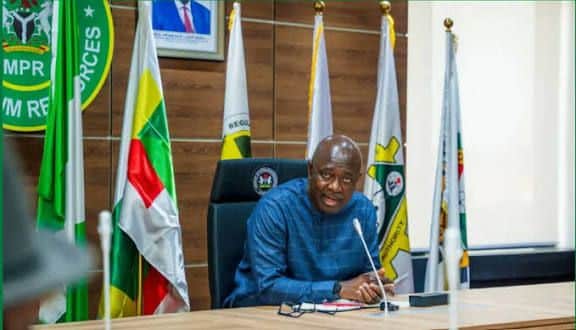
This revelation came from the Minister of State for Petroleum Resources (Oil), Heineken Lokpobiri, during his address at the OTL Africa Downstream Energy Week in Lagos — a gathering that continues to shape policy and investment dialogue across the downstream oil market.
Africa’s Refining Deficit and the $120bn Energy Gap
According to Lokpobiri, the figure reflects Africa’s vast consumption potential and highlights its role as one of the world’s fastest-growing markets for petroleum products.
However, he lamented that limited refining capacity and weak distribution infrastructure have continued to redirect much of the continent’s wealth to foreign economies.
“Data available shows that Africa imported about $120 billion worth of hydrocarbon resources in 2024,” the minister said.
“This proves that Africa has the markets, but unfortunately, our refining limitations and distribution gaps mean the money goes back to other countries.”
He emphasized that despite possessing abundant crude oil reserves, most African nations still rely on refined products from abroad, creating a value drain that hampers economic sustainability.
Lokpobiri explained that Nigeria’s current focus is to capture a greater share of that value within the continent by becoming a central refining and distribution hub for Africa.
“Our goal is to retain more of that value here in Nigeria. The continent is looking to us to lead the way.
Those of you active in the downstream oil market know that distribution doesn’t stop at Nigeria’s borders—it extends to the entire sub-region,” he added.
Nigeria’s Push to Become Africa’s Energy Hub
Lokpobiri reiterated that ongoing reforms in Nigeria’s downstream oil market—including investments in new refineries, depots, and logistics infrastructure—aim to reverse the historical trend of value loss.
The government, he noted, is committed to enabling private operators like Dangote Refinery and modular plants to anchor regional supply.
He said that the Energy Transition Plan and renewed investment in the sector were part of broader efforts to boost energy security and ensure that Nigeria remains competitive in a post-subsidy environment.
Lagos Champions Sustainable Energy Development
In his goodwill message, Governor Babajide Sanwo-Olu of Lagos State, represented by the Commissioner for Energy, Biodun Ogunleye, praised OTL Africa for sustaining a platform that has attracted investment and fostered policy dialogue in Africa’s energy sector for nearly two decades.
He described Lagos as the energy and logistics capital of sub-Saharan Africa, adding that the state’s initiatives, such as the Lagos State Electricity Policy and Energy Transition Plan, demonstrate a firm commitment to sustainable energy and private sector collaboration.
“This enduring partnership reinforces Lagos’s position as the energy and logistics capital of sub-Saharan Africa—a hub of innovation, enterprise, and strategic investment,” Sanwo-Olu said.
He added that the discussions at OTL Africa would “spark new opportunities for Lagos, Nigeria, and the wider continent,” particularly as the world transitions toward cleaner and more inclusive energy systems.
Driving Competitiveness in Africa’s Downstream Oil Market
Chairman of the Advisory Board of OTL Africa Downstream Energy Week, Adetunji Oyebanji, called for consistent policies, innovation, and collaboration to make Africa’s energy ecosystem globally competitive.
He stressed that the conference theme, “Energy Sustainability: Growth Beyond Boundaries and Competition,” reflects the urgent need for the continent to go beyond conventional limits and build an integrated, sustainable energy future.
“Energy sustainability is not just about preserving resources,” Oyebanji stated.
“It is about ensuring that our growth today doesn’t compromise the prosperity of tomorrow. Africa’s downstream oil market must be competitive, responsible, and adaptable to global realities.”
He also noted that the OTL platform serves as a bridge between policy formulation and practical implementation, enabling regulators, investors, and innovators to jointly shape Africa’s downstream future.
Towards a Self-Sufficient African Energy System
Experts at the event agreed that transforming Africa’s downstream oil market requires bold policies, reliable infrastructure, and an enabling regulatory environment.
With the continent’s energy demand projected to grow by over 40% in the next decade, stakeholders emphasized the importance of refining autonomy and intra-African trade in refined products.
Nigeria, according to Lokpobiri, is strategically positioned to lead this transformation—leveraging its crude output, refinery capacity, and port infrastructure to serve as a supply hub for West and Central Africa.
As discussions at OTL Africa concluded, participants expressed optimism that ongoing reforms, combined with collaborative efforts among African nations, would gradually reduce dependence on imported fuel and ensure that more value is retained within the continent.
“The journey to energy self-sufficiency will not be easy,” Lokpobiri admitted, “but if Africa builds capacity, strengthens its downstream oil market, and commits to sustainability, the $120 billion gap we see today will become our biggest opportunity tomorrow.”