

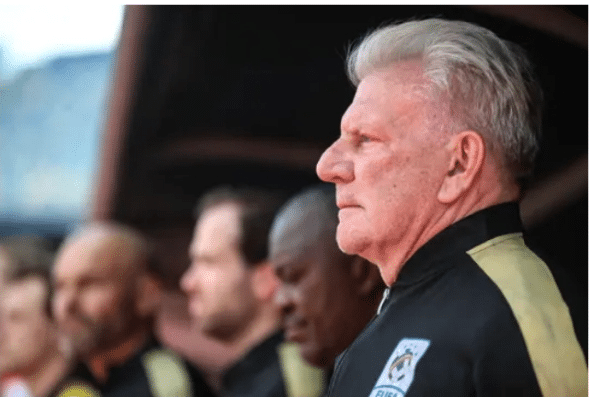
Uganda head coach Paul Put has declared his team ready for battle ahead of AFCON 2026, expressing belief that the Cranes can compete with Africa’s best sides.
Placed in a demanding Group C alongside Nigeria, Tunisia, and Tanzania, Uganda face an enormous test, but Put insists his players are hungry and fearless.
“The draw is tough, but football is played on the pitch, not on paper,” the Belgian tactician said, exuding calm confidence about his team’s prospects.
The Cranes will be making their eighth appearance at Africa’s most prestigious tournament, returning with renewed ambition after years of building consistency and tactical discipline.
Put, who previously managed Burkina Faso and Kenya, knows the pressures of top-level African competition and believes Uganda’s preparation and mental strength will make the difference.
“We’ve worked on mentality,” he explained. “You can’t step into a competition like this with fear. My players understand what it takes to fight for their nation.”
Uganda’s qualification journey was built on grit, defensive solidity, and unity. They edged past bigger names, proving that teamwork often triumphs over reputation in high-stakes football.
Their run to Morocco was characterized by determination. In hostile away grounds and tight home games, the Cranes showed that their fighting spirit could not easily be broken.
Now, as the tournament approaches, Put says his side will “respect every opponent but bow to none,” signalling intent to disrupt traditional hierarchies in African football.
“They have stars and depth, but we have belief,” Put said of Nigeria. “Belief can move mountains when talent alone hesitates. That’s our biggest strength.”
Facing the Super Eagles will undoubtedly be Uganda’s sternest test. Nigeria’s blend of experience and creativity remains unmatched, with European-based stars across every department of the squad.
Put acknowledges the challenge but remains unmoved. “Nigeria are a football giant. We respect them deeply, but intimidation? No. We’ll stand firm and express ourselves.”
Uganda’s tactical preparation has been extensive. Training sessions have emphasized compact defending, quick transitions, and efficiency in possession — a structure built for frustrating stronger teams.
Assistant coaches have introduced video analysis sessions, helping players study the habits of key opponents. The emphasis is on awareness and composure in crucial tournament moments.
Captain Khalid Aucho has become a vocal leader during camp, reminding teammates that every pass, tackle, and sprint represents national pride, not personal glory.
“We carry 45 million hearts with us,” Aucho said. “When we wear this jersey, we don’t just play football. We defend our identity and history.”
The Cranes’ opening match against Tunisia on December 23 promises intensity. Tunisia’s organized, technically gifted side remains one of the continent’s toughest to unpick.
Put calls them “the most tactically astute team in Africa,” acknowledging that Tunisia’s structure demands high concentration. Yet he insists Uganda will not abandon their attacking instincts.
“We’ll be disciplined, but we’ll play our game,” he said. “If you defend for ninety minutes, you lose eventually. We must create danger too.”
Uganda’s preparation camp in North Africa has impressed observers. The players are reportedly fitter, faster, and more connected than ever under Put’s demanding training philosophy.
Fitness coach Jean-Pierre Lemoine revealed that recovery and nutrition protocols have been modernized. “Every detail matters,” he said. “At this level, even sleep becomes tactical.”
For Uganda, returning to this stage means more than football — it’s a story of resilience. The nation’s fans have waited patiently for a team to believe again.
Across Kampala and Gulu, flags wave proudly as local fans discuss the group matches. Excitement mixes with hope that this generation might redefine Uganda’s football identity.
Veteran striker Fahad Bayo, one of the squad’s most experienced figures, says the team’s mindset has shifted from survival to competition. “We’re not here to admire anyone,” he said.
“The days of fear are gone. We’ve earned our place. We’ll run, press, and fight until the final whistle. That’s the Ugandan way,” Bayo added.
In midfield, Moses Waiswa will orchestrate play, providing the creativity that Uganda once lacked. His ability to break lines could prove decisive in group-stage battles.
Defensively, Timothy Awany and Halid Lwaliwa remain the anchors. Their understanding will be crucial against sides like Nigeria, who punish positional lapses ruthlessly.
Uganda’s fans understand the odds, yet their belief in Coach Put remains unshaken. His leadership and passion have transformed the dressing room into a unified front.
“Coach Put has given us purpose,” Aucho said. “He’s a tough man but a fair one. He’s made us believe we belong among Africa’s best.”
Put’s career in Africa spans two decades, marked by deep understanding of the continent’s football culture — a blend of passion, unpredictability, and tactical evolution.
When asked what success means for Uganda, he smiled. “Progress. Every point, every clean sheet, every victory, that’s success. This journey is about growth, not miracles.”
Still, he refuses to discount Uganda’s potential for upsets. “We’ll take it one game at a time,” he said. “In football, anything can happen — that’s the beauty of it.”
Observers predict that Uganda’s youthful energy and compact defending could unsettle complacent giants, especially if early results boost their confidence in the group stage.
Beyond results, the Uganda Football Association views this tournament as a springboard for long-term growth. Improved structures, youth academies, and sponsorships are already in motion.
FUFA President Moses Magogo praised the players’ discipline and promised continued support. “They’ve made the nation proud already,” he said. “Now, let’s see how far they can go.”
For the fans, the Cranes’ presence alone is a source of unity. Streets are already lined with posters celebrating their return to continental competition.
Uganda’s path may be steep, but under Put’s guidance, it carries purpose. The coach’s blend of discipline and optimism has created a new footballing culture.
“This group has spirit,” Put emphasized. “We may not have superstars, but we have warriors. And sometimes, warriors surprise kings.”
His words echo across Uganda’s training base, where focus, laughter, and determination coexist. Every player knows that one good tournament could define their careers.
As December draws closer, the Cranes are determined to write their own story — not one of fear or excuses, but of effort, courage, and national pride.
Football analysts across Africa describe Uganda as a dark horse — unpredictable, hardworking, and dangerous in transition. Traits that often decide knockout fates.
In a world where reputations dominate headlines, Uganda’s quiet confidence stands out. They are not promising miracles, only effort — and that might just be enough.
Coach Put summed it up best: “We’re not coming to fill numbers. We’re coming to compete. And if we fall, we’ll fall fighting.”
For Ugandans everywhere, those words resonate deeply — a rallying cry of hope ahead of the continent’s biggest football festival.
About The Author


