The House of Representatives begins probe into abandoned federal properties worth over N20 trillion, seeking accountability and recovery of national assets.
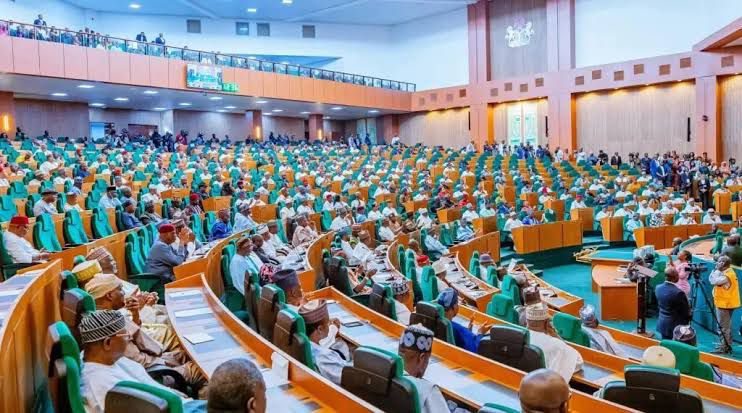
The Nigerian House of Representatives has launched a major investigation into the growing crisis of abandoned federal properties nationwide, with the total value of these assets estimated at over ₦20 trillion.
The move comes amid concerns over decades of mismanagement, wasted resources, and the neglect of critical national infrastructure.
The investigation was triggered by a motion of urgent public importance moved by the Minority Leader, Hon. Kingsley Chinda (PDP, Rivers), during Wednesday’s plenary session.
Chinda highlighted findings by the Nigerian Institute of Quantity Surveyors in 2021, which revealed that about 11,866 government-owned properties remain abandoned across the country.
This represents roughly 63% of federal projects and properties initiated since independence in 1960.
High-Profile Abandoned Properties
Chinda listed some of the most significant abandoned federal properties, including:
Federal Secretariat Complex, Ikoyi, Lagos
Millennium Tower, Abuja
National Library, Abuja
Nigerian International Hotel, Suleja, Niger State
NIPOST Headquarters, Abuja
FIRS Headquarters, Abia State
Nigerian New Spring Manufacturing Company, Kaduna
Kaduna Textile Building
Nigerian Iron Melting Company, Delta State
“These abandoned federal properties are not just eyesores; they represent a colossal loss of public funds and economic opportunities,” Chinda said.
The lawmaker expressed concern about the Presidential Implementation Committee (PIC), established in 2000 under President Olusegun Obasanjo to monitor federal properties.
According to Chinda, the PIC’s official report has still not been submitted, raising questions about accountability and transparency in managing these assets.
“Many of these abandoned federal properties are deteriorating due to delays, inflation, and outdated engineering standards. Yet, with proper planning, a significant number can be revived and put to productive use,” he added.
Chinda recommended exploring public-private partnerships (PPPs) to salvage and complete abandoned federal properties.
Through PPPs, private investment could help complete or repurpose these assets, reducing government spending and enhancing national infrastructure.
“Transforming abandoned properties into functional assets can prevent further loss and stimulate economic growth,” he said.
In response to the motion, the House approved the formation of an ad-hoc committee chaired by Hon. Amos Magaji (APC, Kaduna). The committee is tasked with:
1. Reviewing the 2000 PIC report and verifying its implementation.
2. Assessing the current state of all abandoned federal properties.
3. Identifying the causes of abandonment and any mismanagement.
4. Recommending measures to recover, repurpose, or privatize these assets.
The committee has six weeks to complete its investigation and submit a detailed report to the House for further legislative action.
Experts argue that the failure to utilize abandoned federal properties has wider economic and social consequences.
Idle structures contribute to urban decay, reduce investor confidence, and deprive communities of essential services, including offices, industrial facilities, and housing.
Reviving these properties could create jobs, increase government revenue, and reduce the financial burden of constructing new projects. Economists say even partial recovery of these assets could provide a major boost to the national economy.
Chinda called on the executive branch to cooperate fully with the committee by providing relevant documentation and access to abandoned properties.
He emphasized that proper management and accountability in government-owned assets are critical to national development.
“The federal government must ensure that every abandoned federal property is assessed, recovered, and either completed or repurposed for public benefit,” he said.
The House of Representatives’ probe marks a significant step toward addressing long-standing neglect and mismanagement of abandoned federal properties.
If successful, the initiative could restore value to national assets, stimulate infrastructure development, and strengthen accountability in public property management.
This investigation represents a bold opportunity to convert wasted resources into productive, revenue-generating assets, ensuring that Nigeria’s public investments serve the people as intended.
More news at ireport247news
About The Author