
New York City’s mayor-elect Zohran Mamdani is set to move into Gracie Mansion in January 2026, leaving his modest Queens apartment for the city’s iconic mayoral residence.
Mamdani, elected on a platform of housing justice, faces public scrutiny as he transitions from a rent-stabilized home to an 18th-century mansion symbolizing political authority.
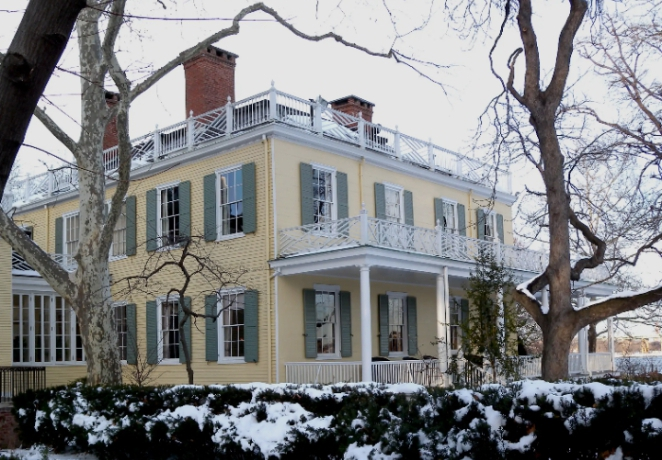
Gracie Mansion, located in Manhattan’s Upper East Side within Carl Schurz Park, has been the official residence of New York City mayors since 1942.
Originally built in 1799 by Scottish-American shipping merchant Archibald Gracie, the mansion served as a country villa overlooking the East River, far from city limits at the time.
The house retains its Federal-style architecture, featuring high ceilings, period fireplaces, and a layout designed for both private living and public civic functions.
In the 1960s, a modernist events wing was added, extending the mansion to roughly 12,000 square feet, accommodating formal receptions, meetings, and official gatherings.
Gracie Mansion is maintained as a city-owned property, ensuring each incoming mayor can perform official duties effectively while living in a historically significant space.
Archibald Gracie lost ownership due to financial hardship, but his name persisted, cementing the mansion’s identity as a symbol of New York’s political and social history.
The city acquired the property in 1896, incorporating it into Carl Schurz Park, and repurposed it over decades for various public uses, including housing the city museum temporarily.
Mayor Fiorello La Guardia became the first mayor to reside there officially in 1942, following Parks Commissioner Robert Moses’ recommendation to designate it as a civic residence.
Since then, most mayors have lived at Gracie Mansion, including Ed Koch, David Dinkins, Bill de Blasio, and Eric Adams, each adding layers of historical significance.
Michael Bloomberg notably opted not to reside there, using the mansion primarily for events, highlighting the flexibility mayors have historically exercised with the property.
Some mayors have split time between Gracie Mansion and private homes, balancing family needs, personal preferences, and civic responsibilities across Manhattan and the other boroughs.
Zohran Mamdani, 34, and his wife, illustrator Rama Duwaji, will leave their Astoria, Queens apartment, emphasizing safety and focus on his “affordability agenda” as reasons for the move.
The mansion is valued by some estimates at $100 million, yet Mamdani frames the residence as a functional tool to implement housing policies and civic initiatives effectively.
The move has drawn questions about reconciling his tenants’ rights platform with living in a high-value city-owned mansion designed for political prestige.
Mamdani has stated that Astoria will always remain part of him, underscoring his commitment to the community while transitioning to the official mayoral residence.
Gracie Mansion has long been a site of public protest, particularly around housing rights, asylum seekers, and migrant protections, reflecting the city’s ongoing social challenges.
In August 2023, migrant rights counterprotesters clashed with anti-immigration demonstrators outside Gracie Mansion, highlighting the residence’s role as a symbolic platform for civic engagement.
In November 2023, protests arose around the city’s “right to shelter” law, demonstrating Gracie Mansion’s continued prominence in debates over housing policy and homeless rights.
New York City faces one of the most severe housing crises in the United States, with record-high rents and historically low vacancy rates adding urgency to Mamdani’s agenda.
The city’s rental vacancy rate stands at just 1.41 percent, meaning only about 33,000 vacant units are available among nearly 2.4 million rental apartments citywide.
Average rents have skyrocketed, with one-bedroom units in Manhattan averaging $4,200 monthly, making housing affordability a critical concern for residents across all boroughs.
Brooklyn and Queens residents face similar pressures, with average rents for one-bedroom units reaching between $2,800 and $4,000, a substantial portion of local average incomes.
Comparatively, cities like Vienna demonstrate how municipal ownership and social housing programs can maintain affordable rents, contrasting sharply with New York’s market-driven model.
In Vienna, a two-bedroom apartment can rent for under 700 dollars monthly, reflecting the impact of prioritizing housing affordability at the municipal level.
Mamdani’s platform focuses on a multi-year rent freeze for rent-stabilized units, stronger tenant protections, social housing expansion, and limits on speculative property investments by landlords.
The mansion itself has evolved over time, with interior and accessibility upgrades implemented during Mayor Bloomberg’s tenure, earning the nickname “People’s House” for its public-facing orientation.
Public tours and civic events allow citizens to engage with the historic property, maintaining a connection between city leadership and the communities they serve.
Mamdani’s occupancy symbolizes the balance mayors must strike between personal residence, political image, and responsiveness to public policy priorities in New York City.
His move also represents generational change, as a younger, more diverse mayor takes residence in a building historically associated with political elites and long-standing traditions.
Security considerations, family needs, and the ability to host official city functions efficiently have all factored into Mamdani’s decision to move into Gracie Mansion.
While his campaign emphasized living among constituents in rent-controlled housing, Mamdani frames the mansion as an essential tool for advancing housing justice and broader policy goals.
The mayor-elect has signaled that his administration will remain closely tied to communities like Astoria, reflecting the enduring influence of local neighborhoods on citywide governance.
Gracie Mansion’s history, protests, and civic role exemplify New York’s unique blend of political symbolism, historical preservation, and practical governance requirements.
From its 18th-century origins to its modern-day function, the mansion remains a touchstone for political power, public engagement, and the ongoing debates over housing equity.
Mamdani’s tenure will be closely watched as he navigates this complex symbolic and practical environment, implementing policies against a backdrop of historic architecture and civic expectation.
His approach may redefine the role of a mayoral residence in New York, emphasizing policy functionality over traditional prestige while respecting the mansion’s historical significance.
Public reaction to Mamdani’s move reflects broader tensions in urban politics, where ideals of accessibility, equity, and affordability often confront established structures and symbolism.
As the city prepares for Mamdani’s inauguration, Gracie Mansion will once again serve as both a home and a platform for New York’s political and social experiments.
Mamdani’s leadership will test whether symbolic spaces like Gracie Mansion can harmonize with progressive housing policies and the demands of a city facing one of its most acute housing crises.
The mansion, steeped in history, protests, and civic significance, offers a lens into how New York navigates the interplay between political authority, social responsibility, and urban governance.
Through his occupancy, Mamdani will aim to balance the mansion’s ceremonial and functional roles, demonstrating how historical spaces can support contemporary urban leadership.

In moving to Gracie Mansion, Mamdani’s journey embodies both the continuity of civic tradition and the promise of transformative policies in one of the world’s most complex cities.
About the Author




