Zelenskyy peace talks pressure has escalated sharply as European leaders convene in London, responding to shifting geopolitical dynamics and mounting expectations for a credible pathway toward ending the prolonged conflict.
The high-stakes gathering follows weeks of diplomatic manoeuvring, during which Ukraine has faced renewed scrutiny, especially regarding the scale and direction of concessions required for meaningful negotiations.

European officials are working to present a unified front, acknowledging that the crisis transcends regional boundaries and carries direct implications for the continent’s long-term stability, security, and strategic direction.
Complicating the delicate diplomacy is intense US pressure on Kyiv, which has reshaped several aspects of the negotiating environment and heightened unease within Ukraine’s political and military leadership.
Senior advisers close to the president note that Zelenskyy peace talks pressure has steadily grown, particularly after Washington intensified demands aimed at securing faster progress in dialogue with Moscow.
Many Ukrainian officials view the accelerated timetable as unrealistic, arguing that the latest proposals fail to properly recognise battlefield realities, domestic sentiment, and deeper geopolitical risks.
The European leaders arriving in London understand these internal tensions, recognising that any miscalculation could damage Ukraine’s strategic position or weaken European credibility in broader global diplomacy.
Concerns about European security concerns have become central to these discussions, especially as policymakers grapple with uncertainty surrounding future US commitments and potential shifts in transatlantic cooperation.
Several diplomats say London’s role in hosting the summit reflects the UK’s broader intent to reinforce European resolve and coordinate policies amid fluctuating US political dynamics.
Despite months of outreach, the atmosphere remains tense, with Zelenskyy peace talks pressure intertwined with broader anxieties about whether Western unity can withstand the strain of diverging national priorities.
The territorial concessions debate has been particularly contentious, as Ukraine continues to resist any plan requiring it to surrender regions still formally recognised as sovereign Ukrainian territory.
Kyiv officials emphasise that conceding land without binding guarantees would not only embolden Russia, but also destabilise Ukraine’s identity, governance structures, and broader regional security architecture.
Their position has garnered sympathy among several European leaders, who believe premature concessions risk legitimising aggression and setting dangerous precedents for future conflicts across the continent.
Still, Washington argues that prolonged fighting has drained Ukraine’s resources and that a negotiated settlement, however imperfect, could prevent further loss of life and national devastation.
This US pressure on Kyiv has been met with mixed responses, as some European capitals remain wary of endorsing a framework that appears to prioritise speed over sustainability.
French and German officials, while open to discussions, insist that Ukraine’s sovereignty must remain central, warning that any rushed deal could unravel quickly and prolong instability.
The UK has echoed similar concerns, underscoring the critical need for credible security guarantees for Kyiv to ensure any diplomatic agreement carries long-term viability and practical deterrent value.
Behind closed doors, advisers describe Zelenskyy as firm but cautious, determined to protect Ukraine’s interests while balancing growing Zelenskyy peace talks pressure from powerful international actors.
His strategy includes leveraging European frustration over inconsistent US policy messaging, particularly regarding commitments to long-term support, NATO coordination, and post-war reconstruction frameworks.
The discussions in London therefore serve not only to address immediate diplomatic challenges but also to clarify wider European expectations regarding future defence and partnership structures.
Many analysts argue that Europe is now entering a pivotal phase, where decisions made today could reshape its geopolitical identity and influence for decades to come.
This has raised European security concerns about potential fragmentation within the Western alliance, especially if Washington continues applying pressure without adequate alignment with European partners.
Among Ukraine’s leadership, fear persists that external actors may prioritise their own strategic interests over Ukraine’s survival, prompting renewed calls for more transparent multilateral coordination.
Several officials close to the talks emphasise that Zelenskyy peace talks pressure has not dampened Kyiv’s determination to pursue a fair and comprehensive settlement grounded in legitimate international principles.
At the same time, they acknowledge the complexity of engaging with a Washington administration eager to secure high-profile diplomatic victories on an accelerated schedule.
The territorial concessions debate remains a flashpoint, drawing strong reactions from civil society, military commanders, and political factions united in rejecting any framework that undermines Ukraine’s territorial integrity.
Polls within Ukraine continue to show overwhelming opposition to ceding land, reinforcing Zelenskyy’s cautious approach and limiting his flexibility in discussions with foreign leaders.
European negotiators respect this reality, recognising that any proposed settlement must reflect the will of the Ukrainian people to maintain long-term legitimacy and political stability.
Even so, there are growing concerns that friction between Washington and Kyiv could weaken diplomatic momentum, complicating attempts to forge a unified Western approach to the conflict.
London’s diplomatic corridors have thus become the central venue for reconciling diverging strategies and recalibrating expectations regarding what a realistic peace framework might entail.
Despite lingering disagreements, leaders remain hopeful that collective engagement will help relieve Zelenskyy peace talks pressure and provide Kyiv with greater leverage during discussions with Washington.
However, the US pressure on Kyiv remains a dominant theme, prompting European diplomats to push for greater coordination and more balanced proposals that adequately consider Ukrainian constraints.
European leaders also emphasise that security guarantees for Kyiv must be robust, enforceable, and strategically aligned with broader European defence priorities in a volatile geopolitical environment.
This position highlights lingering anxieties that insufficient guarantees could leave Ukraine vulnerable to future aggression, undermining any progress achieved through current negotiations.
While the territorial concessions debate continues to strain relations, leaders in London insist that dialogue must remain open, consistent, and grounded in mutual respect for Ukraine’s national interests.
Their collective posture reflects an acknowledgement that Zelenskyy peace talks pressure must be managed carefully to prevent fractures within the Western alliance or missteps that could embolden adversaries.
Analysts note that although Washington appears determined to secure a swift agreement, European leaders favour a more deliberate, inclusive, and sustainable diplomatic process.
This divergence underscores longstanding differences in transatlantic threat perception, strategic priorities, and political pressures shaping each nation’s approach to the conflict.
For Ukraine, navigating these crosscurrents is exceptionally challenging, particularly as Zelenskyy seeks to maintain unity among domestic stakeholders while responding to intensifying external demands.
The London summit therefore marks a crucial moment wherein Ukraine’s allies must decide how to balance urgency with prudence, ensuring that negotiated outcomes reflect both security realities and moral obligations.
European officials reiterate their view that Ukraine’s resilience is directly linked to broader European stability, highlighting ongoing European security concerns that extend far beyond the immediate conflict zone.
Despite the diplomatic turbulence, Zelenskyy continues to emphasise Ukraine’s readiness for genuine dialogue, provided that its sovereignty is respected and security guarantees for Kyiv are clearly defined.
In this environment, the outcome of current negotiations will shape not only Ukraine’s future but also broader perceptions of Western unity, credibility, and strategic reliability.
European capitals remain steadfast in supporting Ukraine’s right to self-determination, even as they navigate the complexities introduced by the US pressure on Kyiv and shifting global power dynamics.
Diplomats believe progress remains possible, provided all stakeholders are willing to engage constructively and resist the temptation to prioritise rapid political gains over durable, long-term peace.
Still, the road ahead is fraught with challenges, and the Zelenskyy peace talks pressure will likely intensify as discussions progress, particularly if disagreements persist over territorial issues and future security structures.
Yet optimism remains that coordinated diplomacy can generate momentum, strengthen Western cohesion, and pave the way toward a settlement that does not compromise Ukraine’s fundamental interests.
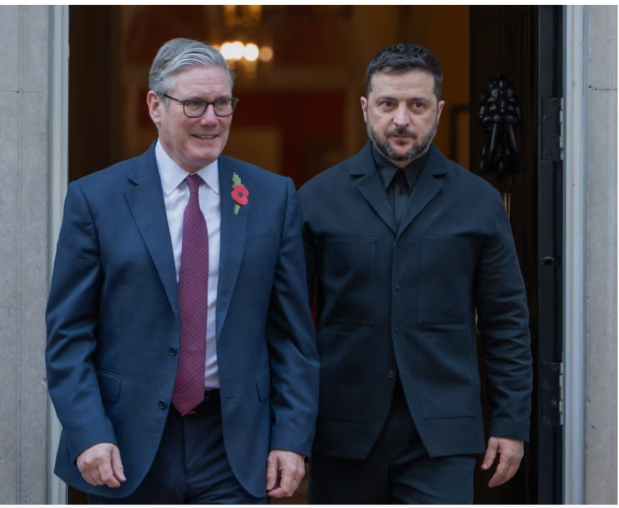
Leaders in London hope this moment can serve as a turning point, reducing tensions, aligning strategies, and ultimately easing the Zelenskyy peace talks pressure now dominating international attention.