


Zelenskyy defence minister sacking has sent shockwaves through Kyiv and European capitals. President Volodymyr Zelenskyy abruptly removed Mykhailo Fedorov on Thursday, just as Ukraine appeared to gain ground in its war with Russia.
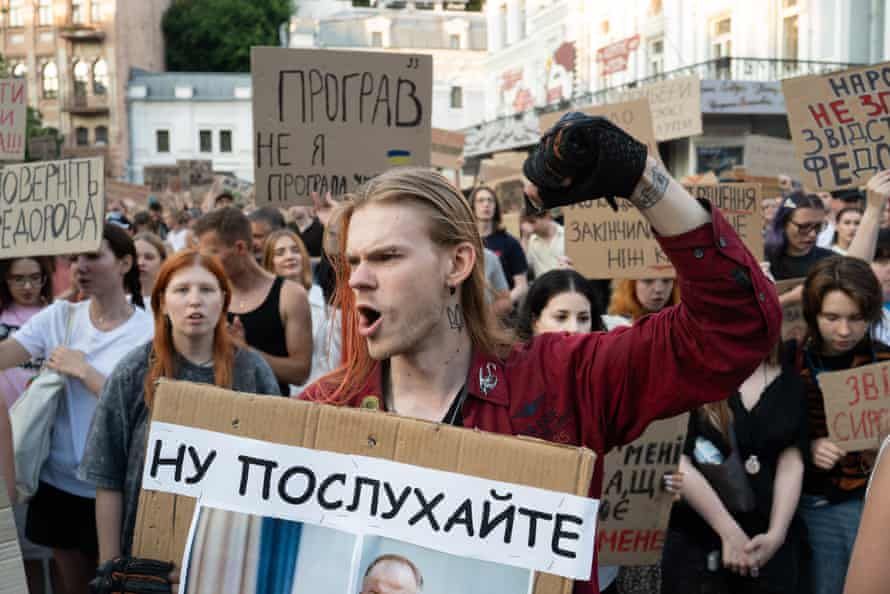
The decision triggered immediate demonstrations in the capital. Protesters filled the streets holding placards in Ukrainian, demanding answers about a move many called self-destructive at a critical moment.
Fedorov, 35, was appointed in January. He was celebrated for a tech-driven approach to the war, especially in drones and procurement reform. His dismissal has raised fears about continuity and political stability.
Senior European officials were startled by the timing. The sacking came on the eve of a visit by outgoing British Prime Minister Keir Starmer, adding diplomatic awkwardness to an already tense situation.
Fedorov did not go quietly. At a press conference after his removal he accused military leadership of blocking reforms. He said the conflict was about how to fight Russia, not just who leads.
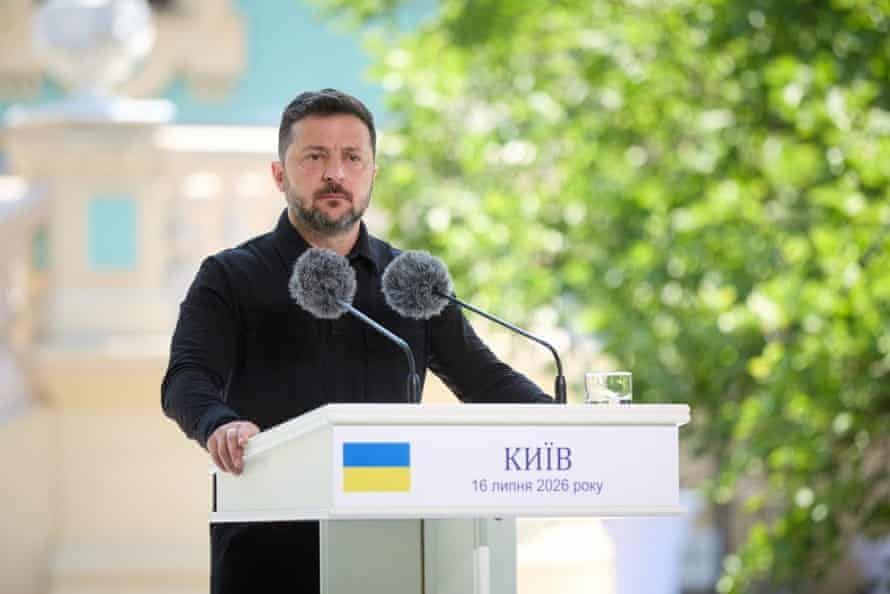
“When the president said he did not plan to replace Syrskyi, I said I would learn to work with him,” Fedorov said. “All the initiatives we proposed began to be blocked.”
He pointed directly at General Oleksandr Syrski, the 60-year-old chief of staff. Fedorov claimed Syrski was unwilling to discuss problems “face to face and openly.”
“Instead of finding a way of defeating Russia asymmetrically – which is the commander-in-chief’s job – he’s found a way of splitting our country,” Fedorov said.
The clash highlighted a deeper divide. Syrski represents an older, Soviet-trained military doctrine focused on attrition. Fedorov represented a younger, data-driven generation born after independence.
“We will take all the data and see what works,” Fedorov said after his appointment. “Everything that works well will proceed.” That included performance-based incentives that many traditional officers rejected.
Zelenskyy offered a different explanation. At a joint press conference with Starmer, he said he was being asked “to choose between sides [when honestly] what I want most is unity.”
Critics called that unconvincing. The Kyiv Independent editorial board wrote that the move bore “all the hallmarks of Zelenskyy’s tendency to dismiss top officials and commanders who get too popular.”
The paper added: “Forced to choose between the man who was turning the war of attrition around with technology and intelligent strategy on one hand, and the man who was sabotaging it with micromanagement and Soviet thinking on the other, Zelenskyy thought about it and chose the latter.”
Fedorov’s supporters point to concrete results. He streamlined procurement and introduced competitive tendering to cut corruption. He also pushed for better recruitment and training systems.
He was credited with persuading Elon Musk to shut down unauthorised Russian Starlink access earlier this year. Frontline troops described that as a “significant advantage.”
Before defence, Fedorov served as minister of digital transformation. There he helped build Ukraine’s drone programme from the ground up, turning civilian tech into battlefield tools.
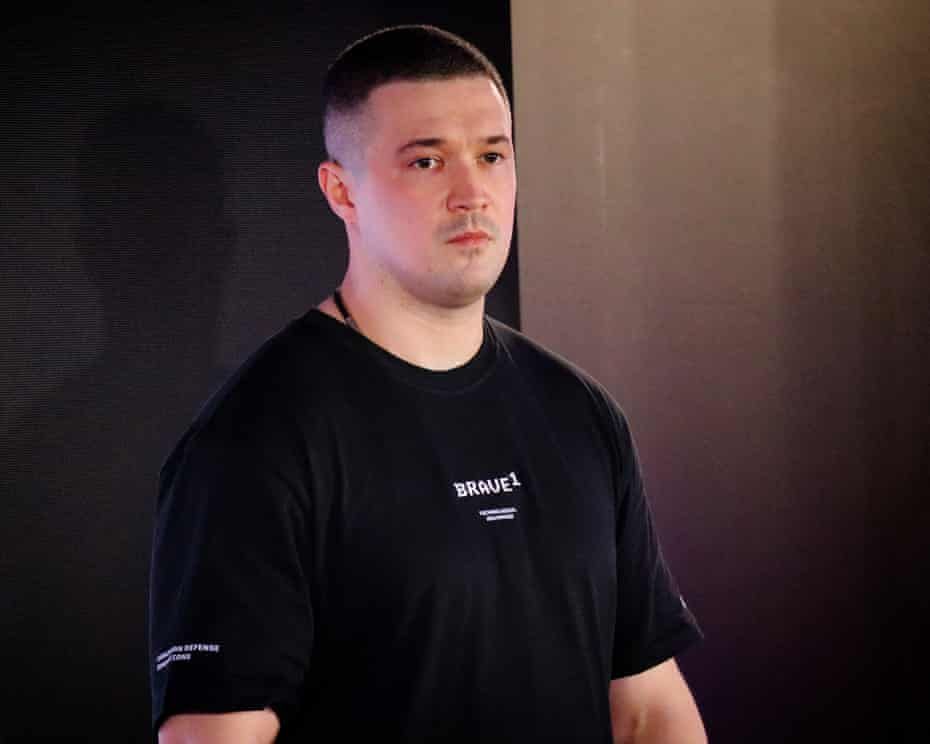
A former marketing executive with no military service, Fedorov grated on senior officers. His casual style, freewheeling speeches, and insistence on metrics clashed with hierarchy.
Born in 1991, the year Ukraine left Moscow’s orbit, he embodied a break from Soviet bureaucracy. Syrski, by contrast, graduated from a Moscow command school and began as an artillery officer.
The tension between them was, in hindsight, inevitable. One wanted improvisation and asymmetry. The other wanted control and attrition against a larger enemy.
Protests continued into a second day. Crowds gathered near government buildings, chanting support for Fedorov and waving Ukrainian flags. Organisers called it a defense of reform, not just a person.
Russian military bloggers celebrated the news. They framed it as proof of dysfunction in Kyiv. That reaction only deepened anger among Ukrainians who saw Fedorov as effective.
Zelenskyy moved quickly to appoint an interim. Yevhen Khmara, former head of the security service’s Alpha unit, will take over temporarily.
Khmara’s background suggests continuity on drones. Alpha has been heavily involved in long- and medium-range strike operations. Zelenskyy said he wants Khmara to advance Fedorov’s reform programmes.
Analysts remain skeptical. The defence portfolio has seen five ministers in five years. That turnover raises questions about who can actually govern the war effort.
Peter Beaumont, senior international correspondent, noted the broader pattern. “For Zelenskyy, it underlines again the fact that, impressive as he is on a global stage… he has struggled to assemble and retain a cohesive team.”
The president’s challenge is balancing competing interests. He must keep the military, parliament, international partners, and public opinion aligned while fighting an existential war.
That balancing act has failed before. Previous dismissals of popular commanders sparked similar criticism that politics was overriding military logic.
Fedorov himself framed the issue as strategic. He argued Ukraine cannot win by matching Russia soldier for soldier. Technology and speed, he said, were the only viable path.
The sacking also comes amid debate over Western aid and peace talks. Zelenskyy has accused Moscow of “typical Russian lies” to sabotage negotiations, while preparing new proposals for the front.
Inside Ukraine, morale matters as much as munitions. The sight of a reformist minister removed after six months sends a worrying signal to young officers and volunteers.
Supporters of the president argue unity must come first. They say public spats between a minister and a general cannot continue during wartime.
But unity without direction risks stagnation. That is the fear driving people into the streets in Kyiv this week.
The question now is whether Khmara will be empowered, or simply managed. Can any defence minister operate independently under current command structures?
Ukrainians are asking that aloud. “The question many Ukrainians find themselves asking… is whether anyone can genuinely be empowered to be effective in the role,” the Guardian noted.
For Europe, the stakes are clear. Ukraine’s ability to sustain innovation directly affects the war’s trajectory and regional security.
Zelenskyy remains a powerful wartime symbol abroad. Yet at home, the repeated turnover in senior posts undermines confidence in long-term planning.
Read also:https://ireport247news.com/andy-burnham-to-undo-thatcher-legacy-in-first-s/
Fedorov leaves with a record of pushing change fast. Whether that change survives depends on Khmara and on Syrski’s willingness to adapt.
The coming weeks will test both men. Russia is watching closely, and so are Ukraine’s partners in Washington, Brussels and London.
Zelenskyy defence minister sacking may be remembered as a turning point. Either it stabilizes command, or it accelerates the very divisions it was meant to prevent.
Read more: Ireport247news
About The Author
