Talks between the United States and Iran scheduled to take place in Oman on Friday have emerged as one of the most consequential diplomatic moments in years, with both sides entering negotiations under the shadow of military escalation, domestic pressure, and a rapidly deteriorating regional environment.
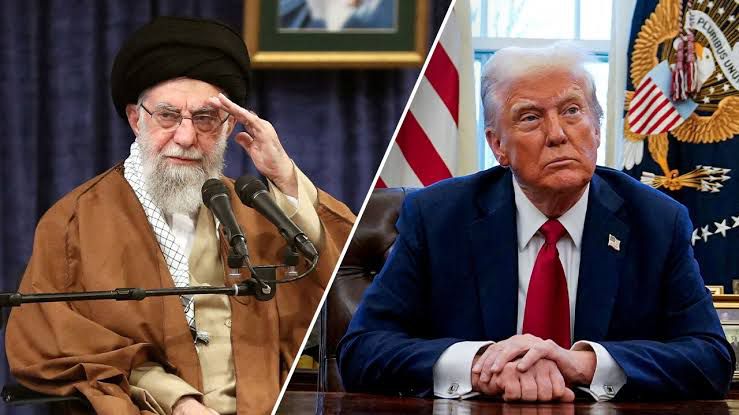
The discussions, confirmed by multiple regional officials, come after weeks of heightened rhetoric from US President Donald Trump, who has repeatedly warned that Iran’s nuclear programme would be “obliterated” if diplomacy fails.
Tehran, meanwhile, is approaching the talks as a matter of regime survival, according to analysts, amid internal unrest and fears of a broader regional war.
Mediators from Qatar, Türkiye, and Egypt have reportedly presented both sides with a framework of principles aimed at narrowing long-standing disagreements, although expectations remain low that the talks will deliver a comprehensive breakthrough.
US-Iran talks in Oman revive fragile diplomacy
The US-Iran talks in Oman mark a return to a familiar diplomatic setting. The Gulf state has long played a quiet but critical role as a neutral intermediary between Washington and Tehran, hosting previous back-channel negotiations focused primarily on Iran’s nuclear activities.
This round of talks, however, is taking place in a far more volatile context. US military assets have been repositioned across the Middle East, protests have rocked Iran’s major cities, and Israel has stepped up pressure on Washington to take a harder line against Tehran.
According to regional diplomats, the agenda proposed by mediators includes discussions on uranium enrichment levels, sanctions relief, regional security concerns, and mechanisms to prevent direct military confrontation. While Washington wants a broader negotiation, Iranian officials have insisted that the talks should focus strictly on the nuclear file.
Competing demands threaten early deadlock
At the heart of the negotiations are deep and unresolved gaps that have frustrated previous diplomatic efforts.
The Trump administration has demanded that Iran end all domestic uranium enrichment, arguing that even limited enrichment poses a proliferation risk. Tehran, however, maintains that enrichment is a sovereign right under international law and has signalled it may only be willing to cap enrichment at 20 percent.
Washington is also pushing Iran to curb its ballistic missile programme, which has expanded significantly in recent years. Iranian missiles can now reach up to 2,500 kilometres, placing US bases and Israel within range. Tehran insists the programme is defensive, pointing to past Israeli strikes and regional threats.
In addition, the US wants Iran to stop supporting armed groups across the Middle East — including in Lebanon, Iraq, Syria, and Yemen — a demand echoed by Israel and several Arab governments. Iran rejects this framing, arguing that its regional alliances are part of a legitimate resistance strategy.
For Tehran, any agreement must include meaningful sanctions relief. US-led sanctions have battered Iran’s economy, contributed to the collapse of the rial, and fuelled widespread public discontent.
Trump’s threats and domestic pressures
President Trump has adopted an unusually aggressive tone ahead of the talks, warning Iran’s leadership that any attempt to restart its nuclear programme would be met with devastating consequences.
Speaking in Washington, Trump said Iran’s supreme leader “should be very worried,” remarks delivered against the backdrop of increased US military deployments in the region. At the same time, the president has insisted he prefers a deal, reflecting the tension between diplomacy and coercion that has defined his Iran policy.
Analysts say Trump faces competing domestic pressures. Hardliners and advocates of regime change argue Iran is at its weakest point in decades and that the US has a rare opportunity to force fundamental change.
Meanwhile, influential voices within Trump’s political base are urging him to avoid another costly Middle Eastern war, citing his long-standing promise not to entangle the US in new conflicts.
Tehran views talks as existential
From Iran’s perspective, the US-Iran talks in Oman represent more than a diplomatic engagement — they are widely seen as an existential test for the Islamic Republic.
Political analysts note that Iranian leaders believe US hostility is a continuation of last year’s brief but intense conflict involving Israel, which left hundreds dead and exposed Iran’s vulnerabilities.
Recent protests triggered by economic hardship have further shaken the regime’s confidence.
“There is a belief in Tehran that unless Washington understands that any strike on Iran would trigger a regional war, the pressure will only intensify,” said one Middle East analyst. Iranian officials fear that even limited US or Israeli attacks could spiral into a wider confrontation involving multiple regional actors.
This perception has hardened Tehran’s negotiating posture, making major concessions politically risky at a time of internal instability.
Regional and global stakes
The outcome of the Oman talks carries significant implications beyond Washington and Tehran.
Israel has consistently opposed any agreement that allows Iran to retain nuclear capabilities, while Gulf states are watching closely, wary of being caught in the crossfire of another regional war.
Russia and China, both of which have strengthened ties with Iran, are also monitoring developments as they seek to counter US influence in the Middle East.
Energy markets have reacted nervously to the rising tensions, with analysts warning that any military escalation could disrupt shipping routes and drive up global oil prices.
For Europe, the talks are a test of whether diplomacy can still work after years of sanctions, threats, and mutual distrust.
Narrow window for de-escalation
Despite the high stakes, expectations for a sweeping agreement remain low. Diplomats involved in the mediation process say the most realistic outcome would be a temporary de-escalation deal — possibly freezing certain nuclear activities in exchange for limited sanctions relief and confidence-building measures.
Failure, however, could accelerate a slide toward confrontation. With troops on alert and rhetoric intensifying, even a minor incident could trigger a wider conflict.
As negotiators gather in Oman, the world is watching to see whether diplomacy can still restrain one of the Middle East’s most dangerous rivalries — or whether the talks will simply mark another missed opportunity.
About The Author