
The Federal Government is facing mounting pressure from labour unions and the organised private sector over a proposed five per cent surcharge on fuel (petroleum products), a move critics warn could exacerbate inflation and deepen economic hardship across Nigeria.
The Trade Union Congress (TUC) has issued a firm warning that it may call a nationwide strike within two weeks if the government proceeds with the levy.
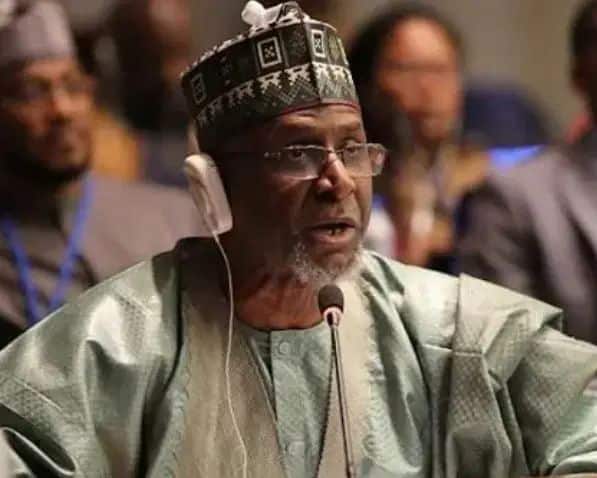
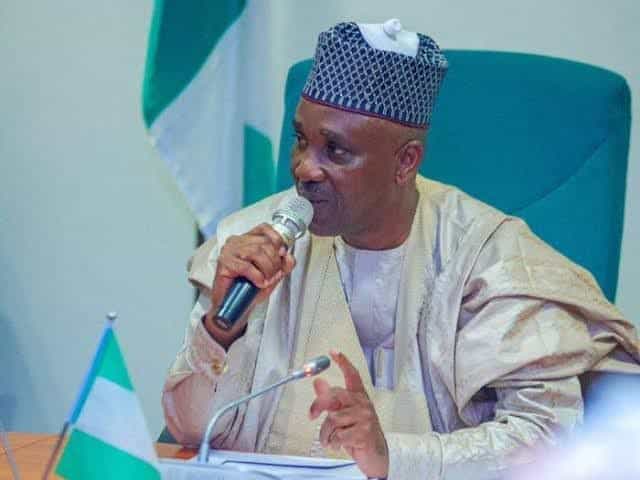
TUC President-General Festus Osifo and Secretary-General N.A. Toro described the surcharge as “economic wickedness” that unfairly burdens ordinary Nigerians.
“The government cannot continue to use Nigerians as sacrificial lambs for its economic experiments.
Instead of offering relief, jobs, and solutions, it has chosen to squeeze citizens dry,” the union leaders said in a statement on Monday.
The TUC further disclosed that it has begun mobilising affiliates, state councils, civil society organisations, professional associations, student unions, and faith-based groups to resist the measure.
“Strike action is firmly on the table if Abuja fails to heed this warning. Nigerians deserve economic justice, not endless punishment,” the union added.
The proposed five per cent levy is part of broader fiscal reforms aimed at boosting government revenue.
Historically, the tax traces its roots to the Federal Roads Maintenance Agency Act of 2002, which created FERMA to maintain federal roads.
A 2007 amendment introduced a five per cent user charge on petrol and diesel sales, with 40 per cent of proceeds directed to FERMA and 60 per cent to State Roads Maintenance Agencies.
While the measure is not entirely new, its possible reintroduction has heightened public concern amid the ongoing removal of fuel subsidies, rising inflation, and currency devaluation.
Rumours of an early 2026 implementation date further fuelled anxiety, though the government has stated that no start date has been fixed.
Members of the organised private sector (OPS) have also rejected the proposed surcharge, warning that it will increase operating costs, particularly in the transportation sector, and further strain consumers.
Gabriel Idahosa, President of the Lagos Chamber of Commerce and Industry (LCCI), highlighted that any additional cost will likely be passed to consumers, aggravating the already high demand on public transport.
He cautioned that uneven enforcement could lead to competitive disparities among fuel stations.
Idahosa also stressed the importance of accelerating the adoption of renewable energy alternatives, particularly Compressed Natural Gas (CNG), to reduce dependency on fossil fuels.
Currently, only about 100,000 vehicles have been converted to CNG nationwide, he noted.
Similarly, Dr. Femi Egbesola, President of the Association of Small Business Owners of Nigeria (ASBON), denounced the surcharge, citing excessive taxation, inadequate social safety nets, and growing poverty.
“Businesses are closing down by the day,” he said, urging the government to prioritise tax relief over new levies.
Segun Kuti-George, National Vice President of the National Association of Small-Scale Industrialists, also warned that the surcharge would drive inflation higher, stressing that “additional taxation at this time is one tax too many.”
He called for innovative revenue-generation strategies rather than imposing further financial burdens on citizens.
Experts warn that if the surcharge is implemented without proper cushioning, it could increase fuel prices, transportation costs, and the cost of goods and services, further straining household budgets.

A strike by the TUC, if enforced, could paralyse critical sectors of the economy, disrupting livelihoods nationwide.
The looming crisis underscores the delicate balance between revenue generation and social stability in Nigeria.
While macroeconomic indicators may suggest progress, the microeconomic realities on the streets reveal enduring hardship, particularly among low-income households and small businesses.
Labour leaders and private sector representatives have called for urgent dialogue with the Federal Government to resolve the matter before it escalates into a nationwide disruption.
The consensus among stakeholders is that any fiscal reform must consider the socio-economic realities of ordinary Nigerians and integrate mechanisms to mitigate adverse impacts.
As the government deliberates, Nigerians remain on edge, watching closely to see whether the TUC will escalate to strike action or if dialogue can avert a potential economic disruption.
About The Author