

Trump Pearl Harbor remark sparks diplomatic outrage and public backlash dominated global discourse after Donald Trump referenced the Pearl Harbor attack jokingly during sensitive discussions on the Iran war.
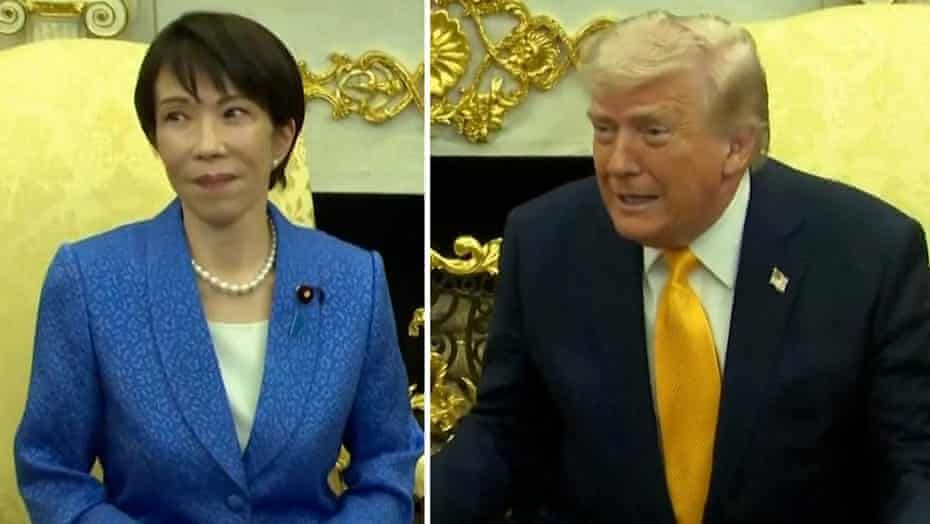
The controversial statement came during a White House meeting with Sanae Takaichi, where Trump defended surprise military tactics while responding to questions about coordination with allies.
In his response, Donald Trump remarked, “Who knows better about surprise than Japan?” directly invoking one of the most painful events in United States history.
The room reportedly shifted from laughter to discomfort as the weight of the reference became clear, especially given the presence of Japanese officials during the exchange.
The Pearl Harbor attack, which took place in Hawaii, resulted in the deaths of more than 2,000 Americans and led directly to U.S. entry into World War II.
For many observers, invoking such a moment in a humorous tone was seen as deeply inappropriate, particularly in a formal diplomatic setting involving a close ally like Japan.
Critics across media and political circles quickly condemned the remark, arguing that it trivialised history and disrespected those who died in the attack.
Some commentators noted that the reference risked reopening historical sensitivities that have long been managed carefully through decades of diplomacy between Washington and Tokyo.
The reaction was particularly strong given that Japan and the United States have built one of the world’s closest alliances since the end of World War II.

That alliance, forged after years of conflict, has relied heavily on mutual respect and careful acknowledgment of shared history.
By referencing the Pearl Harbor attack in a joking manner, analysts say the remark risked undermining that carefully maintained balance.
Despite the backlash, supporters of Donald Trump praised the comment as a display of his characteristic bluntness and unscripted communication style.
Some described the remark as humorous and argued that it reflected a willingness to speak candidly rather than adhere strictly to diplomatic conventions.
However, critics countered that humor involving historical tragedies carries risks, especially when delivered by a sitting president during a time of geopolitical tension.
The broader context of the Iran conflict amplified the significance of the comment, as tensions in the Middle East continue to raise concerns about global stability.
At the time of the remark, the United States was facing questions from allies about why advance notice had not been given prior to military actions involving Iran.
In that context, Trump’s emphasis on “surprise” as a strategic advantage appeared to be at the center of his response.
Yet the choice to illustrate that point using the Pearl Harbor attack struck many as insensitive and diplomatically risky.
Sanae Takaichi reportedly maintained composure during the exchange but appeared visibly uneasy, according to observers present at the meeting.
Her response afterward focused on reaffirming cooperation between the two countries while carefully avoiding direct criticism of the remark.
This measured reaction reflects the broader diplomatic approach often taken by Japan when navigating sensitive historical issues.
Japan’s post-war constitution, which renounces war, adds another layer of sensitivity to discussions involving military strategy and conflict.
As a result, references to past wartime actions, especially those involving surprise attacks, are treated with particular caution in Japanese political discourse.
The incident also reignited debate about the importance of tone and language in international diplomacy.
Experts argue that even off-the-cuff remarks can carry significant weight when made by world leaders, particularly in moments of crisis.
In this case, the Trump Pearl Harbor remark sparked questions about whether such statements could affect trust among allies.
Trust is especially critical as countries coordinate responses to evolving security challenges, including threats to key global trade routes.
One such route is the Strait of Hormuz, where tensions linked to the Iran conflict have raised concerns about energy supplies.
The United States has called on allies, including Japan, to play a greater role in ensuring the safety of maritime traffic in the region.
However, Japan’s ability to contribute militarily is limited by legal and political constraints rooted in its post-war constitution.
During the meeting, Sanae Takaichi reportedly explained these limitations while emphasizing Japan’s commitment to international cooperation.
This exchange highlighted the complex dynamics at play, where strategic expectations must be balanced against domestic legal frameworks.
The Trump Pearl Harbor remark, therefore, became more than just a controversial comment; it symbolized broader tensions about expectations, communication, and historical memory.
Observers noted that such moments can have lasting implications, even if they do not immediately alter policy decisions.
Diplomatic relationships often depend as much on perception and respect as they do on formal agreements and shared interests.
In that sense, the reaction to the remark reflects deeper concerns about maintaining mutual understanding in a rapidly changing global environment.
The controversy also drew comparisons to previous instances where Donald Trump referenced historical events in ways that sparked debate.
These patterns have led some analysts to question whether such communication styles are effective in sustaining long-term alliances.
Others argue that while unconventional, Trump’s approach resonates with supporters who value directness over traditional diplomatic language.
Still, the stakes remain high when such remarks intersect with sensitive historical narratives and ongoing conflicts.
The Iran war continues to test alliances and requires careful coordination among nations with differing capabilities and political systems.
Against this backdrop, even a single comment can take on outsized significance, influencing both public perception and diplomatic tone.
For many in the United States, the Pearl Harbor attack remains a symbol of loss, resilience, and the turning point that led to involvement in World War II.
For Japan, it is part of a complex historical legacy that continues to shape national identity and foreign policy.
Balancing these perspectives requires sensitivity, particularly from leaders whose words carry global influence.
As reactions continue to unfold, the Trump Pearl Harbor remark stands as a reminder of how history, politics, and communication intersect on the world stage.
Whether the controversy will have lasting diplomatic consequences remains to be seen, but it has already sparked a renewed focus on the role of language in international relations.
Read also: US attacks deeper into Iranian territory, says Dan Caine
In times of conflict, words can either reinforce alliances or create new tensions, making careful communication an essential component of global leadership.
The episode ultimately underscores the importance of respecting historical memory while navigating present-day challenges in an increasingly interconnected world.
About The Author
