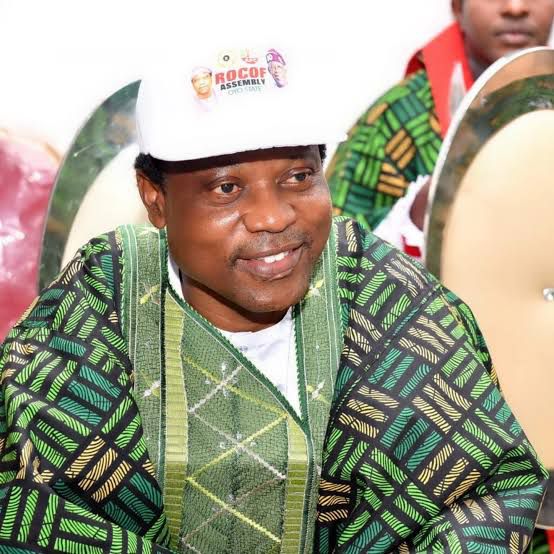
Tinubu’s aide, Bayo Onanuga, says the President foresaw U.S. pressure over alleged Christian persecution and has issued decisive security directives.
As international scrutiny intensifies over alleged religious persecution, Nigeria’s presidency has responded confidently.
Bayo Onanuga, Special Adviser on Information and Strategy to President Bola Ahmed Tinubu, stated that the Nigerian leader had long anticipated the ongoing Tinubu U.S. Pressure, insisting that the President is fully prepared to confront global criticism with decisive action at home.
Onanuga’s remarks follow renewed tension between Nigeria and the United States after former U.S. President Donald Trump redesignated Nigeria as a Country of Particular Concern (CPC), a classification reserved for nations accused of violating religious freedoms.
Trump also warned that America might cut off aid to Nigeria, and in an inflammatory statement, threatened that the U.S. could “go into that now disgraced country guns-a-blazing to wipe out Islamic terrorists killing Christians.”
Responding to these developments, Onanuga emphasized that President Tinubu had foreseen the Tinubu U.S. Pressure and had already implemented strong security measures to counter any internal or external challenges.
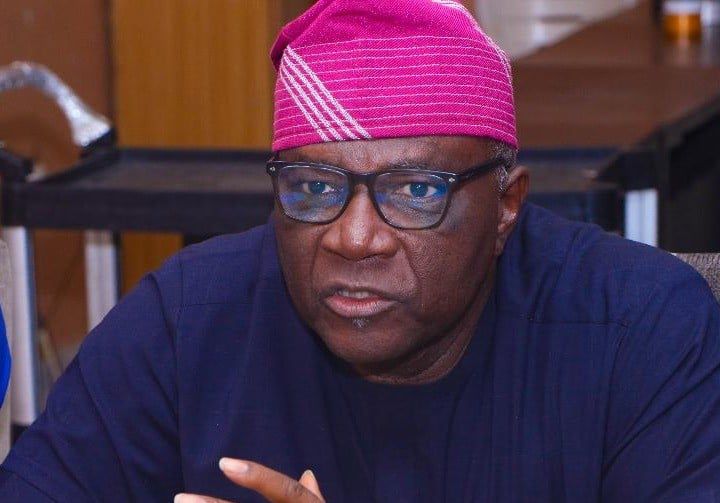
“President Bola Tinubu was well ahead of the orchestrated game unfolding in America as he told the new service chiefs what Nigerians expect of them. No more excuses, he said. Nigerians want results,” Onanuga wrote on his verified X account on November 2.
According to him, the President’s instructions were not reactionary but part of a deliberate, proactive approach to addressing Nigeria’s evolving security threats.
Onanuga released excerpts from President Tinubu’s speech to the nation’s top military officers, highlighting the urgency and depth of his directives.
“Security threats are constantly evolving, constantly mutating. Of grave concern to our administration is the recent emergence of new armed groups in the North-Central, North-West, and parts of the South.
“We must not allow these new threats to fester. We must be decisive and proactive. Let us smash the new snakes right in the head,” Tinubu said.
The President stressed that technology and intelligence-driven warfare must define the military’s approach going forward.
He assured that the federal government would provide full support to ensure that Nigeria’s armed forces deliver measurable results.
Tinubu further charged the security chiefs to collaborate more effectively, eliminate rivalry among agencies, and maintain public trust through transparency and discipline.
The Tinubu U.S. Pressure intensified after U.S. Senator Ted Cruz introduced the Nigeria Religious Freedom Accountability Act of 2025.
The bill proposes sanctions on Nigerian officials accused of enabling what it describes as the “mass murder of Christians.”
The legislative effort has fueled a debate among foreign policy analysts, who warn that such unilateral actions could harm diplomatic ties between Abuja and Washington.
Critics say the bill oversimplifies Nigeria’s complex security issues by portraying them through a purely religious lens.
While extremist violence in Nigeria has targeted both Christians and Muslims, the U.S. narrative, driven by certain right-wing circles, continues to frame the crisis as one-sided persecution.
In response, Nigerian authorities have reiterated that the government protects all citizens equally and rejects allegations of state-backed religious bias.
Officials argue that the violence stems from terrorism, banditry, and organized crime rather than faith-based discrimination.
Onanuga’s clarification was therefore aimed at reinforcing confidence in the Tinubu administration’s strategy.
He noted that the President’s early warning to the military demonstrates foresight, strength, and an understanding of Nigeria’s geopolitical dynamics, especially amid Tinubu U.S. Pressure.
“President Tinubu’s leadership style is rooted in action and accountability,” Onanuga added, noting that the administration’s policies are guided by national security priorities, not foreign pressure.
Since assuming office, President Tinubu has placed national security at the center of his governance agenda.
His administration has prioritized intelligence reform, inter-agency cooperation, and the modernization of military equipment.
Under his direction, the Nigerian Armed Forces have launched targeted operations against terrorists in the North-East and armed bandits in the North-West.
The government has also pledged increased welfare for troops and improved technology for surveillance and communication.
Analysts argue that Tinubu’s stance—assertive yet pragmatic—signals that Nigeria will not yield to external intimidation, regardless of the growing Tinubu U.S. Pressure.
The U.S. designation of Nigeria as a Country of Particular Concern has been met with mixed reactions globally.

Some religious advocacy groups in America have hailed the move as necessary, while others, including international observers, warn it could destabilize relations with Africa’s largest democracy.
Within Nigeria, faith leaders and civil society organizations have urged diplomatic engagement instead of confrontation.
They argue that global partnerships, rather than punitive measures, are key to addressing the root causes of terrorism and insecurity.
Political analysts in Abuja say the controversy could test Tinubu’s diplomatic acumen. His administration must balance internal reforms with external diplomacy to maintain Nigeria’s sovereignty while engaging constructively with the U.S.
President Tinubu’s actions, as highlighted by Onanuga, suggest a leader seeking to balance domestic imperatives with international expectations.
His proactive communication with the military and his call for results-oriented governance indicate that he aims to prove Nigeria’s capacity to secure itself without succumbing to Tinubu U.S. Pressure.
Diplomatic sources also hint at behind-the-scenes talks between Nigerian and U.S. envoys to ease tensions and reaffirm mutual interests, particularly in counterterrorism and trade cooperation.
For now, the Tinubu administration remains focused on reinforcing national unity and rebuilding global trust through transparency and performance.
The current diplomatic strain between Nigeria and the United States highlights how internal security issues can escalate into global narratives.
As Tinubu U.S. Pressure mounts, the Nigerian government’s strategy appears clear: act decisively at home, stand firm abroad, and maintain sovereignty while addressing legitimate international concerns.
Bayo Onanuga’s remarks reaffirm that President Tinubu is not merely reacting to foreign criticism but executing a deliberate vision—one that prioritizes national defense, innovation, and the protection of every Nigerian citizen, regardless of religion or ethnicity.
More news at ireport247news
About The Author