
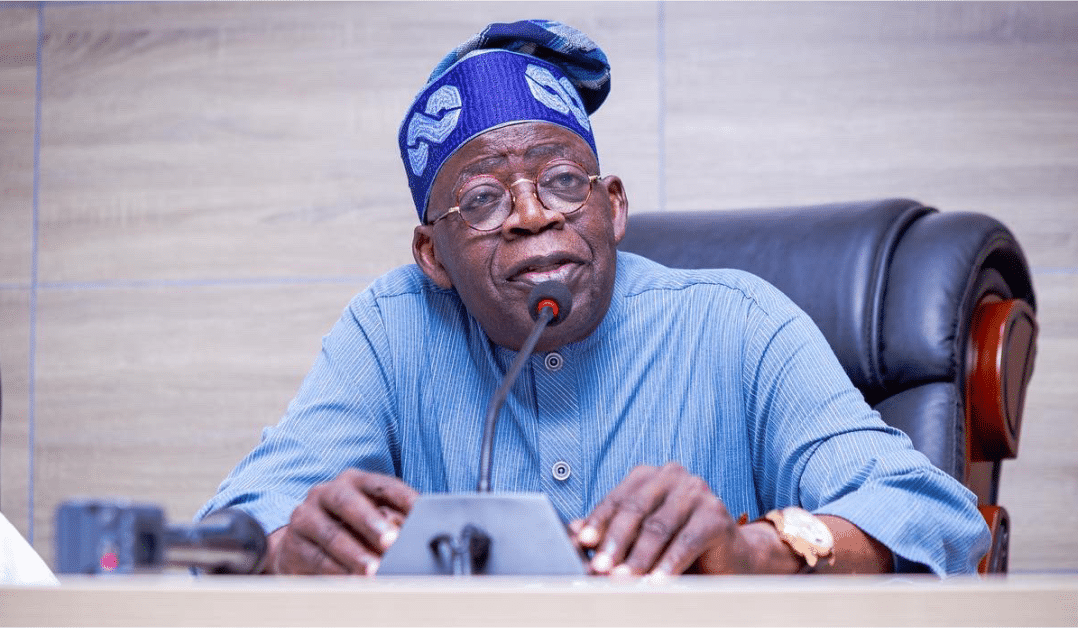
President Tinubu appoints Dr. John Nwabueze as Nigeria’s Tax Ombudsman to enhance fairness, transparency, and accountability in national tax administration.
President Bola Ahmed Tinubu has officially appointed Dr. John Nwabueze as Nigeria’s first Tax Ombudsman, marking a major leap forward in the government’s commitment to fiscal justice and transparency.
The appointment represents a defining moment in Nigeria’s evolving tax administration system, designed to promote fairness, accountability, and efficiency in public revenue management.

Announced on Tuesday, the appointment of the Tax Ombudsman aligns with the provisions of the Joint Revenue Board of Nigeria (Establishment) Act, 2025, a crucial reform law intended to modernize the country’s tax governance.
The new office is set to act as a neutral and independent channel through which taxpayers can seek justice in their dealings with revenue authorities.
According to a statement from the Presidency, the Tax Ombudsman office will “provide a structured mechanism for the fair and impartial resolution of tax-related disputes, protecting taxpayers against arbitrary or abusive actions by revenue officials.”
The government explained that the office would focus on addressing complaints involving taxes, levies, excise duties, customs payments, and other fiscal matters that affect citizens and businesses.
President Tinubu congratulated Dr. Nwabueze on his appointment, describing him as a man of integrity, diligence, and proven professionalism.
He expressed confidence that the new Tax Ombudsman would uphold the principles of transparency and justice that underpin the administration’s ongoing economic reforms.
The President emphasized that the office will be central to his government’s mission of building trust between taxpayers and public institutions while fostering voluntary compliance.
Dr. Nwabueze, a distinguished tax expert and public policy adviser, hails from Oshimili South Local Government Area of Delta State.
He brings to the office extensive experience spanning both the public and private sectors.
Before his appointment, he served as the Managing Partner of a top tax advisory firm that has provided strategic financial consultancy to government agencies and multinational companies.
In public service, Dr. Nwabueze worked as Technical Adviser to the Joint Senate Committees on the Federal Capital Territory and Finance and later to the Chief Economic Adviser to former President Olusegun Obasanjo.
His career reflects a consistent focus on fiscal reform, policy development, and the promotion of efficient governance.
Academically, Dr. Nwabueze holds a Doctor of Business Administration (Finance) from Walden University, Minneapolis; a Master’s degree in Accounting from Strayer University, Washington, D.C.; and dual Bachelor’s degrees in Accounting and Mathematics from the University of Jos.
His deep academic grounding complements his practical experience, positioning him to lead Nigeria’s new era of taxpayer advocacy and fiscal transparency.
The establishment of the Tax Ombudsman is widely celebrated as one of the most progressive steps in Nigeria’s ongoing revenue reform efforts.
For years, taxpayers and businesses have decried arbitrary assessments, prolonged disputes, and a lack of accountability in tax enforcement.
The creation of this office is expected to change that narrative, offering Nigerians a fair and transparent process for resolving conflicts with tax authorities.
Experts in the financial sector have praised the initiative as a “transformational move” that could redefine Nigeria’s business climate.
They note that a functioning Tax Ombudsman will not only enhance confidence among local taxpayers but also attract foreign investors who often seek predictable and fair fiscal systems before committing capital to emerging economies.
Beyond dispute resolution, the new office will play a vital role in identifying recurring challenges within the tax administration system and recommending long-term policy solutions.
By bridging the gap between taxpayers and government institutions, the Tax Ombudsman is expected to foster a new culture of openness, voluntary compliance, and shared responsibility in revenue generation.
Government insiders confirmed that the office will operate independently, with oversight from the Presidency through the Ministry of Finance and the Joint Revenue Board.
This autonomy is designed to protect its neutrality and ensure that the Tax Ombudsman remains credible in addressing taxpayer complaints.
Plans are also underway to establish regional offices across Nigeria, making the service accessible to individuals and businesses nationwide.
Economists have highlighted that the introduction of the Tax Ombudsman could also improve Nigeria’s standing in the global Ease of Doing Business index by simplifying the dispute resolution process and ensuring a fairer regulatory environment.
In the long term, this development could expand Nigeria’s tax base and promote economic stability without overburdening citizens or enterprises.
International observers have applauded Nigeria’s adoption of the Ombudsman model, noting its success in countries like Canada, South Africa, and the United Kingdom.
These nations have used similar frameworks to promote fiscal justice, reduce corruption, and enhance voluntary tax compliance — outcomes Nigeria hopes to replicate under this reform.
Dr. Nwabueze is expected to begin work immediately, focusing on setting up the operational structure, complaint-handling systems, and awareness campaigns that will educate taxpayers about their rights and responsibilities.
His first task will likely involve assembling a team of technical experts, financial analysts, and legal advisers to establish a robust institutional foundation for the new office.
Ultimately, President Tinubu’s decision to establish and appoint a Tax Ombudsman underscores his administration’s broader commitment to good governance and fiscal responsibility.
The move sends a strong signal that fairness, integrity, and transparency will be central to the government’s approach to economic management.
As Dr. Nwabueze assumes his role, Nigerians and business stakeholders alike await the tangible impact of this historic appointment.
The new Tax Ombudsman is expected to redefine how tax issues are handled, protect citizens from administrative excesses, and contribute to building a sustainable, transparent, and inclusive economic future for the nation.
More news at ireport247news
About the Author


