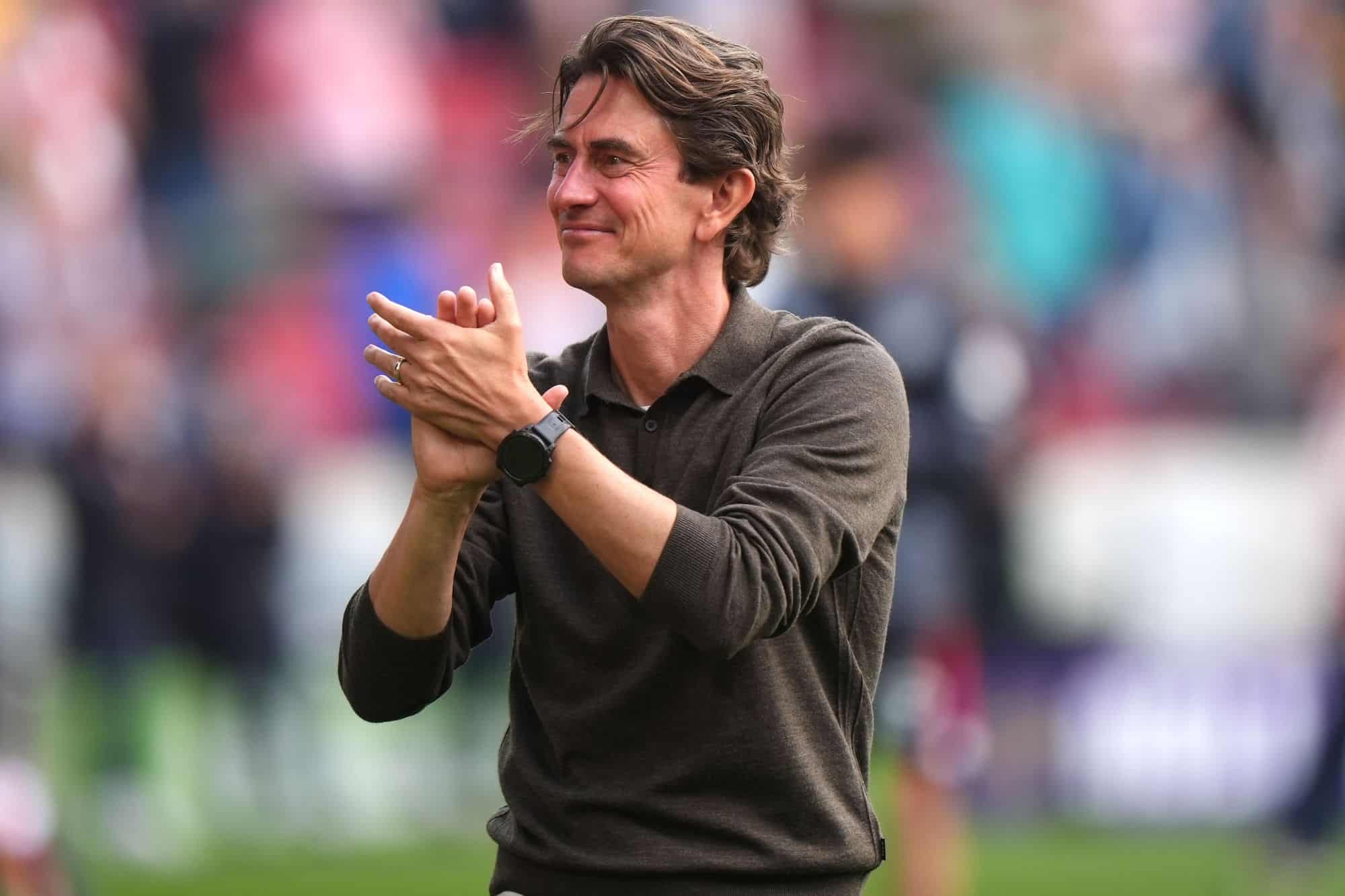
Thomas Frank has engineered a rapid Frank’s Pragmatism at Tottenham, transforming their identity into a flexible, set-piece-dominant force. Early success is evident, but squad depth issues loom large.
The North London seismic shift from Ange Postecoglou’s fiercely idealistic “Angeball” to Thomas Frank’s calculated Tactical Evolution has been one of the defining narratives of the 2025/2026 Premier League season.
The new era at Tottenham Hotspur is defined by a hard-nosed, results-first approach that has come to be known as Frank’s Pragmatism. The manager, renowned for his meticulous style and ability to maximize resources, took over a Tottenham side that, despite ending a 17-year trophy drought with the Europa League, was widely considered structurally flawed after finishing 17th in the preceding league campaign.

His immediate mission was clear: instill stability, consistency, and a winning habit, even if it meant sacrificing some of the aesthetic ideals of his predecessor.
Just four months into his tenure, the ‘Frank Effect’ is undeniable. Spurs find themselves comfortably positioned in the Premier League’s top four and have successfully navigated the initial phase of the Champions League.
This early success is not merely a string of fortunate results; it is the product of a systemic overhaul rooted in Tactical Evolution, moving the club from an all-out-attack philosophy to a more balanced, opponent-specific strategy. This calculated approach—prioritising points over purity—is the hallmark of Frank’s Pragmatism.
The foundations of Frank’s transformation and set-piece dominance
Frank’s key achievement has been instilling a sense of defensive stability and structural coherence without completely sacrificing attacking flair. The most striking evidence of this is the club’s defensive improvement: conceding less than a goal per game in the league is a remarkable turnaround from the previous season’s porous backline. This shift is built upon two tactical pillars.
Flexible formations and fluidity
Unlike his predecessor, Frank does not adhere to a single rigid formation. He has successfully utilized three distinct shapes based on the opposition, showcasing the core tenets of his management style:
-The 4-3-3 Attacking: Used primarily against mid-table and lower sides to dominate possession and exploit the flanks, allowing new signings like Mohammed Kudus and Xavi Simons to operate in attacking zones.
The 4-2-3-1/4-4-2 Mid-Block: Employed to ensure central compactness and control in general play, often featuring the defensive solidity of the on-loan João Palhinha alongside a ball-progressor like Rodrigo Bentancur.
The 3-5-2 (against elite rivals): Demonstrated in the massive 2-0 away victory against Manchester City. This shape prioritises defensive numbers, aggressive wing-back play from Pedro Porro and Destiny Udogie, and quick counter-attacks. It’s a masterclass in calculated sacrifice, exchanging possession for security and exploiting turnover spaces. The speed with which these different systems were absorbed by the players is a testament to Frank’s exceptional coaching and communication skills.
The Set-Piece Weapon
One of the most immediate and visible changes is the use of set-pieces as a major scoring route—a classic component of the Frank managerial toolkit. Drawing on his successful blueprint from Brentford, Frank has introduced coordinated movement, screening, and blocking systems to exploit dead-ball situations. Defenders like Cristian Romero and Micky van de Ven—who form the undisputed first-choice centre-back pairing—have become significant threats from corners and free-kicks, adding crucial goals that often decide tight Premier League contests. This focus on maximizing “low-risk, high-reward” opportunities—or Set-Piece Dominance—showcases Frank’s data-driven, percentage-based approach to the game. Approximately a third of all goals in modern football come from set-plays, and Frank ensures Tottenham are on the right side of that statistic.
The Romero Dependency and Structural Weakness
While the initial results are glowing, a detailed analysis of the underlying numbers reveals a critical structural dependency that threatens to derail their campaign: the reliance on captain Cristian Romero. This issue, dubbed the Romero Dependency, is the Achilles’ heel of the current system.
Statistics show a damning drop-off in performance when the Argentine is absent. Tottenham’s win rate plummets dramatically from around $50\%$ with Romero starting to just over $23\%$ without him over the last 26 league matches dating back to the start of the previous season. Furthermore, without their captain, the team concedes an average of $16.3$ shots per game, a clear increase from the $12.3$ shots conceded when he is on the pitch.
Romero’s blend of aggression, leadership, and ball-playing ability is the anchor for Frank’s high-pressing, flexible defensive line. His current adductor issue is a major cause for concern, with the team looking palpably less intense and cohesive defensively in his recent absence, as noted by Frank himself following the recent Champions League draw at Monaco.
Overcoming this heavy dependence on one player will require Frank to accelerate the defensive integration of his back-up options, ensuring the structural integrity of Frank’s Pragmatism remains intact even without its most critical piece.
Challenges ahead: Squad depth and sustaining intensity
The next phase of the season, extending through the unforgiving winter fixture list and the knockout stages of the Champions League, will be the true crucible for Frank’s project. The club’s Tactical Evolution must now prove sustainable under extreme pressure.
Navigating the injury crisis and squad depth
The injury list is extensive, with key creators like James Maddison and Dejan Kulusevski long-term absentees. While the summer window brought quality additions like Mohammed Kudus and the versatile Xavi Simons, the overall Squad Depth still presents a risk, especially with the demanding Champions League schedule. Frank’s ability to rotate his team effectively without suffering a drastic drop in performance will be the single most crucial factor in maintaining their top-four challenge. Losing depth players is manageable; losing key structural components like Romero or Palhinha for extended periods could completely destabilize the team. Frank, an expert in player management from his background in sports psychology, will need to rely heavily on this expertise to keep the morale and fitness of his core players high through the congested schedule.
The home form paradox
The paradox of Frank’s early reign is his team’s inconsistent form at the Tottenham Hotspur Stadium. The club secured an impressive 2-0 victory at Manchester City but suffered surprising home defeats to mid-table opposition like Bournemouth and Aston Villa. Finding the right blend of patience and penetration to break down low-block teams on home turf is a new challenge for Frank. His system excels in exploiting space—a luxury not always afforded at home. This is where the in-possession quality of players like Simons and the returning Maddison, once fit, will be most vital in translating the efficiency of Frank’s Pragmatism into consistent home wins.
The Mental Grind of Elite Competition
The change in culture from the volatile enthusiasm of the previous manager to Frank’s measured, emotionally intelligent approach requires the players to maintain self-generated intensity. As Frank noted after the Monaco match, the team struggled with a “lack of energy” and poor “decision-making.” Sustaining peak physical and mental intensity across four competitions will test the soft skills of Frank’s management, skills he developed successfully at Brentford but which operate under far greater scrutiny at a club of Tottenham’s stature. The ability to win ugly, grind out results, and remain disciplined under fatigue is where Frank’s Pragmatism must ultimately deliver.
Frank’s first few months at Tottenham Hotspur have been a resounding success, a clinical display of tactical pragmatism that has instantly elevated the team’s standing. The challenge now shifts from implementing change to sustaining it against the relentless pressures of elite European football and the looming threat of key injuries.
Read more news at: ireport247news.com
About the Author