Thailand is enveloped in sorrow as Queen Mother Sirikit, the nation’s enduring symbol of maternal grace and unity, passes away at ninety-three, closing an extraordinary royal chapter.
The royal palace announced her death on Friday night, confirming Queen Mother Sirikit succumbed peacefully at Bangkok’s Chulalongkorn Hospital, where she’d been receiving treatment for a persistent blood infection.
Her passing has plunged the Thai monarchy into deep grief, marking the end of an era shaped by the compassion, elegance, and steadfast devotion of a revered queen consort.
“Her Majesty’s condition deteriorated until she passed at 9:21pm,” read the palace statement, sparking nationwide royal mourning that now unites millions across Thailand’s temples and streets.
Prime Minister Anutin Charnvirakul cancelled his scheduled ASEAN summit trip, describing Queen Mother Sirikit as “a guiding light whose compassion nurtured both people and kingdom through decades of transformation.”
The Thai government convened an emergency cabinet session Saturday, with ministers dressed in black, reflecting the solemn tone defining the kingdom’s official royal mourning period.
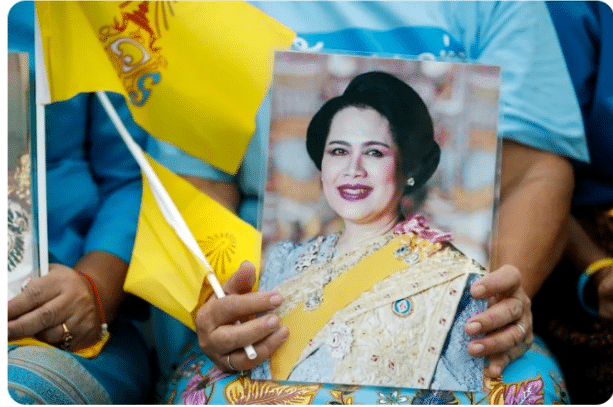
King Maha Vajiralongkorn, her only son and reigning monarch, decreed that the Thai monarchy observe one year of mourning, echoing customs from his father’s passing in 2016.
The late queen’s body will be transferred to Bangkok’s Grand Palace, where citizens will gather in quiet reverence, paying homage beneath golden spires and fluttering black flags.
Across Bangkok, markets, schools, and offices observed moments of silence, their television screens looping images of Queen Mother Sirikit alongside hymns of eternal gratitude and remembrance.
Her August 12 birthday, already marked as Thailand’s Mother’s Day, has taken renewed meaning — a national remembrance of unconditional love within the Thai monarchy tradition.
Even during political turbulence and the youth-led protests that shook Thailand in 2020 and 2021, few dared direct criticism toward Queen Mother Sirikit herself.
Protesters’ demands for reform targeted institutions, not individuals, reaffirming how her gentle image remained untouched amid debates over the Thai monarchy and its role.
Throughout her life, Queen Mother Sirikit bridged divides, promoting unity between Bangkok’s elite and Thailand’s rural majority, embodying empathy at times when polarization threatened to fragment national identity.
Born Sirikit Kitiyakara in 1932, she belonged to an aristocratic lineage closely tied to the Thai monarchy, growing up amid privilege, refinement, and political evolution.
Her formative years coincided with the shift from absolute monarchy to constitutional rule, shaping her understanding of the delicate balance between tradition and modern governance.
In 1948, while studying music and languages in Paris, she met King Bhumibol Adulyadej, then a young monarch completing his education in Switzerland.
Their courtship blossomed into a royal romance, culminating in marriage on April 28, 1950, just days before King Bhumibol Adulyadej’s coronation as Rama IX.
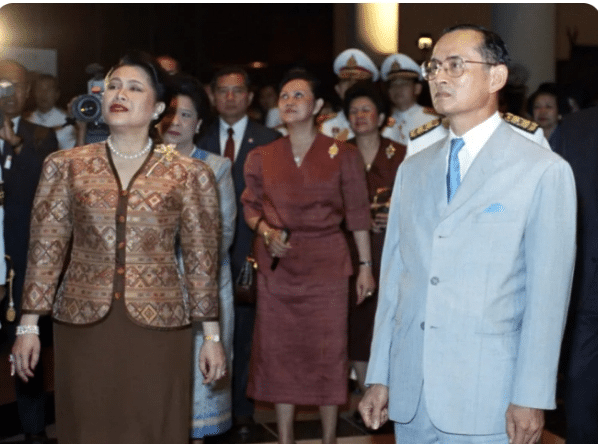
Together, they became the heartbeat of the Thai monarchy, embodying love, stability, and purpose during decades when coups and crises tested Thailand’s national endurance.
For seventy years, their partnership symbolized devotion — his scientific curiosity complemented by her artistic elegance, blending modern ideals with deep reverence for Buddhist tradition.
Through extensive travels, Queen Mother Sirikit represented Thailand abroad, enchanting global audiences and solidifying her reputation as one of Asia’s most elegant diplomatic figures.
Her fashion, often compared to Jacqueline Kennedy’s, fused traditional Thai silk with Parisian design, turning the queen into a global ambassador for cultural sophistication.
Magazines from Vogue to Life chronicled her wardrobe and demeanor, amplifying the image of the Thai monarchy as a symbol of timeless grace and modernization.
By the 1960s, as Thailand industrialized, Queen Mother Sirikit shifted focus inward, dedicating herself to rural welfare, women’s empowerment, and environmental sustainability.
She founded the SUPPORT Foundation, empowering artisans to revive traditional weaving and handicrafts, ensuring cultural heritage thrived within the modern Thai monarchy framework.
Her projects brought self-reliance to remote villages, strengthening local economies and reducing urban migration — a reflection of King Bhumibol Adulyadej’s philosophy of sufficiency economy.
In a 1979 interview, Queen Mother Sirikit remarked, “Rural Thais often feel forgotten. We bridge that gap by living among them, learning their needs firsthand.”
These words embodied her belief that compassion and accessibility must underpin the moral authority of the Thai monarchy, not distance or divine privilege.
Evening royal broadcasts showcased her humanitarian missions, reinforcing the monarchy’s benevolent image amid shifting political tides and global scrutiny.
During the Cold War, Queen Mother Sirikit and King Bhumibol Adulyadej toured northern provinces combating poverty and opium dependence, turning the palace into a developmental force.
Her quiet strength mirrored her husband’s humility, reinforcing the Thai monarchy’s legitimacy through tangible service rather than ceremonial spectacle.
In times of crisis, Queen Mother Sirikit urged unity, often appearing at schools and temples to comfort victims of floods, landslides, or political unrest.
Her visibility transformed her into a moral compass, a stabilizing figure when Thailand’s democracy wavered under successive military interventions.
By the 1980s, her health began to falter, yet Queen Mother Sirikit continued to preside over charitable events and national celebrations with dignified resilience.
Her brief withdrawals from public life sparked speculation, but each return reminded citizens of her enduring devotion to the Thai monarchy and its people.
The 2000s saw her increasingly associated with royalist movements, notably when she attended a 2008 funeral of a pro-monarchy activist, drawing symbolic political interpretations.
That appearance linked Queen Mother Sirikit to the “Yellow Shirt” royalists during escalating tensions with “Red Shirt” populist movements supporting ousted leaders.
Despite controversy, her maternal image endured, sheltering the Thai monarchy from deeper fractures as the kingdom wrestled with ideological realignment.
Following King Bhumibol Adulyadej’s death in 2016, Thailand witnessed unprecedented mourning — processions stretching miles, temples echoing chants of impermanence and gratitude.
Now, in 2025, the cycle of grief repeats as Thais confront the loss of Queen Mother Sirikit, their second great royal bereavement in a decade.
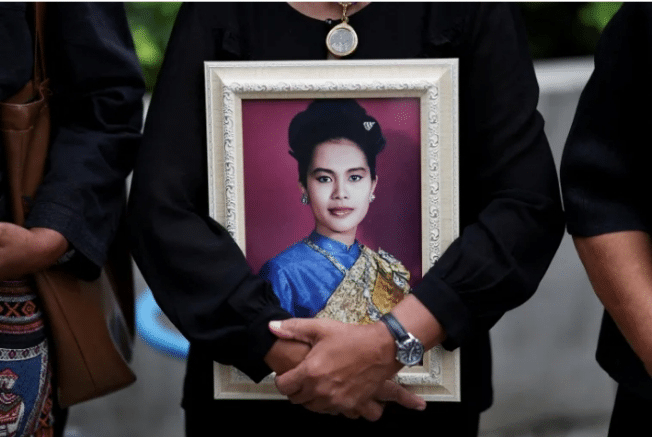
In Bangkok’s Sanam Luang grounds, thousands gathered with candles, portraits, and flowers, chanting blessings for her rebirth in the Buddhist celestial realms.
Foreign embassies lowered flags, while world leaders sent condolences praising Queen Mother Sirikit’s humanitarianism and her enduring contributions to Asian diplomacy and women’s empowerment.
Japan’s Emperor Naruhito called her “a bridge between East and West,” while Britain’s King Charles noted her “grace that transcended eras and inspired generations.”
King Maha Vajiralongkorn appeared publicly for the first time since her death, bowing before her portrait and declaring a kingdom-wide day of reflection.
His brief statement praised “a mother whose love encompassed every Thai,” reaffirming the continuity of the Thai monarchy through reverence and duty.
During his address, King Maha Vajiralongkorn emphasized gratitude, urging Thais to “remember Her Majesty not through tears, but through kindness shown to one another.”
Monks have begun leading meditation vigils across the country, marking the first phase of the elaborate royal mourning ceremonies scheduled to unfold for months.
In provincial temples, black ribbons adorn Buddha statues, while choirs sing verses from the royal anthem composed by King Bhumibol Adulyadej himself decades ago.
International tributes highlight how Queen Mother Sirikit transcended royal protocol to address tangible issues like education, maternal health, and rural inequality.
Her initiatives prefigured modern sustainable development, aligning the Thai monarchy’s image with global humanitarian standards and soft-power diplomacy.
Younger Thais, often skeptical of monarchy, have expressed newfound respect online, posting images of Queen Mother Sirikit’s projects alongside messages of gratitude and nostalgia.
Social media platforms flooded with hashtags honoring her, reflecting how digital-age mourning blends tradition with contemporary sentiment within the Thai monarchy narrative.
The government has suspended entertainment broadcasts, urging citizens to wear black and observe decorum consistent with the long-standing royal mourning traditions.
Markets report a surge in sales of commemorative portraits and silk scarves bearing Queen Mother Sirikit’s monogram, cherished symbols of affection and loyalty.
Cultural scholars note her life encapsulated the evolution of Thai femininity — a transformation from feudal deference to modern civic participation under the Thai monarchy.
In literature and film, her image endures — the nurturing mother who guided a nation with poise while safeguarding the legacy of King Bhumibol Adulyadej.
Her influence extended to architecture, with landmarks like the Queen Sirikit National Convention Centre immortalizing her contributions to culture and diplomacy.
As the nation prepares for elaborate funeral rites, artisans craft intricate sandalwood carvings, honoring the spiritual purity associated with Queen Mother Sirikit.
Her cremation, to be attended by regional leaders, will symbolically unite Southeast Asia in respect for Thailand’s enduring royal heritage.
For the Thai people, this moment transcends grief; it is a meditation on continuity — how the Thai monarchy remains both fragile and immortal in collective consciousness.
Through the lives of King Bhumibol Adulyadej, Queen Mother Sirikit, and now King Maha Vajiralongkorn, the kingdom has witnessed generational renewal rooted in sacred duty.
As candlelight vigils spread nationwide, the echoes of prayer weave through humid Bangkok nights, binding citizens under the vast shadow of royal mourning.
Her passing may close a luminous chapter, but Queen Mother Sirikit’s spirit endures — a quiet whisper of grace guiding Thailand toward peace, compassion, and timeless continuity.
About The Author