Syria has issued a forceful condemnation of Israeli Prime Minister Benjamin Netanyahu’s illegal visit to seized territory, calling it a provocative breach of sovereignty and a blatant escalation in ongoing regional tensions.
The visit saw Netanyahu accompanied by top Israeli officials touring troops stationed in southern Syrian territory Israel has occupied since the overthrow of Bashar al-Assad, sparking outrage from Damascus and the United Nations.
Ibrahim Olabi, Syria’s ambassador to the UN, told the Security Council that the visit “epitomizes Israel’s ongoing aggression against Syria and its people,” warning that it threatens stability and violates international law.
Olabi urged the UN to take immediate action, emphasizing the need to enforce the 1974 disengagement agreement, halt occupation, and ensure violations of Syria’s sovereignty do not recur under any circumstances.
Since the fall of Assad’s regime, Israel has maintained forces in a UN-patrolled Golan Heights buffer zone, conducting airstrikes, ground operations, reconnaissance flights, and establishing checkpoints across southern Syria without Damascus’s consent.
UN spokesperson Stephane Dujarric described Netanyahu’s public visit as “concerning, to say the least,” reiterating that UN Resolution 2799 calls for full respect of Syria’s sovereignty, unity, and territorial integrity.
Danny Danon, Israel’s ambassador to the UN, did not address the visit directly, instead criticizing Syria for failing to restrain militias, protect minorities, and address internal violence, portraying Israel’s operations as defensive.
Olabi responded sharply, noting that Israel has conducted more than 1,000 airstrikes and over 400 ground incursions, while Syria has engaged constructively with diplomacy, showing zero signs of aggression toward Israeli forces.
Netanyahu’s entourage included Foreign Minister Gideon Saar, Defence Minister Israel Katz, army Chief of Staff Eyal Zamir, and Shin Bet head David Zini, signaling Israel’s intent to assert dominance in strategically sensitive southern regions.
Syria’s Ministry of Foreign Affairs condemned the visit as a “serious violation of Syria’s sovereignty and territorial integrity,” warning that such provocations exacerbate tensions and undermine any regional peace efforts underway.
In Quneitra province, Israeli forces recently renewed incursions, establishing military checkpoints and conducting patrols in areas historically recognized as Syrian territory, raising alarm about potential escalation and civilian vulnerability.
President Ahmed al-Sharaa has described Israeli operations, including airstrikes and ground infiltrations, as “very dangerous,” emphasizing that they target civilians, infrastructure, and government installations in southern Syria with reckless disregard.
Observers note that Netanyahu’s high-profile visit serves multiple purposes: signaling domestic strength, asserting military presence to neighboring countries, and undermining Damascus’s leverage in ongoing security negotiations with Israel.
The Security Council meeting highlighted deep mistrust between the two nations. Olabi reminded the international community that Israel bears responsibility for initiating attacks while Syria has repeatedly pursued diplomatic solutions to prevent escalation.
Syria continues to call for adherence to international law, urging the UN to enforce disengagement agreements and prevent Israel from normalizing violations that could destabilize the wider Middle East region.
Analysts suggest that while negotiations between Syria and Israel on a security pact may continue behind closed doors, Netanyahu’s public visit reflects a calculated attempt to provoke Damascus while maintaining political leverage in ongoing discussions.
The Golan Heights buffer zone remains a focal point of tension, with Israel citing security concerns and historical claims, while Syria insists the area is sovereign Syrian territory and demands an immediate end to occupation and incursions.
Reports indicate that Israeli forces have conducted repeated reconnaissance flights, temporary ground operations, and occasional detentions of Syrian citizens, heightening local fears and further straining cross-border relations.
Diplomatic sources in New York confirm that UN officials have lodged formal complaints over the visit, emphasizing that international norms require restraint, recognition of territorial sovereignty, and avoidance of provocative military displays.
Syria stresses that true stability in the region depends on consistent international enforcement of UN resolutions, accountability for violations, and meaningful dialogue rather than unilateral military actions.
The Syrian ambassador underscored that Netanyahu’s presence on occupied soil was “unacceptable and dangerous,” warning that continued provocations risk triggering escalatory cycles that could harm civilians and undermine regional security.
Historical context underscores Syria’s position: Israel’s occupation of southern Syrian territory and repeated incursions violate longstanding agreements, including the 1974 disengagement accord, and have been condemned repeatedly by the international community.
Diplomats note that while the Security Council discusses measures to reduce tensions, on-the-ground realities reflect a power imbalance, with Israeli forces conducting operations without immediate repercussions, eroding trust with Damascus.
The repeated violations, including airstrikes on Damascus, ground patrols in southern provinces, and establishment of checkpoints, highlight Israel’s operational autonomy and Syria’s limited capacity to enforce its territorial claims effectively.
Observers emphasize that Netanyahu’s visit was intended to demonstrate control and reassure both domestic audiences and Israeli allies of ongoing military capabilities in contested areas of Syria.
The UN continues to monitor developments closely, urging restraint, adherence to international law, and immediate cessation of provocative military operations that risk undermining ongoing diplomatic negotiations and regional stability.
Syria’s repeated calls for enforcement of disengagement agreements and respect for sovereignty reflect a strategy rooted in legal legitimacy, seeking international support to prevent further encroachments by Israeli forces.
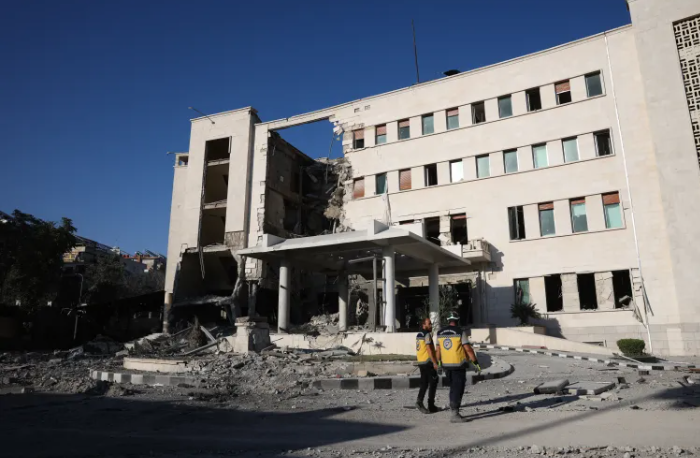
Civil defense workers in southern Syria report increased surveillance and patrols by Israeli forces, contributing to a climate of tension and uncertainty for residents in buffer zones and surrounding areas.
The Security Council has urged both nations to prioritize diplomacy, reiterating that unilateral military actions exacerbate tensions, risk civilian harm, and undermine prospects for a lasting peace settlement.
Syria maintains that international recognition of its sovereignty, accountability for violations, and sustained diplomatic engagement are essential for stability, while Israel’s provocative actions demonstrate ongoing disregard for these principles.
Regional experts warn that continued Israeli incursions and public demonstrations of military control, such as Netanyahu’s visit, could trigger escalation cycles, threatening not only Syrian stability but broader Middle Eastern security.
The Syrian government emphasizes that occupation cannot be normalized and that diplomacy, backed by international enforcement of UN resolutions, is the only viable path to reducing tensions and ensuring long-term security.
Diplomats highlight that despite Israel’s military superiority and repeated incursions, Syria has consistently responded with diplomacy, patience, and engagement with UN mechanisms, showcasing restraint even under continuous provocation.

Observers conclude that Netanyahu’s visit, while symbolically asserting control, underscores fragile security arrangements and the persistent challenge of balancing military posturing with diplomatic progress in the region.
About The Author