

Why the SEC to seize CBEX’s N1.3tr cash marks a turning point in Nigeria’s fight against Ponzi schemes
Nigeria’s capital market regulator has intensified its clampdown on unlawful digital investment platforms as the Securities and Exchange Commission (SEC) has filed a major application before the Investments and Securities Tribunal (IST) seeking orders to freeze the bank accounts of Crypto Bridge Exchange (CBEX) and 25 associated defendants.
This escalation comes after investigators concluded that the entity orchestrated a large-scale Ponzi operation that siphoned an estimated N1.3 trillion from unsuspecting Nigerians.
The case, registered as IST/OA/02/2025 and heard at the first sitting of the sixth Tribunal, was presided over by the Tribunal Chairman, Hon. Aminu Jinaidu.

During the proceedings, the SEC sought sweeping interim orders that would allow regulators and financial institutions to halt further dissipation of assets believed to have been acquired through the unlawful scheme.
At the heart of the SEC’s plea is a demand that all commercial banks and financial institutions immediately freeze accounts linked to CBEX and its promoters.
In addition, the Commission is pushing for the seizure of houses, vehicles, landed properties, and any other assets procured using funds obtained from the public through the platform.
SEC outlines CBEX’s alleged illegal operations
In its submission, the SEC described CBEX as an unlicensed digital asset operator that pretended to be a legitimate capital market service provider.
The regulator stated that the firm ran an unlawful investment scheme, promising unrealistic profits and exploiting the public’s growing interest in cryptocurrency.
According to the Commission, CBEX lured investors by claiming that it could deliver up to 100 percent return on investment within 30 days—an offer that violated provisions of the Investments and Securities Act (ISA) 2025.
Specifically, Section 3(b) of the Act prohibits any unregistered entity from offering securities or investment contracts to the public.
Investigators say the promises were deliberately structured to attract rapid inflows.
However, as with many Ponzi schemes, earlier investors were paid with funds from newer participants, creating the illusion of profitability until the system inevitably collapsed.
International regulators had raised early red flags
In a revelation that underscores CBEX’s controversial history, the SEC informed the Tribunal that the platform had previously been flagged by foreign regulators.
The Securities and Futures Commission (SFC) of Hong Kong issued an advisory on April 23, 2024, identifying CBEX as a suspicious virtual asset entity.
The Hong Kong advisory noted that CBEX had adopted a name similar to that of a legitimate Chinese property rights trading organisation, despite having no affiliation with it.
This tactic, regulators believe, was intended to mislead unsuspecting investors by borrowing credibility from an established institution.
Defendants absent in court as case progresses
Though formally invited, CBEX and the 25 co-defendants failed to appear before the Tribunal and were not represented by legal counsel.
In response, Hon. Jinaidu ordered that all hearing notices be published in national newspapers to ensure that the defendants could no longer claim lack of awareness of the proceedings.
The Tribunal adjourned the matter to January 27, 2026, allowing time for proper service and further regulatory action.
How the CBEX scheme collapsed
CBEX reportedly entered the Nigerian digital investment landscape in July 2024.
It operated through a website and a mobile application, offering investment packages backed by claims of advanced Artificial Intelligence trading tools capable of generating extraordinary profits from digital asset markets.
Participants were promised returns as high as 100 percent within a 40 to 45-day lock-in period.
These offers attracted tens of thousands of users across multiple states, particularly young Nigerians seeking rapid digital investment returns.
By late 2024, withdrawals began to stall.
Complaints from investors surged as the platform began disabling access and delaying payments.
Within months, the operation collapsed entirely, with many investors discovering that CBEX’s founders had disappeared, taking with them more than N1.3 trillion—equivalent to nearly $800 million at the time.
Subsequent investigations concluded that the platform was structured as a classic Ponzi scheme, paying old investors from the funds of new investors while presenting fabricated profit dashboards to maintain confidence.
SEC to seize CBEX’s N1.3tr cash: Implications for digital investment regulation
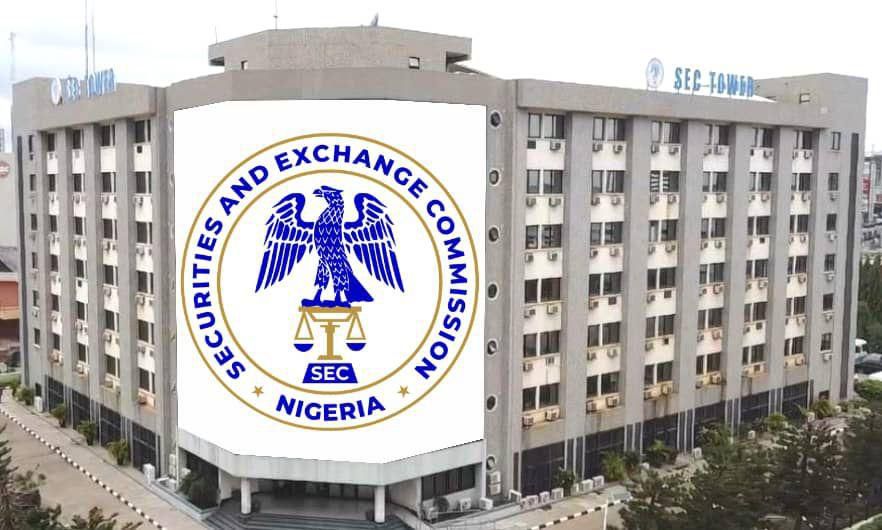
If granted, the SEC’s request to seize CBEX’s assets will represent one of Nigeria’s most significant enforcement actions against a digital investment fraud.
Analysts believe the crackdown is intended not only to recover funds but to serve as a deterrent to emerging unlicensed platforms exploiting cryptocurrency excitement.
The move also aligns with regulators’ broader efforts to restore trust in Nigeria’s capital markets.
With the rise of social-media-driven investment schemes, authorities have intensified surveillance on digital platforms claiming to offer guaranteed returns or automated trading profits.
For affected investors, the Tribunal’s decision could determine whether any meaningful restitution is possible.
While the scale of the fraud suggests that total recovery may be unlikely, asset seizure could provide partial compensation.
As the case progresses, financial analysts expect tighter regulatory controls over digital asset operators in 2026, including a mandatory registration regime, enhanced disclosures, and stricter enforcement mechanisms.


