A growing diplomatic storm has erupted after Russia arrests Ukrainian biologist Leonid Pshenichnov, accusing him of treason for supporting environmental limits on Antarctic krill overfishing.
The seventy-year-old scientist, long recognized for his Antarctic research, was detained in Crimea while preparing to travel to Australia for a major CCAMLR conference on marine conservation.
Officials in Kyiv condemned the move, calling the case a politically motivated assault on science. Western governments and research groups have described the detention as a “trumped-up” act of intimidation.
Leonid Pshenichnov has spent decades studying the fragile Antarctic ecosystem, contributing to international efforts to protect krill — a small crustacean vital to the Southern Ocean’s food chain.
He was set to join a meeting organized by the Commission for the Conservation of Antarctic Marine Living Resources (CCAMLR), which was expected to debate new marine protected areas in Antarctic waters.
However, shortly before his departure, Russian authorities arrested him in the occupied city of Kerch, Crimea, alleging he “defected to the enemy” by supporting Ukrainian proposals to limit krill harvesting.
The charges, officially described as “high treason,” claim his scientific recommendations undermined Russia’s fishing industry and threatened the country’s economic interests in the region.
The arrest of Leonid Pshenichnov comes amid Moscow’s expanding crackdown on dissent, extending even to the scientific community. Since 2023, treason laws have been toughened to include life imprisonment.
Analysts say the Kremlin increasingly targets individuals deemed sympathetic to Ukraine, using fabricated accusations to stifle collaboration in sensitive research sectors.
International observers argue that Pshenichnov’s case symbolizes how Russia arrests Ukrainian biologist figures not for espionage, but for upholding international environmental standards.
Diplomatic sources believe the charges are part of Moscow’s attempt to assert dominance over resource exploitation in the Southern Ocean, particularly as global demand for krill products soars.
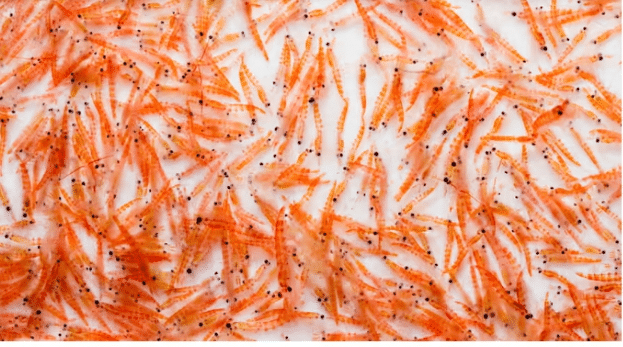
Krill, tiny shrimp-like creatures, play a pivotal role in marine ecosystems — feeding whales, penguins, and fish. But they are also harvested for omega-3 supplements and aquaculture feed.
Scientists warn that the current scale of Antarctic krill overfishing is unsustainable, threatening not only biodiversity but also the carbon absorption function of the Southern Ocean.
Russia and China have resisted proposals to expand protected zones around the Antarctic Peninsula, arguing that restrictions would hinder economic opportunities for their fleets.
Environmental advocates say these nations are prioritizing profit over preservation. They insist that Russia arrests Ukrainian biologist experts like Pshenichnov to silence those pushing for stricter conservation measures.
The international research community has reacted with anger and disbelief. Colleagues of Leonid Pshenichnov describe him as an “outstanding” scientist and a “deeply humane” individual dedicated to marine ecology.
Dr Evgeny Pakhomov, an oceanographer at the University of British Columbia who co-authored studies with Pshenichnov, said his detention is “unspeakable” and a “travesty of justice.”
“He has knee problems and needs regular medical care. Detaining a 70-year-old scholar for doing his job is unconscionable,” Pakhomov told reporters.
More than 50 international scientists have signed an open letter demanding his immediate release and urging CCAMLR member states to denounce Russia’s actions.
Ukraine’s ambassador to Australia, Vasyl Myroshnychenko, condemned Moscow’s move during the opening session of the CCAMLR conference in Hobart, Tasmania.
He urged member states, including Australia, Japan, the United States, and the United Kingdom, to “stand up for scientific freedom” and challenge Russia’s misuse of treason laws.
“Is it acceptable,” he asked, “for this community to remain silent while Russia arrests Ukrainian biologist Leonid Pshenichnov for defending Antarctic marine life?”
Australia said it was “gravely concerned,” while the UK demanded the release of “all civilians arbitrarily detained by Moscow.” The U.S. State Department has also called the case politically motivated.
Pshenichnov’s arrest highlights the complex legal situation in occupied Crimea. After Russia annexed the peninsula in 2014, residents were pressured to accept Russian passports.
Myroshnychenko said Pshenichnov was “forced” to take Russian citizenship, a move now being twisted by Moscow to justify accusing him of treason against Russia.
“He’s not a politician or activist — he’s a scientist. His only crime is standing for evidence-based conservation,” the ambassador stressed.
Observers note that this is not the first time Russia arrests Ukrainian biologist professionals or academics under similar pretexts since the full-scale invasion of Ukraine.
The case underscores growing fears over academic repression in Russia. Since 2022, several researchers have been arrested for allegedly sharing data with foreign institutions.
Human rights groups say the Kremlin is conflating legitimate scientific cooperation with espionage, eroding trust in international research.
Leonid Pshenichnov’s work with CCAMLR since 1983 has been instrumental in monitoring krill populations and advising on ecosystem management. His arrest, scientists say, endangers decades of joint Antarctic research.
“By targeting him, Russia is not just punishing an individual — it’s undermining global scientific collaboration,” said Dan Crockett of the Blue Marine Foundation.
The Antarctic Treaty System, which governs the region’s environmental protection, relies on mutual trust and scientific exchange. Experts warn that Russia’s actions could destabilize this framework.
CCAMLR’s credibility, they say, depends on transparency and cooperation among its 27 member nations. If one country criminalizes participation, the treaty’s conservation goals could collapse.
Several environmental groups have urged member nations to impose diplomatic pressure until Russia releases Pshenichnov and recommits to science-based decision-making.
Russia arrests Ukrainian biologist Pshenichnov, they argue, not because of espionage but because he represented a model of transnational integrity the Kremlin fears.
Diplomatic pressure on Moscow is building. European governments are expected to raise the issue at the upcoming UN Biodiversity Conference, calling for accountability over the misuse of scientific institutions.
Ukraine’s foreign ministry has initiated formal protests and is coordinating with allies to secure Pshenichnov’s release. Australia has hinted at sanctions targeting Russian fisheries operating in the Southern Ocean.
Experts believe Moscow may attempt to use Pshenichnov as a bargaining chip in broader geopolitical negotiations with Kyiv.
Still, conservationists emphasize that “science must remain outside politics” and that the arrest endangers the credibility of climate and biodiversity initiatives globally.
Human rights organizations are urging CCAMLR member states to take a united stance. The arrest, they warn, sets a dangerous precedent that could discourage scientists from engaging in environmental research.
Blue Marine Foundation and several NGOs have called on international fisheries to boycott Russian krill products until Leonid Pshenichnov is released.
Environmental activists also demand that the next CCAMLR session formally censure Russia for violating the Antarctic Treaty’s principles of peaceful scientific cooperation.
At home in Crimea, Pshenichnov’s family fears for his health. His wife and son have reportedly been denied access to him since his arrest earlier this month.
Colleagues say his decades of research have been vital in understanding the Antarctic food web and guiding responsible fishing policies worldwide.
“Leonid’s only fault was believing that science could protect our planet,” said one scientist. “Now, that belief has made him a political prisoner.”
As Russia arrests Ukrainian biologist Leonid Pshenichnov, his case stands as a grim symbol of the intersection between geopolitics, environmental protection, and academic freedom.
For conservationists and democracies alike, his imprisonment raises an urgent question — can truth still survive when science becomes a crime?