

How Rosalía’s new album Lux Is Reshaping Conversations Around Faith and Pop Culture
Spanish pop sensation Rosalía has once again disrupted the global music landscape — this time not through experimental production, flamenco fusion, or genre-defying vocals, but through a surprising wave of praise from Catholic clergy across Europe and Latin America.

Rosalía’s new album Lux, released in November 2025, has sparked serious reflection in religious and cultural circles after a Vatican cardinal and several bishops publicly commended its spiritual themes.
While it is not uncommon for artists to weave elements of spirituality into their work, the magnitude of positive reaction from high-ranking Church officials marks a rare moment in contemporary pop culture.
For Rosalía, whose creative path has consistently challenged convention, Lux represents a bold evolution: a mainstream album that openly engages with the language of faith, divine longing, and the struggle between earthly desires and spiritual purpose.
A Surprising Reception: Clergy Applaud a Global Pop Phenomenon
In a world where religious institutions often find themselves at odds with modern entertainment, the warm reception for Rosalía’s new album Lux has taken many observers by surprise.
According to commentary shared through Catholic media channels, the album’s lyrical depth, contemplative moments, and exploration of themes like forgiveness, devotion, suffering, and transcendence demonstrate “an artist wrestling with the sacred.”
A Vatican cardinal reportedly described the project as “a bridge between contemporary culture and the spiritual imagination,” noting that Rosalía had created space for listeners — particularly young audiences — to engage with moral and metaphysical questions often absent from mainstream charts.
Bishops in Spain, Mexico, and Argentina echoed similar sentiments, praising her for spotlighting spiritual yearning in a period defined by digital noise and cultural fragmentation.
This reaction has generated significant discussion across Europe’s cultural institutions, prompting critics, theologians, and fans alike to consider what it means for a global pop star to inspire religious reflection at such a high level.
A New Phase for Rosalía — Artistically and Culturally
Rosalía, long celebrated for blending tradition with modernity, appears to have entered a new artistic phase with Lux.
While previous albums explored identity, heritage, heartbreak, and empowerment, this latest body of work channels a deeper introspection.
Many tracks embrace minimalist arrangements, haunting vocal layers, and poetic references to sacred texts, Catholic mysticism, and classical religious imagery.
Yet, even with its spiritual tone, Rosalía’s new album Lux remains firmly rooted in contemporary sound.
Elements of electronic pop, folk instrumentation, and ambient production are seamlessly intertwined, making the album both accessible and profound.
Critics argue that this balance is what makes Lux so resonant: it is not a religious record, but a reflection on the human condition through the lens of spirituality.
For younger listeners — including those who may not have grown up in religious contexts — the album has offered a fresh entry point into conversations about meaning, purpose, and transcendence.
And for the Catholic Church, which has been seeking ways to connect with modern audiences, Lux has unexpectedly become a cultural touchstone.
A Cultural Milestone in the Intersection of Faith and Pop
The enthusiastic response to Rosalía’s new album Lux highlights a broader trend: the growing willingness of global audiences to engage with spiritual content from non-traditional sources.
In an era where artists often shape cultural dialogue more powerfully than institutions, Rosalía’s embrace of faith-inspired narratives has opened a new chapter in the relationship between popular music and religious identity.
Cultural analysts note that the Church’s public praise signals a recognition of Rosalía’s influence among young people worldwide.
By acknowledging her work, religious leaders are also acknowledging the shifting dynamics of moral storytelling — from the pulpit to the stage, from traditional liturgy to digital streaming platforms.
Rosalía’s ability to navigate both global stardom and spiritual artistry marks a significant evolution in contemporary entertainment.
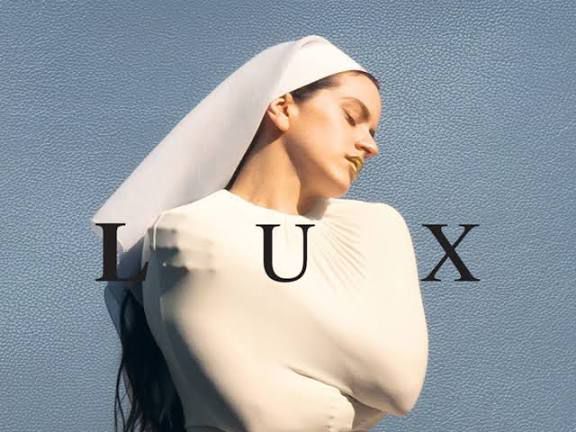
The reception of Lux demonstrates that pop music’s boundaries continue to expand, reaching into domains previously considered incompatible with mainstream culture.
As the world digests this unexpected intersection of faith and fame, one thing is clear: Rosalía’s new album Lux has not only reshaped her musical legacy but has also created a cultural milestone that will be discussed for years to come.


