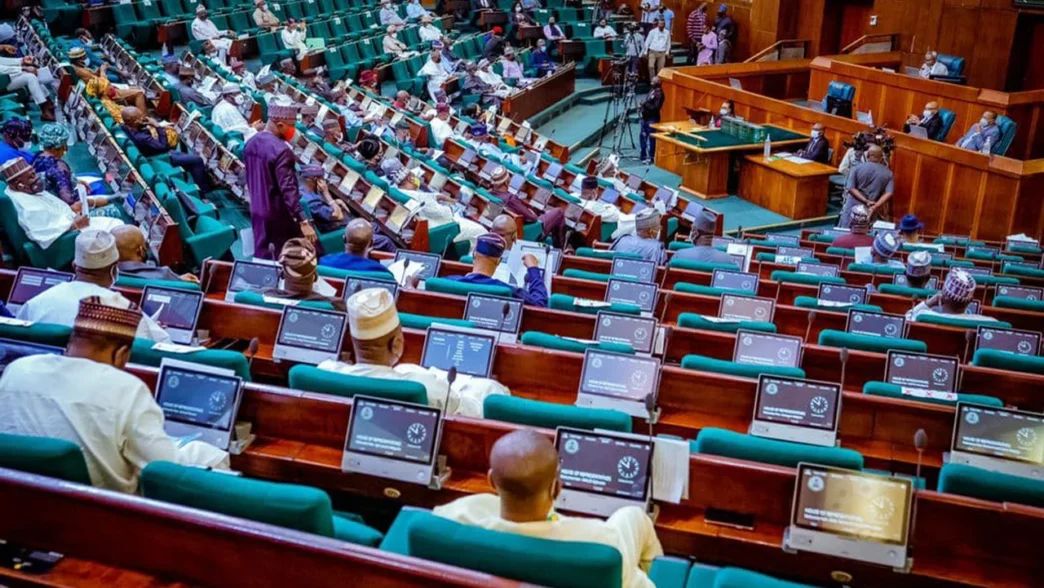

Stronger Fiscal Oversight Measures Target Defaulting MDAs
Nigeria’s House of Representatives is advancing a constitutional reform that seeks to strengthen public finance accountability by imposing strict financial consequences on defaulting MDAs that fail to submit audited financial statements within an approved timeframe.
The proposal marks one of the most assertive legislative efforts in recent years to tackle chronic reporting lapses among government agencies and statutory institutions.
For several budget cycles, federal lawmakers and oversight committees have raised concerns over the persistent failure of numerous Ministries, Departments and Agencies to forward their annual audit reports to the Office of the Auditor-General of the Federation.
These delays, and in some instances outright negligence, have weakened institutional transparency and limited the National Assembly’s capacity to scrutinise expenditure patterns, track public funds, and address financial irregularities.
The latest amendment effort is designed to close loopholes that have historically allowed defaulting MDAs to operate for multiple fiscal years without up-to-date financial disclosure.
Under the proposed constitutional alteration, all statutory corporations, commissions, authorities, and agencies would be required to submit audited financial statements between 90 and 180 days into each new financial year.
Where compliance fails, such defaulting MDAs risk losing access to budgetary allocations in the succeeding fiscal period.
Lawmakers describe the measure as a decisive shift from moral persuasion to enforceable sanctions.
According to members of the Constitution Review Committee, which adopted the proposal ahead of plenary consideration, the reform is aimed at restoring discipline to the country’s public accountability architecture and reinforcing the relevance of the Auditor-General’s oversight mandate.
The proposed amendment introduces new provisions under Section 85 of the Constitution, prescribing both the submission timeline and consequences for non-compliance.
It stipulates that audited statements must provide comprehensive information on the financial dealings of each agency, ensuring greater clarity on transactions, commitments, and revenue utilisation.
Where any agency is classified among defaulting MDAs, the Auditor-General would be required to transmit its name to the National Assembly for immediate exclusion from federal budget approvals for the following year.
Legislators argue that the absence of such deterrent provisions has for years emboldened defaulting MDAs to delay reporting obligations without fear of sanction.
The Public Accounts Committees in both chambers have repeatedly complained that incomplete audit submissions hinder investigations into previous infractions, obstruct expenditure verification, and undermine follow-up on unresolved audit queries.
Beyond strengthening documentation discipline, proponents of the amendment believe the reform will enhance fiscal governance by compelling agency leadership to prioritise compliance as a prerequisite for accessing public funds. With the new framework, defaulting MDAs would no longer be able to seek fresh appropriations while failing to account for prior-year transactions.
Stakeholders familiar with Nigeria’s audit and procurement ecosystem observe that the reform aligns with broader global best practices, where timely audited financial statements are considered essential for credible budget implementation.
They note that consistent reporting provides a clearer trail of expenditure trends, improves confidence in public sector accounting systems, and strengthens deterrence against mismanagement.
If ratified by both chambers of parliament and assented to by the President, the amendment is expected to become one of the most far-reaching accountability provisions in Nigeria’s democratic era.

Analysts say its enforcement will redefine the relationship between the legislature and defaulting MDAs, shifting oversight from reactive inquiries to proactive compliance assurance.
However, some governance observers caution that implementation capacity will be critical to the reform’s success.
They emphasise the need for adequate resourcing of the Office of the Auditor-General and improved coordination between audit institutions and spending agencies to prevent administrative bottlenecks that could inadvertently widen the pool of defaulting MDAs.
Others argue that leadership commitment within MDAs will determine the pace of cultural change, noting that timely audits depend on strong internal financial controls, functional accounting systems, and consistent documentation of transactions throughout the fiscal year.
Without reforms at the agency level, they warn, some entities may struggle to meet the proposed reporting deadlines, risking classification as defaulting MDAs despite good-faith efforts.
Lawmakers nonetheless insist that the amendment offers an opportunity to reset standards across the public sector.
By directly linking audit compliance to budget eligibility, the new rule is expected to transform financial accountability from a procedural obligation into a strategic priority.
Supporters further contend that the measure will strengthen the effectiveness of the Public Accounts Committees by ensuring that audited statements are available when oversight cycles commence.
As the National Assembly prepares to reconvene later in January 2026, the amendment is set to receive formal legislative consideration and voting.
If approved, it will usher in a new era in which defaulting MDAs face tangible financial consequences, while compliant agencies benefit from a more transparent and predictable accountability environment.
With Nigeria pursuing fiscal consolidation and improved expenditure efficiency, the proposed sanction framework signals the legislature’s determination to entrench discipline in public finance management.
Whether through enhanced transparency, stronger institutional credibility, or reduced audit backlogs, the reform is positioned to redefine the standards of financial stewardship expected of federal agencies — and to ensure that defaulting MDAs can no longer operate outside the boundaries of enforceable accountability.
About The Author