The House of Representatives begins probe into $850bn missing crude oil proceeds, toxic frozen foods, and mismanaged green energy projects across Nigeria.
The House of Representatives has begun an extensive investigation into the alleged non-repatriation of crude oil proceeds estimated at over $850 billion, covering nearly three decades of oil export operations.
Lawmakers say the missing funds represent one of the largest economic losses in Nigeria’s history and could have significantly boosted the country’s development if properly remitted.
At the same time, the House is also probing two other major national concerns: the reported use of toxic chemicals in frozen foods imported into the country, and the mismanagement of green and renewable energy projects that have allegedly been handed to institutions lacking technical capacity or legal authority to execute them.
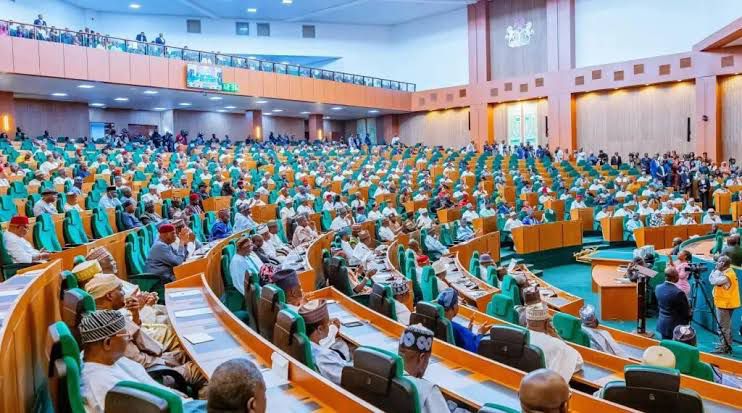
Chairman of the House Ad-hoc Committee on Pre-Shipment Inspection of Exports and Non-Repatriation of Crude Oil Proceeds, Hon. Seyi Sowunmi, announced the commencement of the probe at a press briefing in Abuja.
According to Sowunmi, the investigation will cover transactions between 1996 and 2014, a period when oil companies allegedly failed to repatriate between 40 and 45 percent of Nigeria’s total export earnings.
He explained that this amounted to roughly $850 billion in unreturned funds — money that, if recovered, could transform the nation’s infrastructure, education, and healthcare systems.
“Recent findings suggest massive non-compliance with the Pre-shipment Inspection of Exports Act,” Sowunmi said.
“We have discovered serious gaps between what Nigeria actually exports and what is declared or remitted into the national treasury. Every dollar from our exports must return home.”
The chairman added that before the enactment of the Pre-shipment Inspection of Exports Act (CAP P26, Laws of the Federation, 2004), Nigeria suffered from recurring issues such as under-valuation, delayed invoicing, price manipulation, illegal swaps, and deliberate overloading of shipments. These practices, he said, resulted in long-term revenue losses and capital flight.
He emphasized that the Nigerian Export Supervision Scheme (NESS) was created to safeguard the nation’s foreign exchange earnings, but weak enforcement and systemic corruption have undermined its effectiveness.
Sowunmi expressed concern about conflicting data from key institutions, including the Central Bank of Nigeria (CBN), the National Bureau of Statistics (NBS), the Nigerian Upstream Petroleum Regulatory Commission (NUPRC), and the Nigerian National Petroleum Company Limited (NNPCL).
“These inconsistencies are alarming,” he said. “Our records don’t align with those from international partners, including the Organisation of Petroleum Exporting Countries (OPEC). We must uncover where the shortfall in crude oil proceeds originated.”
Sowunmi reaffirmed the committee’s resolve to identify all entities and individuals involved in the alleged diversion or withholding of export funds. “Nigeria cannot afford to lose such vast sums to negligence or collusion. The time for accountability has come,” he concluded.
During the plenary session, lawmakers also passed a motion to investigate reports of harmful chemicals used in preserving frozen foods imported into Nigeria.
The motion followed alarming public reports suggesting that some imported meat and fish products were treated with substances unfit for human consumption.
Members of the House expressed deep concern over the potential health hazards these chemicals pose, including risks of organ damage and long-term illnesses. They noted that several importers allegedly use dangerous preservatives to prolong the shelf life of frozen products, in clear violation of food safety laws.
The House mandated its committees on Health, Agriculture, and Trade to work closely with agencies such as the National Agency for Food and Drug Administration and Control (NAFDAC) and the Standards Organisation of Nigeria (SON) to verify the allegations and recommend penalties for defaulters.
Lawmakers insisted that protecting citizens’ health must remain a national priority and urged stricter border checks to prevent the importation of unsafe food products.
In a separate motion sponsored by Hon. Okey-Joe Onuakalusi, the House also resolved to investigate the domiciliation of green and renewable energy projects with institutions lacking both technical expertise and legal authorization.
Onuakalusi, while presenting his motion titled “The Dire Need to Investigate the Domiciliation of Green Energy Projects with Inappropriate Entities to Avert Substandard Implementation and Loss of Values,” expressed concern that many of these projects, including solar mini-grids and wind farms, were poorly managed due to unqualified handlers.
He warned that if left unchecked, such mismanagement could stall Nigeria’s transition to clean energy and waste billions in public funds.
The House therefore mandated the Committee on Renewable Energy to review all existing green energy contracts, determine their compliance with procurement standards, and identify entities operating without due authorization.
Furthermore, the House urged the Federal Government, through the Office of the Secretary to the Government of the Federation (SGF) and the Bureau of Public Procurement (BPP), to ensure that future renewable energy projects are awarded only to competent, legally recognized, and technically capable institutions.
Lawmakers also called on the Ministry of Power and the Energy Commission of Nigeria to establish a framework for better coordination among agencies and ensure that renewable energy projects deliver value to citizens.
In addition to the ongoing economic and environmental probes, the House has set up another ad hoc committee to investigate the persistent insecurity in the Federal Capital Territory (FCT) despite the government’s investment of $460 million from a Chinese loan obtained in 2010 to improve surveillance and public safety.
Lawmakers questioned how such a significant loan was spent when cases of kidnapping, banditry, and armed robbery remain rampant in the capital city. The committee will review expenditure records and security outcomes to determine whether the funds were properly utilized or diverted.
The series of investigations launched by the House of Representatives signals a new era of transparency and accountability in Nigeria’s governance. Analysts say that the successful recovery of the missing crude oil proceeds could dramatically improve the country’s financial position, strengthen the naira, and reduce dependency on foreign borrowing.
By also addressing issues in food safety and renewable energy management, lawmakers are taking steps toward ensuring both economic stability and citizen well-being. The public now looks to the House committees to carry out their mandates thoroughly and deliver outcomes that will restore confidence in Nigeria’s institutions.
More news at ireport247news
About The Author