Former presidential aide and non-career ambassador RenoOmokri has sparked controversy by accusing Peter Obi, the Labour Party’s 2023 presidential candidate, of exhibiting ethnic bias in his recognition of sports achievements.
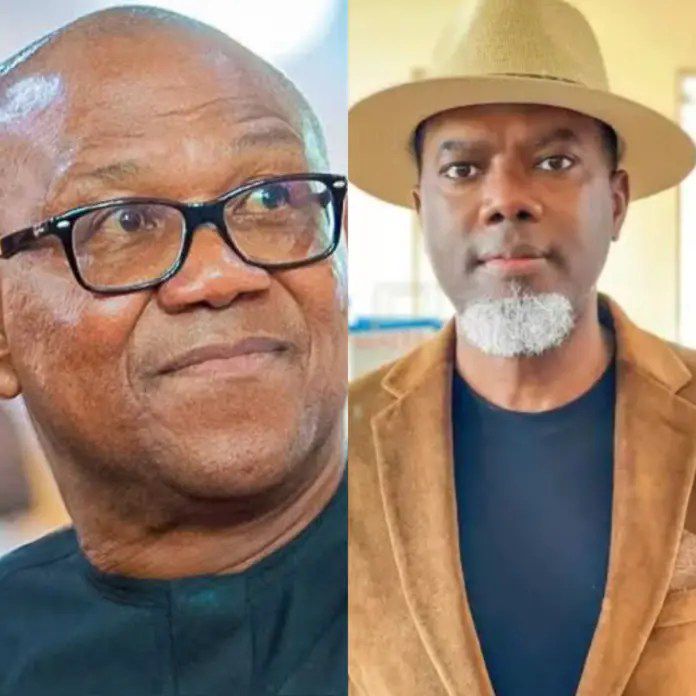
Omokri’s critique centers on Obi’s recent social media post that highlighted Nigerian-origin athletes participating in the 2026 Super Bowl.
In his post on X (formerly Twitter), Omokri questioned why Obi singled out only two players—Michael Onwenu and Uchenna Nwosu—both of whom share Obi’s ethnic background.
According to Omokri, this selective acknowledgment raises concerns about fairness and inclusivity in publicly celebrating Nigerian talent.
“Nigeria has produced numerous athletes achieving international success, yet Peter Obi appears to commend only those who share his ethnicity,” Omokri wrote.
The commentator pointed out that Nigerian athletes have excelled in multiple international competitions since 2023.
These include triumphs at the Women’s Africa Cup of Nations (WAFCON), the Women’s Afrobasket Championship, and the ITTF Africa Senior Championships, among others.
Despite these remarkable accomplishments, Omokri stressed that Obi has not publicly recognized or individually praised any of the athletes behind these victories.
Beyond competitions in Nigeria, many Nigerian-origin athletes competing for other countries have also qualified for prestigious global events such as the World Cup, the Olympic Area Athletics Association (OAAF) competitions, and the World Athletics Championships.
Yet, Omokri argued, Peter Obi has not acknowledged their contributions or achievements.
“Recognition should be inclusive and not determined by ethnicity. Peter Obi’s approach risks sending the wrong message to young Nigerian athletes,” he added.
Omokri further highlighted the context of the Super Bowl, where six Nigerian-origin players were expected to participate this year, including Boye Mafe and Olusegun Oluwatimi.
According to Omokri, Obi mentioned only Onwenu and Nwosu, deliberately or otherwise overlooking the others who do not share his ethnic background.
The selective praise, he claims, signals a pattern of partiality in recognizing Nigerian excellence in sports.
The former presidential aide also drew attention to basketball, noting that players of Nigerian descent featured prominently in the 2023 and 2024 NBA Finals without receiving any public acknowledgment from Obi.
“If recognition is only extended to those within a specific ethnic group, it undermines the broader achievements of Nigerians everywhere,” Omokri said.
This incident has prompted broader discussions on social media about the role of public figures in celebrating national talent.
Critics argue that leaders and prominent politicians have a responsibility to be impartial when highlighting accomplishments, particularly when it comes to representing a diverse nation like Nigeria.
For many observers, Peter Obi’s selective praise could unintentionally perpetuate ethnic favoritism in public discourse.
Supporters of Obi, however, maintain that highlighting Onwenu and Nwosu may simply reflect the former governor’s personal connection or admiration, rather than deliberate ethnic favoritism.
They suggest that Obi has consistently expressed pride in Nigerian achievements across multiple sectors, including politics, business, and education, although perhaps not always through social media.
Nevertheless, Omokri’s critique underscores the importance of equitable recognition of Nigerian athletes.
In an era where international sports achievements inspire youth across the nation, public acknowledgment by leaders such as Peter Obi carries symbolic significance.
By commending athletes across ethnicities and borders, politicians can reinforce national unity and encourage the next generation of talent to aspire for global success.
As the debate continues, observers expect that Peter Obi and his team may address these concerns, either through broader social media recognition or public statements celebrating Nigerian athletes of all backgrounds.
Meanwhile, Omokri’s post remains widely shared, sparking conversations about ethnic bias, representation, and the responsibilities of prominent Nigerian figures in promoting inclusivity.
In conclusion, while Peter Obi’s admiration for Nigerian athletes is evident, critics like Reno Omokri believe that the approach must extend beyond ethnic lines.
Inclusive recognition not only celebrates the nation’s talent but also strengthens the sense of pride among all Nigerians.
The ongoing discussion highlights the delicate balance leaders must strike when publicly acknowledging achievements in a diverse and multicultural country.
Ireport247news