

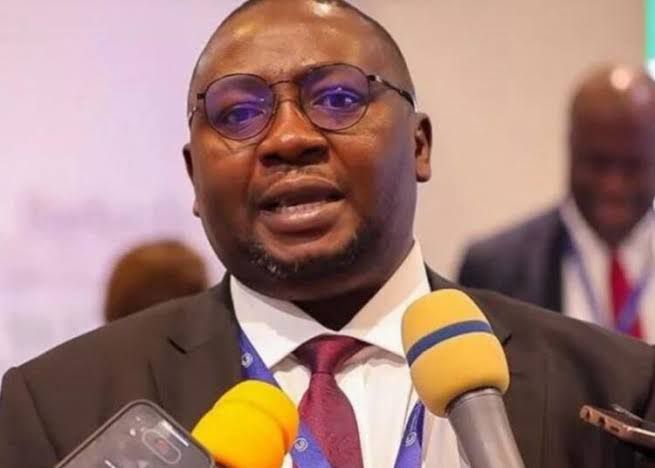
Nigeria’s Minister of Power, Adebayo Adelabu, has issued a stark warning that the country’s electricity sector faces imminent collapse unless the federal government urgently injects liquidity to offset the mounting debt owed to power generation companies (Gencos). The minister revealed that the sector is currently burdened by a legacy debt of over ₦4 trillion, which threatens to undo the recent progress made under President Bola Tinubu’s administration.
Speaking at a high-level meeting at the Presidential Villa in Abuja between President Tinubu and members of the Association of Power Generation Companies (APGC), Adelabu painted a sobering picture of the sector’s financial instability. He emphasized that immediate government action is necessary to avert systemic shutdowns in power generation, which would cripple economic activity nationwide.
“The sector’s progress risks being derailed by a ₦4 trillion debt overhang—accumulated since 2015. Without urgent liquidity support, generation shutdowns are inevitable,” Adelabu stated in a press release issued by his spokesperson, Bolaji Tunji.
While President Tinubu acknowledged the seriousness of the crisis, he requested time to verify the debt claims. In the interim, Adelabu appealed for partial debt defrayment to keep generation companies afloat during the audit process.
Despite the President’s cautious approach, Adelabu credited his administration with laying the groundwork for a sustainable, investor-friendly electricity market. Since May 2023, several transformative reforms have been implemented, including:
The Electricity Act 2023 – Nigeria’s first comprehensive electricity law, decentralizing control and promoting competition.
The National Electricity Policy (2024) – A unified framework for planning and execution, the first in 24 years.
Over $2 billion in capital investments for grid expansion and off-grid solutions.
A 70% increase in sector revenue, reducing subsidy costs by ₦700 billion.

Under the Tinubu administration, Nigeria’s installed generation capacity rose to 14,000MW, with an all-time peak of 5,801MW in 2025 and zero national grid collapses this year—a first in over a decade. Additionally, over 300,000 smart meters have been installed, with 3.45 million more in procurement under the ₦700 billion Presidential Metering Initiative.
However, despite these gains, liquidity remains a core challenge. Adelabu stressed that electricity supply is directly dependent on cash flow, describing liquidity as the “oxygen of the sector.” He cited the Afam axis in Rivers State as a flashpoint, where gas shortages due to unpaid suppliers have already hampered power generation.
To address short-term disruptions, the minister proposed unlocking 800 million cubic feet of gas from Nigeria LNG to stabilize supply while awaiting full sector restructuring.
Industry leaders including Tony Elumelu and Kola Adesina echoed the minister’s concerns, calling for a sustainable solution to gas supply shortfalls and financial uncertainties.
Adelabu also endorsed President Tinubu’s appeal for patience from financial institutions and Gencos during the verification process but insisted that only legitimate claims would be securitized under the planned ₦4 trillion bond programme, which has already received anticipatory approval from the presidency.
“The Tinubu administration will not inherit unverifiable debts, but it remains committed to resolving valid obligations transparently,” Adelabu affirmed.
The minister reiterated that a stable and efficient electricity sector is fundamental to Nigeria’s broader economic transformation. With industrialization, job creation, and digital expansion hinging on reliable power, failure to address the liquidity crisis could reverse hard-earned gains.
“Electricity is the foundation of Nigeria’s economic ambitions. We must persevere together to sustain the sector’s revival,” Adelabu concluded.
The high-stakes meeting was attended by top government officials including Chief of Staff Femi Gbajabiamila, Coordinating Minister of Economy Wale Edun, Minister of Information Mohammed Idris, and Presidential Energy Adviser Olu Verheijen, along with APGC Chairman Col. Sani Bello (rtd.) and other industry stakeholders.
About The Author
