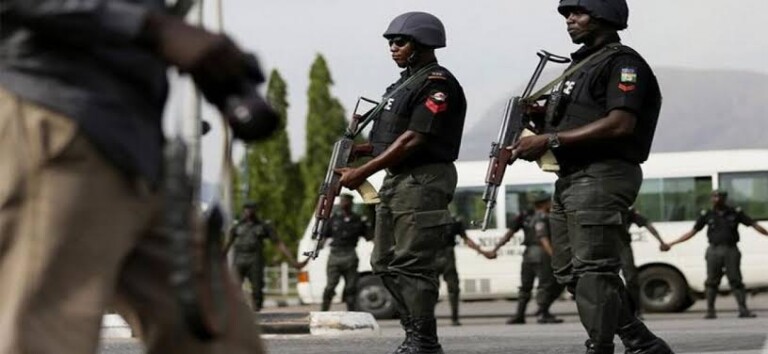
Berom Youths condemn Plateau State killings, accusing Fulani herdsmen of coordinated attacks in Kwi and Pushit communities, calling for justice and stronger security.
The Berom Youths Moulder Association (BYM) has demanded justice following the recent Plateau State killings, where nine innocent residents were brutally murdered in two separate attacks in Riyom and Mangu Local Government Areas.
The youth association accused suspected Fulani herdsmen of orchestrating coordinated assaults that have once again thrown Plateau communities into mourning.
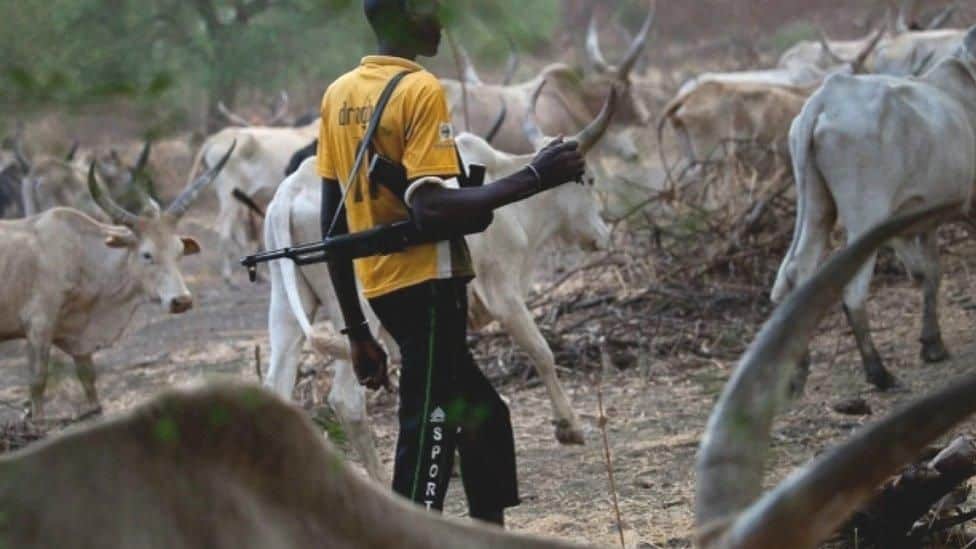
According to reports, the first deadly incident occurred on Friday night, October 31, 2025, in Kwi community, located in Riyom LGA. At about 9:50 p.m., heavily armed men invaded the village, shooting sporadically and burning homes.
By the end of the assault, six people—identified as Ishaya Raymond, Gyang Raymond, Dauda Yakubu, Sunday Adamu, Calvin Elisha, and Isaac Gyang—were confirmed dead. Several others sustained injuries and were rushed to nearby hospitals for treatment.
Earlier that same day, another attack was reported in Pushit community of Mangu LGA, where three villagers were killed by unidentified gunmen.
Residents described the attackers as men on motorbikes, armed with assault rifles, who stormed the community at dusk and opened fire on anyone in sight.
In a statement issued on Saturday night, BYM President Barrister Dalyop Mwantiri condemned the Plateau State killings as “barbaric, cruel, and a continuation of targeted aggression against indigenous people.”
He noted that before the Kwi incident, suspected Fulani herdsmen from the Fass area had earlier killed Mr. Kurang Daniel, a farmer who was harvesting his maize at around 4:00 p.m.
“The information at our disposal reveals that these attackers fabricated false accusations, claiming that natives of Kwi assaulted their cattle,” Mwantiri stated.
“This has been their recurring strategy—spreading misinformation to justify organized attacks on our peaceful communities.”
He accused the herders of weaponizing propaganda to manipulate public perception and mislead security operatives.
“Whenever Fulani herdsmen plan assaults, they create false narratives that portray our people as aggressors. It is a well-known diversion tactic designed to justify their continuous pogroms against innocent villagers,” he added.
Mwantiri called on Sector 4 of Operation Enduring Peace, the military task force responsible for security in the area, to take decisive action by arresting those responsible for spreading falsehoods and carrying out the killings. He urged the task force to use its intelligence and operational strength to end the repeated bloodshed.
“The Plateau State killings are not isolated cases—they form part of a systematic campaign of terror aimed at displacing natives from their ancestral lands,” Mwantiri emphasized.
“We demand that Operation Enduring Peace investigate, prosecute, and bring to justice every individual involved in this violence.”
The Berom Youths Moulder Association lamented that despite repeated attacks, the perpetrators continue to act with impunity. Mwantiri criticized the failure of the authorities to hold anyone accountable, describing the lack of justice as a major factor fueling further unrest.
“When there are no consequences for mass murder, criminals become emboldened,” he warned.
The Mwaghavul Development Association (MDA), representing communities in Mangu, also joined in condemning the killings. In its statement, the MDA expressed deep concern over the rise in violence and the government’s inability to protect lives.
“Our people live in fear every night. Villages that once thrived on farming and trade are now deserted,” the statement read.
Both BYM and MDA appealed to the federal and Plateau State governments to intensify security operations and ensure that displaced families receive humanitarian support.
They urged the authorities to establish early warning systems and community policing structures to prevent future attacks in rural areas.
Security experts have described the Plateau State killings as part of a wider regional crisis involving herder-farmer conflicts, terrorism, and banditry across Nigeria’s Middle Belt.
Analysts argue that the inability of the government to resolve underlying issues such as land ownership, grazing routes, and ethnic mistrust has worsened the violence.
Human rights organizations have also condemned the attacks, calling for an impartial investigation and justice for the victims. Civil society groups insist that the government must demonstrate political will to confront perpetrators, no matter their background or affiliations.
Eyewitnesses from Kwi narrated harrowing experiences. “We were in our homes when we heard gunshots from different directions,” said one survivor.
“People started running for their lives. The attackers shot at anyone they saw, including children.” Others described how families were forced to hide in nearby bushes until the following morning when security operatives finally arrived.
Despite repeated assurances from security agencies, residents say the response time remains slow, allowing attackers to escape unchallenged.
“We have reported these threats several times, yet nothing changes,” lamented a village elder. “Our people are tired of empty promises.”
Mwantiri reiterated that the Berom Youths remain committed to peace but would continue to demand justice through legal and civic means. He emphasized that the only way to ensure lasting stability is through accountability and truth. “No community can live in peace when killers are shielded from justice,” he said.
The Plateau State killings have once again renewed calls for comprehensive security reforms, stronger local governance, and sustained dialogue among communities.
Leaders from both Riyom and Mangu LGAs are urging the government to deploy more security personnel and create sustainable peace-building initiatives to rebuild trust among residents.
Community stakeholders also called on humanitarian organizations to assist victims who have been rendered homeless. Many families have lost their homes, farmlands, and loved ones, while others remain displaced with no access to food or shelter.
Meanwhile, religious leaders across Plateau State have organized prayer sessions for peace and unity, urging citizens not to resort to revenge but to rely on lawful means to seek redress. They also appealed for calm and patience as investigations continue.
The Berom Youths Moulder Association has vowed not to relent until justice is served for the victims of the Plateau State killings. The group reaffirmed its faith in lawful advocacy and called on both state and federal authorities to protect citizens and uphold the sanctity of human life.
More news at ireport247news
About the Author