The Plateau Peace Engagement intensifies as President Tinubu’s delegation meets clerics, community leaders and resolves disputes to strengthen unity and long-term reconciliation.
President Bola Tinubu has renewed his commitment to restoring unity in Plateau State through an expanded Plateau Peace Engagement, a strategic effort aimed at healing divisions and rebuilding trust among diverse ethnic and religious communities.
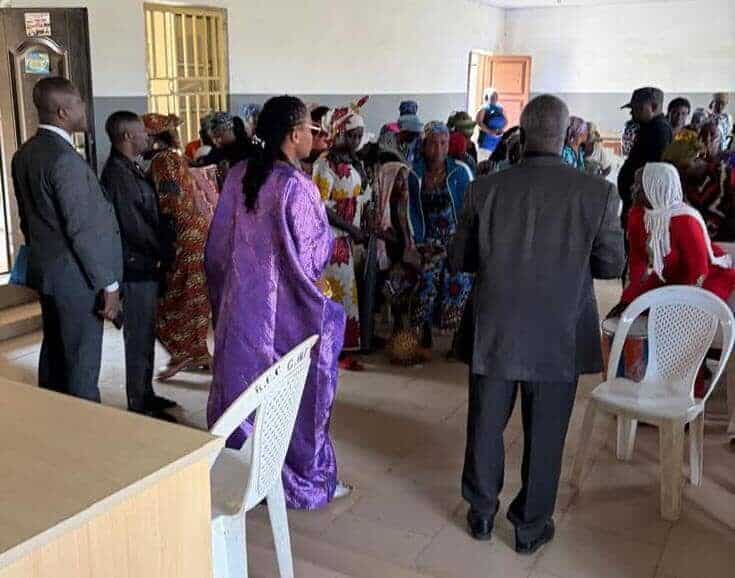
As part of this initiative, the President deployed a high-level delegation led by his Senior Special Assistant on Community Engagement for the North Central Zone, Dr. Abiodun Essiet, who undertook a two-day mission across the state.
The visit focused on fostering dialogue, promoting cooperation, and reinforcing structures designed to prevent conflict before it escalates.
Dr. Essiet’s visit began with meetings involving Christian clerics and Fulani Miyetti Allah community leaders, culminating in a well-attended town hall meeting in Jos.
Delegates from multiple local government areas, traditional institutions, women’s groups and youth councils gathered to discuss new ways to strengthen peace mechanisms from the grassroots upward.
Presidential spokesman Bayo Onanuga noted that these conversations were designed to create a more resilient atmosphere where community voices shape sustainable peace solutions.
One significant stop on Essiet’s itinerary was a courtesy visit to Reverend Ezekiel Dachomo, Chairman of the Regional Church Council (RCC) in Barkin Ladi.
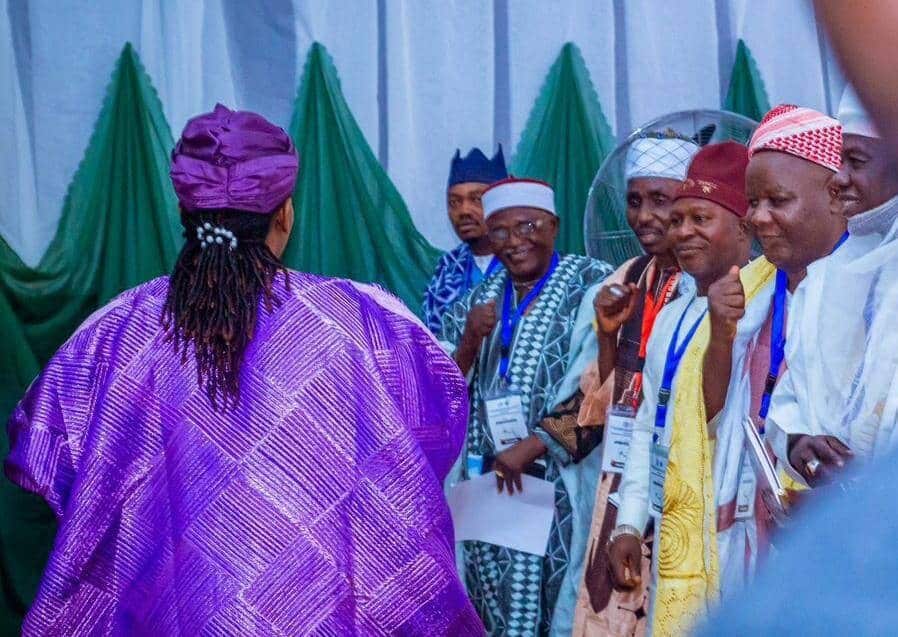
Erked as one of the most influential Christian leaders in the region, Dachomo underscored the need for faith-based leadership to promote unity and reconciliation among the people.
Their discussion explored how religious institutions can be catalysts for trust-building, forgiveness and social development in communities still grappling with the scars of conflict.
Essiet and Dachomo also engaged widows affected by past violence, delivering President Tinubu’s message that the administration is determined to restore hope and dignity to victims.
The delegation extended their outreach to Fulani leaders in Barkin Ladi, an essential step considering the long-standing tensions between pastoral and farming groups.
Essiet reiterated the Federal Government’s assurance that the Plateau Peace Engagement is fully inclusive and designed to uplift every community without bias.
She emphasized that sustainable peace requires equal representation, genuine dialogue and the active involvement of pastoral groups, farmers, youth and traditional authorities.
To further strengthen peace-oriented systems, Essiet convened a workshop in Jos involving representatives from all 17 local government areas.
The workshop focused on developing a functional community peace framework capable of early conflict detection, mediation and response.
Discussions addressed current gaps in communication, the impact of misinformation on community relations, and the need for committees that reflect the diversity of stakeholders.
Participants agreed that lasting harmony requires structured dialogue channels and regular engagement, not just reactive interventions in times of crisis.
A closed-door meeting was also held with leaders of the Irigwe community, the Miyetti Allah group, and representatives of the Youth Council of Bassa Local Government Area.
The session evaluated the progress of the 17-member peace committee created to facilitate ongoing communication and reconciliation between the Irigwe and Fulani communities.
They discussed how to strengthen dispute resolution strategies, improve joint monitoring mechanisms and support youth in playing positive roles in peacekeeping.
Essiet reminded them that intercommunal harmony remains attainable if both sides remain committed to dialogue and accountability.
Throughout her engagements, Essiet emphasized President Tinubu’s unwavering dedication to fostering stability and inclusive governance in Plateau State.
She reiterated that the Plateau Peace Engagement is not a one-time intervention but a long-term commitment to ensuring unity, safety and cooperation among all ethnic and religious communities in the region.
The initiative, she noted, aligns with the administration’s nationwide strategy for strengthening local peace structures and preventing violence.
One of the major accomplishments recorded during the visit was the swift resolution of a conflict involving David Toma, the owner of Agha Farm in Gyel District, Jos South.
On November 15, Toma’s farm suffered significant damage, allegedly caused by roaming cattle.
In retaliation, he seized two cows belonging to herdsmen. With tensions beginning to rise, Essiet intervened promptly to prevent the incident from escalating into a wider crisis.
After negotiations, Alhaji Isah Yau, Chairman of the Miyetti Allah Cattle Breeders’ Association of Nigeria (MACBAN) in Bassa LGA, agreed to pay N500,000 in compensation for the damaged crops.
Toma returned the seized cows, and both parties signed an undertaking committing to peaceful coexistence.
Local leaders commended the process as an example of how early engagement prevents disputes from turning violent.
As the delegation concluded its visit, Essiet expressed confidence that Plateau State is entering a new chapter built on trust and genuine collaboration.
She highlighted the importance of community-based peace structures and emphasized that the Plateau Peace Engagement will continue to expand as more stakeholders embrace dialogue over confrontation.
She also encouraged local communities to maintain clear communication channels, strengthen traditional conflict-resolution practices and support youth-driven peace initiatives.
In her closing remarks, Essiet reminded all stakeholders that peace is not solely a government-driven objective but a shared responsibility that requires continuous effort.
She urged community members to contribute actively to reconciliation, saying that the mission of rebuilding Plateau State must be purposefully nurtured at the grassroots level.
With renewed commitment from religious leaders, traditional rulers, community groups and the Federal Government, the Plateau Peace Engagement is gradually shaping a more united and resilient Plateau State—one where conflict gives way to cooperation and long-term harmony.
About The Author