
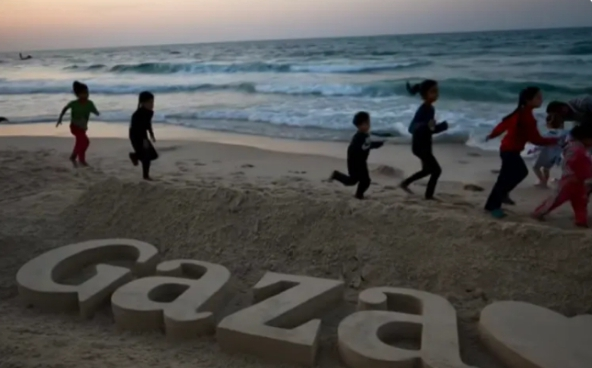
The phrase Palestinian sculptors create art on Gaza beach sand has gained new meaning as artists reclaim devastated shorelines, shaping fragile sculptures that momentarily soften the surrounding darkness of war.
Their work unfolds across the ruins of Gaza’s coast, where shattered structures and scorched debris stand beside waves that continue arriving without pause, indifferent yet strangely comforting.
Artists say the beach has become one of few places where memories of peace still linger, creating a setting where Gaza war resilience grows through shared creativity and presence.
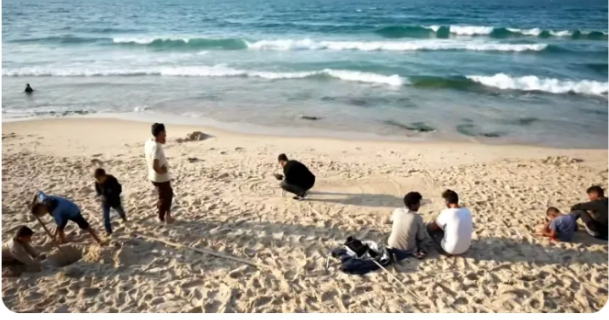
Each morning, sculptors walk across damp sand, carrying makeshift tools scavenged from broken homes, abandoned markets, and destroyed workshops left behind by months of relentless bombardment.
For these artists, the shoreline functions as a vast canvas, offering room for coastal artistic expression that calls communities together despite the overwhelming strain of displacement and danger.
“They come just to watch, to breathe for a moment,” said one sculptor. “People gather because they feel something gentle again, something human in all this destruction.”
Visitors include children deeply affected by trauma, parents exhausted from repeated evacuations, and elderly residents who have witnessed cycles of violence yet still seek fleeting moments of comfort.
According to the artists, the act of shaping the sand itself becomes therapeutic, allowing them to channel fear, grief, and exhaustion into temporary artworks washed away each evening.
The main focus phrase, Palestinian sculptors create art on Gaza beach sand, has therefore become part of a broader sand sculpture tradition that survived despite major cultural losses.
“We used to have studios, tools, and exhibitions,” said another sculptor. “Now the beach is everything. It’s where our hands remember they can still create beauty.”
Some sculptures depict faces symbolizing stories of survival, carved with precision using only broken pieces of tile, battered plastic handles, or thin sticks collected beneath shifting layers of debris.
Other works feature abstract patterns, names of lost relatives, or messages urging peace, all shaped gently into the sand before waves erase them in their nightly sweep.
“People know the sea will take the sculptures away,” an artist explained. “But they still watch because the moment of creation matters more than how long it lasts.”
Families sheltering in makeshift tents near the coastline often gather to witness these creations, finding brief distraction from winter cold seeping through flimsy plastic coverings.
A displaced father described these moments as healing, saying, “When my children see young people shaping images of Gaza, it reminds them that life can still hold meaning.”
He said such encounters strengthen their emotional ties to their land, echoing a sentiment shared by many who refuse to abandon cultural identity amid overwhelming hardship.
Though these artists face shortages of food, electricity, and essential supplies, they insist that the creative rituals they practice help preserve dignity and emotional endurance.
Some visitors bring small items to support the sculptors, offering shells, fragments of ceramics, or simple tools that might help extend the detail and depth of each artwork.
The interaction between observers and artists has created a modest community, reinforcing the sense that resilience grows not only from survival but also from shared imagination.
“For a little while, children hear laughter instead of drones,” said one observer. “Even five minutes of joy is priceless here.”
The war has erased many of Gaza’s gathering spaces, yet the beach remains an open refuge where sculptors can work freely, watched by an ever-shifting audience.
Every afternoon, curious crowds form semicircles around evolving sand forms, whispering questions, pointing excitedly as details emerge, and sometimes offering ideas for new sculptures.
This exchange encourages artists to continue returning, even when storms threaten or military activity nearby heightens fear throughout the community.
Despite the vulnerability of their creations, sculptors celebrate the fleeting nature of their art, believing impermanence itself expresses truths about life during wartime.
One artist reflected softly, saying, “When the tide takes our work, it shows how everything can disappear. Yet we come back and create again. That is hope.”
The sea’s rhythm becomes a metaphor, reminding locals that destruction is not the final chapter, as each new day provides an opportunity to rebuild something meaningful.
As daylight fades, artists often step away from their sculptures together, sharing tea brewed on small fires beside tents and discussing ideas for future designs.
The practice has evolved into a collective ritual, rooted in Gaza war resilience and strengthened by determination to protect cultural identity despite severe material limitations.
Many artists previously participated in regional exhibitions or taught in community centers, all of which now lie in ruins, pushing them toward the open-air studio of the beach.
“What we lost in buildings, we found in each other,” a sculptor said. “We don’t need walls to express what we carry inside.”
Children frequently join the process, mimicking the movements of sculptors and shaping their own small patterns beside larger artworks, proud to contribute to the moment.
Parents observe with quiet gratitude as creativity replaces anxiety, if only briefly, offering their children a sense of normalcy amid the instability of displacement.
International volunteers unable to enter the region send supportive messages online, encouraging the artists to continue documenting their efforts through short videos and phone recordings.
Some sculptors describe these external connections as uplifting, emphasizing that global acknowledgment reminds them they are neither forgotten nor isolated in their struggle.
As night approaches, waves inevitably erase the intricate designs, returning the beach to its untouched form and preparing a blank slate for the next day’s artwork.
“The sea doesn’t destroy our art,” a sculptor insisted. “It participates in it. Every night the tide becomes part of the story.”
This perspective embodies a philosophy shared among the community: that resilience is stronger when people learn to create without attachment to permanence.
By dawn, artists gather again, warmed by shared purpose, ready to transform the coastline into a sanctuary where stories of survival are carved anew each day.
Their work carries emotional weight, but it also carries a message—creativity persists even under immense pressure, proving that human expression cannot be entirely silenced by conflict.
The phrase Palestinian sculptors create art on Gaza beach sand thus represents more than an activity; it symbolizes an act of defiance expressed through delicate, momentary beauty.
These sand sculptures remind those who witness them that art remains a powerful shield against despair, even when shaped by hands trembling from exhaustion and loss.
While the beach may offer only temporary refuge, its significance grows with each creation, serving as a testament to Gaza’s enduring spirit and unwavering cultural heartbeat.
And as long as waves retreat every morning, space will remain for artists to reclaim the sand, shaping hope in a place where hope is constantly threatened.
Their commitment ensures that creativity survives, carrying messages of resilience, identity, and unity to anyone who stands on the shore, watching the artworks rise from the earth.

The daily practice affirms that despite trauma, uncertainty, and grief, the human need for expression continues to illuminate even the darkest landscapes.
In this coastal space, Palestinian sculptors create art on Gaza beach sand not only as artists but as guardians of memory, carving peace into every fragile line they shape.
About The Author