Mounting Tensions Across the Country
Ecuador is gripped by escalating unrest as President Daniel Noboa’s government faces fierce backlash over diesel subsidy cuts, dramatically increasing costs for farmers, transporters, and ordinary citizens nationwide.
The unrest has paralysed highways, disrupted markets, and created shortages in several provinces. What began as scattered demonstrations has morphed into one of Noboa’s sternest challenges to date.
Indigenous-Led Demonstrations
The Confederation of Indigenous Nationalities of Ecuador (CONAIE) has spearheaded the movement, calling nationwide strikes and blockades. Indigenous leaders accuse Noboa of authoritarian tendencies and outright disregard for the nation’s poorest.
“Diesel is the lifeblood of our communities,” one farmer in Imbabura stated. “Without affordable fuel, our work collapses. The president has abandoned rural Ecuador.”
Escalating Confrontations
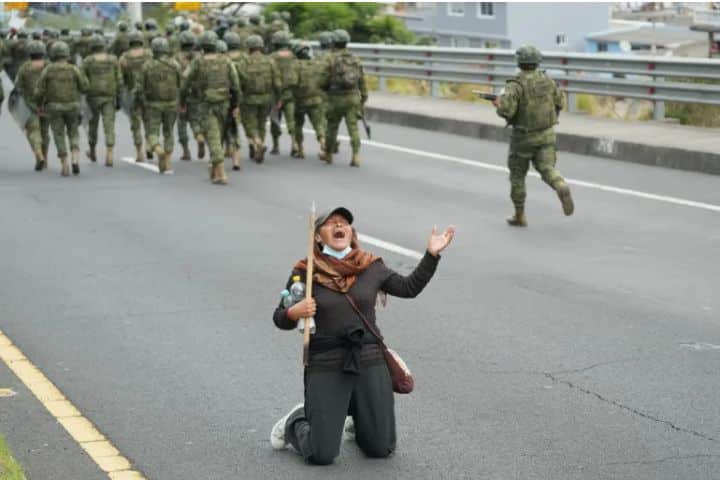
Clashes have intensified across provinces, with police and military deploying tear gas, batons, and armoured vehicles. The government has stationed more than 5,000 troops in Quito to “prevent vandalism.”
Protest leaders reject accusations of violence. “We protest peacefully. It is the government that responds with bullets and intimidation,” declared CONAIE leader Leonidas Iza during a fiery speech in Quito.
A Divided Nation
Analysts warn of a hardening divide between Noboa’s administration and Indigenous groups. “Neither side is willing to compromise,” said law professor Farith Simon. “This impasse risks turning deadly.”
Both government supporters and Indigenous communities appear locked into opposing visions of Ecuador’s future: austerity-driven reform versus grassroots demands for economic justice and shared governance.
The Spark: Diesel Costs
On September 12, Noboa ended the diesel subsidy, raising the cost from $1.80 to $2.80 per gallon. The abrupt move instantly enraged farmers, truckers, and rural residents.
CONAIE argued that the cut unfairly targeted Ecuador’s poor. “This policy pushes millions further into poverty,” the organisation stated, accusing the president of prioritising elite interests over common citizens.
Government’s Response
Noboa has dismissed calls for negotiation. Instead, he vowed to enforce order with heavy security measures. “Those who act like criminals will be treated as criminals,” he warned.
To ease backlash, the government offered handouts and aid packages. Protesters, however, rejected the concessions. “We want rights, not gifts,” Iza retorted, demanding full reinstatement of the subsidy.
Violence and Casualties
At least one protester has been killed in clashes. Video evidence showed soldiers beating a civilian who attempted to aid the wounded, intensifying accusations of state violence.
The Attorney General’s Office announced an investigation. Rights groups, however, remain sceptical. “Militarisation against Indigenous protests risks grave human rights abuses,” a local advocate warned in a press briefing.
Political Stakes for Noboa
Noboa, a conservative 37-year-old heir to a banana empire, won April’s election with 52 percent of the vote. Now, his fragile mandate faces a severe stress test.
His broader agenda of tax hikes, austerity, and public sector layoffs is fuelling anger across multiple sectors. Critics warn the protests could erode his already limited legitimacy.
Historical Echoes
Ecuador’s Indigenous movement has toppled governments before. In 2019 and 2022, mass uprisings nearly unseated presidents Lenin Moreno and Guillermo Lasso. Analysts fear Noboa risks facing the same fate.
“History is clear—when CONAIE mobilises at this scale, no president can govern comfortably,” warned political analyst Daniel Crespo. “The danger of regime destabilisation is real and growing.”
Local Voices of Anger
In Cotopaxi, farmers blocked highways with burning tyres. “At these fuel prices, we can’t feed our families,” one farmer explained. “This isn’t protest—it’s survival.”
In Calderón, women vendors echoed the anger. “Food prices soar every week. Diesel controls everything. The president governs for the rich and ignores mothers who can’t buy bread.”
Alleged Assassination Attempt
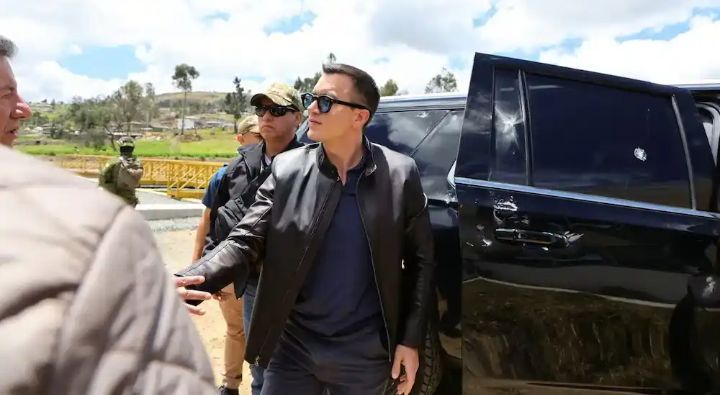
Tensions escalated after Noboa’s convoy was attacked with stones. Authorities labelled it an “assassination attempt.” Protest leaders dismissed the claim as government propaganda designed to criminalise dissent.
“This is political theatre,” Iza responded. “Our struggle is peaceful. The president uses fear to justify repression and silence the Indigenous voice.”
International Criticism
Global attention is turning toward Ecuador. Amnesty International condemned the military crackdown, urging restraint. “Dialogue is the only democratic path forward,” the group said, warning of worsening human rights violations.
Regional organisations also voiced alarm. “Deploying soldiers against Indigenous citizens undermines democracy and erodes trust,” said one NGO observer monitoring the protests from Quito.
Noboa’s Broader Agenda
Beyond subsidies, Noboa’s administration has raised VAT from 12 to 15 percent, dismissed thousands of public employees, and consolidated power in the executive. He argues reforms are essential to fight crime.
Opposition lawmakers, however, denounce what they call authoritarian centralisation. “This government governs by decree, bypassing consensus and punishing the poor,” said one legislator during a heated session of congress.
Unions and Civil Society
Major unions have not fully mobilised, but civil society groups are pressing for mediation. Their concern is that prolonged confrontation will spiral into bloodshed if no dialogue emerges.
“The government and protesters alike are entrenched,” warned Crespo. “Only neutral mediators can prevent Ecuador from descending into a wider national crisis.”
Catholic Church as Mediator?
The Catholic Church has historically played a stabilising role during crises. Analysts now see it as one of the only actors capable of brokering dialogue between Noboa and CONAIE.
“If mediation is not initiated soon, confrontation will deepen,” said Simon. “Ecuador desperately needs dialogue before its fragile democracy fractures beyond repair.”
Rural vs. Urban Divide
Thus far, unrest has centred on rural provinces. Experts warn the conflict could explode if protests intensify in Quito. Urban unrest could paralyse governance and spark broader social conflict.
“Once protests grip the capital, history shows governments cannot withstand the pressure,” one journalist in Quito observed. “Noboa’s presidency may not survive prolonged urban chaos.”
Government’s Image Problem
Noboa’s hard-line messaging continues to draw criticism. “We protest peacefully, but soldiers attack us,” a CONAIE leader declared. “This is not democracy—it is repression wearing a suit.”
Rights groups argue Noboa’s narrative of “criminal protesters” alienates citizens. “Labeling dissent as crime is authoritarian language,” Amnesty International said, urging Noboa to shift rhetoric toward inclusion and dialogue.
Regional Parallels
The crisis mirrors broader Latin American patterns. In Chile, Peru, and Argentina, fuel subsidy cuts sparked massive protests and, in some cases, deadly violence. Ecuador now risks repeating those cycles.
Subsidies are politically explosive, analysts note, because they directly affect daily survival. “Governments that remove them without consultation invite unrest,” a Latin American economist explained in a regional interview.
Economic Consequences
Blockades are choking agriculture, trade, and fisheries. Supply chains are collapsing, while food prices climb nationwide. Economists predict damages could reach hundreds of millions if unrest continues unabated.
“Every day of paralysis means lost harvests and destroyed livelihoods,” one expert warned. “Ecuador’s economy is fragile, and prolonged disruption risks sliding the country into deep recession.”
What Lies Ahead
Noboa now stands at a crossroads. Either he reverses course and opens dialogue or doubles down with military enforcement. Protesters remain determined, and tensions show no sign of easing.
The coming weeks will decide whether Ecuador stabilises or spirals into prolonged crisis. Without dialogue, Noboa’s presidency could face the same fate.
About The Author