The Nnamdi Kanu trial takes a dramatic turn as the IPOB leader drops plans to call witnesses, insisting there is no valid charge against him.
The Nnamdi Kanu trial took a new and unexpected twist as the detained leader of the proscribed Indigenous People of Biafra (IPOB), Nnamdi Kanu, abandoned his earlier plan to call witnesses in his ongoing case.
Kanu, who faces multiple terrorism charges before the Federal High Court in Abuja, told the court that he would no longer proceed with any defence, claiming there was no valid charge against him.
The Nnamdi Kanu trial resumed on Monday, following an adjournment from October 24 to October 27, which was initially set for Kanu to open his defence.
In a letter earlier submitted to the court, Kanu had expressed his intention to summon witnesses to testify on his behalf and had applied for witness summonses.
However, during the hearing, the IPOB leader made an abrupt reversal. He told the court he had carefully reviewed the case file and concluded that there was no legitimate charge for him to answer.
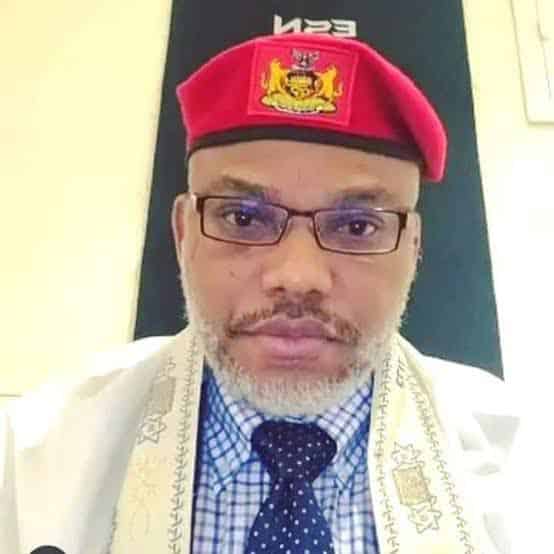
Kanu described the proceedings as an “unlawful trial” and said there was no need to waste the court’s time by presenting witnesses or evidence in his defence.
Reacting to the development, presiding judge Justice James Omotosho instructed Kanu to formalize his decision by filing a written address and serving it on the prosecution.
The judge emphasized that a written record of such a decision was necessary for proper documentation of the trial process.
Justice Omotosho also advised Kanu to seek professional counsel from criminal law experts before finalizing his decision. The judge noted that the choice to forgo witness testimony could carry serious legal implications and that Kanu should fully understand its consequences.
Following the defendant’s declaration, the court adjourned the Nnamdi Kanu trial to November 4, 5, and 6, for the adoption of final written addresses. At that stage, both the prosecution and defence are expected to present their concluding arguments before the court issues a ruling.
Justice Omotosho explained that the adoption would either be based on the prosecution’s existing evidence and the charges presented so far or on Kanu’s position that no prima facie case has been established against him. The decision, he said, would determine whether Kanu will be discharged or required to enter his defence.
The Nnamdi Kanu trial has remained one of the most closely followed legal proceedings in Nigeria’s recent history. Kanu, the self-acclaimed leader of IPOB, was first arrested in 2015 on charges bordering on terrorism, treasonable felony, and incitement.
He was later released on bail in 2017 but fled the country after a military operation in his home state of Abia.
In 2021, he was rearrested abroad and returned to Nigeria, where he has since remained in the custody of the Department of State Services (DSS).
The Federal Government accuses him of promoting secession and inciting violence through IPOB’s activities. Kanu, however, maintains that his movement is peaceful and lawful, arguing that his current prosecution is politically motivated.
Legal experts have expressed divided opinions on Kanu’s new move. Some believe that his decision not to call witnesses could be a deliberate strategy to challenge the legitimacy of the charges against him. Others, however, warn that it might weaken his case by leaving the prosecution’s evidence unchallenged.
Barrister Okorie Chukwuma, a constitutional lawyer, described the move as “a legal gamble.” According to him, “Kanu’s strategy might highlight flaws in the prosecution’s case, but it also exposes him to the risk of having the case determined solely on the evidence presented by the state.”
Another legal commentator, Aisha Ibrahim, said Justice Omotosho’s advice was well-considered.
“It’s rare for a defendant to decline to call witnesses, especially in a high-profile case. The judge’s caution shows prudence. Kanu’s decision could either fast-track his discharge or complicate his situation,” she stated.
Across Nigeria’s South-East region, supporters of the IPOB leader have hailed his decision as a statement of confidence in his innocence.
They argue that the Nnamdi Kanu trial has dragged on for too long without substantial evidence. On the other hand, government officials insist that the proceedings are following due legal process and are based on legitimate national security concerns.
Observers believe the outcome of the trial could have significant implications for national unity, law enforcement, and the broader issue of self-determination in Nigeria.
Political analysts say a favorable ruling for Kanu could renew agitation for Biafra, while a conviction could strengthen the government’s stance against separatist movements.
As the Nnamdi Kanu trial heads into its next phase in November, the legal and political stakes remain high.
If the court agrees with Kanu’s position that no valid charge exists, the IPOB leader could be discharged and acquitted. However, if the judge rules otherwise, he may have to reopen his defence or face conviction based on the prosecution’s case.
Whatever the outcome, the trial continues to shape the national conversation on justice, constitutional rights, and the limits of political dissent.
Nigerians and international observers alike are watching closely as one of the country’s most polarizing legal battles nears its conclusion.
More news at ireport247news
About The Author