Nigeria’s domestic refining landscape could receive a significant boost if modular refineries are adequately supplied with crude oil, according to the Crude Oil Refineries Association of Nigeria (CORAN), which says the smaller-scale refineries have the capacity to meet more than 10 per cent of the country’s diesel demand.
Industry stakeholders, however, warn that persistent feedstock shortages remain a major barrier preventing these facilities from operating at full capacity.
Modular refineries can meet over 10% diesel needs – CORAN
Speaking in response to recent data released by the Nigerian Midstream and Downstream Petroleum Regulatory Authority (NMDPRA), CORAN’s Publicity Secretary, Eche Idoko, said the current contribution of modular refineries to Nigeria’s diesel supply does not reflect their true production potential.
The NMDPRA’s monthly fact sheet indicated that modular refineries accounted for roughly two per cent of Nigeria’s diesel consumption between November 2025 and January 2026.
But Idoko argued that the figures only represent what the refineries are currently producing under constrained conditions, not their actual operational capacity.
According to him, if sufficient crude oil feedstock were made available to operators, modular refineries could easily supply up to 10 per cent — and potentially as much as 15 per cent — of the country’s diesel needs.
He explained that the low production levels stem primarily from limited crude allocations rather than operational inefficiencies.
“Any percentage at this moment is important for the industry, but we believe the potential is much higher than what the current figures suggest,” Idoko said.
“Our refineries have the technical capacity to produce up to 10 per cent or even 15 per cent of Nigeria’s diesel requirement if we have access to enough crude oil.”
Nigeria’s diesel market remains one of the most critical segments of the petroleum industry, as Automotive Gas Oil (AGO) is widely used to power industries, agricultural machinery, construction equipment, and backup electricity generators across the country.
Crude supply challenges limiting production
Industry players say the lack of consistent crude oil supply has significantly limited the ability of modular refineries to scale up production.
Some facilities are reportedly operating far below their installed capacity, while others have remained temporarily shut due to feedstock shortages.
Idoko noted that refineries such as OPAC are currently not running at optimal capacity largely because they cannot access sufficient crude oil to sustain operations.
He added that CORAN has repeatedly urged the Federal Government to extend the naira-for-crude policy to modular refinery operators.
The initiative, which allows domestic refineries to purchase crude oil using the local currency instead of foreign exchange, is expected to reduce operational costs and improve production output.
According to Idoko, extending the arrangement to modular refineries could significantly increase local diesel supply and reduce Nigeria’s dependence on imports.
“We have consistently advocated for modular refineries to benefit from the naira-for-crude arrangement,” he said.
“Facilities such as OPAC, Aradel, Waltersmith and the Edo Refinery should be included in this policy. If this happens, it will allow them to ramp up production and help improve diesel availability in the country.”
Data shows modest contribution to diesel supply
Data from the NMDPRA indicates that modular refineries supplied an average of about 393,000 litres of diesel per day during the three-month period under review.
Production figures varied across the months, with approximately 489,000 litres per day recorded in November 2025, around 392,000 litres per day in December, and about 297,000 litres per day in January 2026.
Only three modular facilities — Waltersmith Refinery, Edo Refinery, and Aradel — were operational during the period.
Other plants, including OPAC and Duport Modular Refinery, were not producing during the timeframe.
When compared with national diesel consumption, which averaged roughly 17 million litres per day, the contribution of modular refineries remained relatively small.
Monthly figures show diesel demand reaching about 15.4 million litres per day in November, rising to 16.4 million litres per day in December, and climbing further to 19.2 million litres per day in January.
Against this backdrop, modular refineries met approximately 3.18 per cent of demand in November, 2.39 per cent in December, and 1.55 per cent in January, producing a three-month average of around 2.37 per cent.
Larger refineries still dominate supply
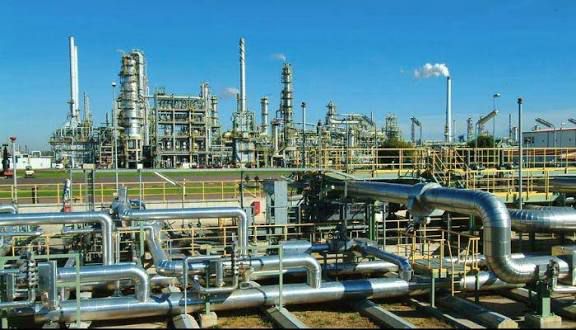
While modular refineries continue to play a growing role in Nigeria’s refining ecosystem, larger-scale facilities remain the dominant suppliers of refined petroleum products.
Notably, the Dangote Refinery recorded significantly higher diesel production during the same period.
Industry data shows that the facility supplied about 5.6 million litres per day of diesel in November 2025, increasing to 5.8 million litres in December and reaching 10.9 million litres per day in January 2026.
Despite this growing domestic capacity, Nigeria still relies on imported refined products to meet total demand, particularly during periods of supply disruptions.
Calls for stronger policy support
Energy analysts say expanding local refining capacity — especially through modular refineries — could play a crucial role in strengthening Nigeria’s energy security and reducing pressure on foreign exchange.
They argue that consistent crude supply, improved infrastructure, and supportive government policies will be essential to unlocking the full potential of the sector.
If properly supported, stakeholders believe modular refineries could serve as a strategic complement to large refineries, helping Nigeria move closer to self-sufficiency in refined petroleum products.