Professor Gambari assures Nigerians that multiparty democracy safeguards prevent Nigeria from turning into a one-party state despite ruling party dominance fears.
Former Chief of Staff to the late President Muhammadu Buhari and founder of the Savannah Centre for Diplomacy, Democracy and Development (SCDDD), Professor Ibrahim Gambari, has emphatically ruled out the possibility of Nigeria evolving into a one-party state, describing such fears as historically unfounded and politically unrealistic.
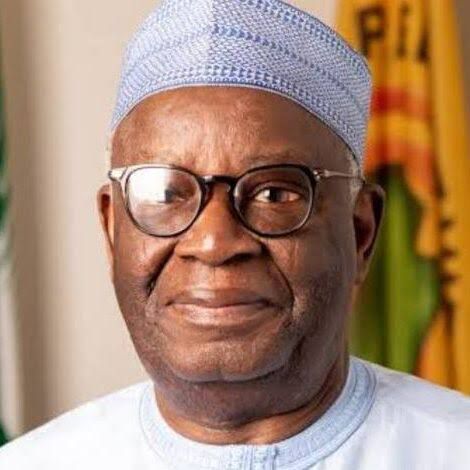
Speaking in Abuja during a media session to mark the 11th anniversary of the SCDDD, Gambari reflected on the centre’s work in policy research, dialogue, advocacy, and training in diplomacy, democracy, and development.
The discussion, he said, also offered an opportunity to evaluate Nigeria’s political trajectory ahead of the 2027 general elections.
Addressing apprehensions raised by opposition parties over the increasing dominance of the ruling party, the former Minister of Foreign Affairs argued that these fears are largely overstated.
According to him, the structures of Nigeria’s political system and the lessons of history continue to favour a multiparty democracy.
“I am not worried at all about Nigeria becoming a one-party state,” Gambari said.
“You can quote me. If history is any guide, this will not happen. Unfortunately, we do not often understand our own history.”
Gambari traced Nigeria’s political evolution, noting that the attempt to establish dominant parties is not new. He recounted the era of the Northern Peoples Congress (NPC) in the First Republic.
While the NPC held significant power, he said, it did not engineer the opposition’s collapse but failed to mediate internal crises, often taking sides. This, he stressed, led to instability rather than national progress.
“The National Party of Nigeria (NPN) followed in the Second Republic, and they became so confident that they believed their dominance would last forever. History, however, proved otherwise,” Gambari recalled.
He also highlighted the Peoples Democratic Party (PDP), which once projected that it could govern for six decades. “Where are they today?” he asked rhetorically.
“These examples clearly show that efforts to convert Nigeria into a one-party state are historically doomed.”
Gambari further argued that the ambitions of Nigeria’s political elite make a single-party monopoly practically impossible.
“Most political actors in this country are too ambitious for their ambitions to be contained within one party,” he said.
Nevertheless, he noted that the political class has often failed to learn from historical precedents, repeating past mistakes that undermined party cohesion and governance.
For the former United Nations Under-Secretary-General, the key to preventing the rise of a one-party state lies in strengthening and properly organising political parties.
“We must pay attention to the structures and ideologies of our parties,” he said.
“If parties are strong, distinct, and well-organised, the idea of a one-party state would be impossible.”
He highlighted the current challenge: many Nigerian parties function as vehicles for power rather than ideological organisations.
“Political parties have become flags of convenience,” Gambari explained.
“Because the constitution does not allow independent candidates, politicians join parties merely to contest elections. This is not a system built on ideological differences.”
Historically, Gambari noted, crossing party lines carried serious consequences. In the First Republic, moving from the NPC to the NCNC or Action Group was a significant political statement because ideological distinctions were clear.
“Today, however, politicians can switch from one party to another without accountability.
“You could be APC in the morning, PDP in the afternoon, and back to APC the next day, with no repercussions,” he said.
He compared this situation to other democracies, where politicians who defect from their elected party must vacate their seats and seek re-election under a new platform.
Such systems, he said, ensure that citizens’ votes are respected and prevent deception in political representation.
Stressing the importance of citizen engagement, Gambari reminded Nigerians that a multiparty system survives only through active participation.
“History is not on the side of a one-party state in Nigeria or anywhere else. But multiparty democracy requires commitment and organisation,” he said.
“We all have roles to play in strengthening our political institutions.”
He concluded by urging reforms to make political parties more transparent, ideologically distinct, and responsive to citizens’ needs.
According to Gambari, if political parties operate with clear agendas, accountability, and internal discipline, Nigeria’s multiparty democracy will remain resilient, preventing any slide toward authoritarianism or a one-party state.
Ireport247news
About The Author