Nigeria is recalibrating its fiscal strategy, placing stronger emphasis on revenue mobilisation while deliberately scaling back its dependence on borrowing, in a move that underscores the federal government’s push for long-term economic stability.
The policy direction, articulated by the Minister of Finance and Coordinating Minister of the Economy, Wale Edun, signals a continuation—and deepening—of the economic reform agenda initiated under President Bola Tinubu’s administration.
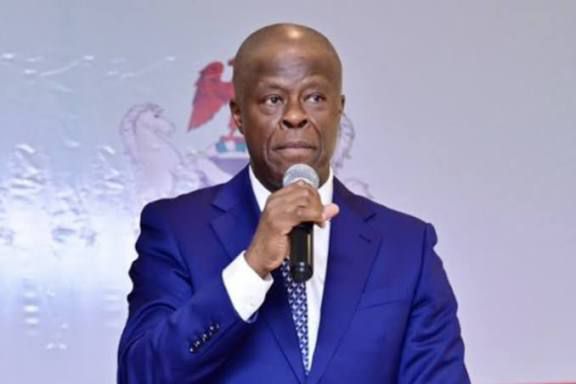
Speaking on the sidelines of the World Economic Forum in Davos, Edun made it clear that the government is no longer eager to lean heavily on debt, even as access to international capital markets improves.
Rather than pursuing fresh borrowing, Nigeria’s economic managers are prioritising domestic resource mobilisation as the backbone of fiscal sustainability, especially at a time when debt servicing costs continue to weigh heavily on public finances.
Nigeria Plans to Double Down on Revenue Mobilisation
At the core of the government’s new fiscal posture is a clear decision to expand and strengthen revenue streams across both oil and non-oil sectors.
According to Edun, the central challenge facing Nigeria is not access to credit but the ability to generate sufficient revenue internally to meet its development needs.
“The focus now is revenue—how we mobilise more domestic resources and rely less on borrowing,” the finance minister said, noting that while Nigeria can still tap global debt markets, doing so will no longer be the default option.
This approach reflects lessons learned from years of rising debt exposure, volatile oil income, and mounting fiscal deficits.
Nigeria’s public debt has expanded significantly over the past decade, leaving limited room for additional borrowing without increasing fiscal vulnerability.
The renewed emphasis on revenue mobilisation is already yielding measurable results. In 2025, government tax collections reached an estimated ₦28 trillion, exceeding initial targets by roughly 30 percent.
This performance marked one of the strongest revenue outturns in Nigeria’s recent fiscal history.
Data from the Federal Inland Revenue Service (FIRS) show that oil revenue rose by 21 percent year-on-year to ₦6.8 trillion, supported by improved production levels and better remittance compliance.
More notably, non-oil revenue surged by 33 percent to ₦21.5 trillion, highlighting the growing contribution of sectors outside crude oil.
Tax Reforms Take Centre Stage
Building on this momentum, the government plans to aggressively widen the tax net in 2026, with reforms aimed at reducing leakages, strengthening compliance, and increasing transparency.
The controversial tax reform proposals currently under review are expected to play a key role in lifting Nigeria’s tax-to-GDP ratio to 18 percent within the next two years, up from one of the lowest levels globally.
For policymakers, this shift is not merely about raising taxes but ensuring fairness and efficiency in the tax system.
Authorities argue that improving compliance among high-income earners and corporate entities will reduce pressure on ordinary citizens while boosting government revenues.
The expected revenue gains are particularly critical given the scale of Nigeria’s 2026 budget. The federal government has proposed spending of nearly ₦58 trillion, with more than a quarter of that amount earmarked for debt servicing alone.
Interest payments are projected to absorb a significant share of total revenues, leaving limited fiscal space for capital expenditure.
Even with improved revenue performance, budget projections suggest total government income will hover around ₦34 trillion, resulting in a fiscal deficit estimated at ₦24 trillion, or about 4.3 percent of gross domestic product.
This shortfall is wider than the previous year’s estimate, underscoring why borrowing restraint has become a policy priority.
Borrowing Pressures and Investor Sentiment
Despite its resolve to cut back on borrowing, Nigeria has benefited from improved investor confidence following a series of credit rating upgrades.
International rating agencies have responded positively to the government’s reform agenda, particularly steps taken to liberalise the foreign exchange market and improve fiscal transparency.
S&P Global Ratings recently revised Nigeria’s outlook to “positive” from “stable” while affirming its sovereign rating at “B-/B”. Moody’s followed with a one-notch upgrade to “B3”, citing improvements in Nigeria’s external buffers and fiscal management.
Fitch Ratings has also maintained a stable outlook, reinforcing perceptions of reduced sovereign risk.
These upgrades paved the way for Nigeria’s return to the international bond market, culminating in a $2.3 billion double-tranche Eurobond issuance that was oversubscribed by about 400 percent.
The strong demand demonstrated investor appetite for Nigerian assets, even amid global economic uncertainty.
However, officials insist that successful market re-entry does not signal a return to debt-heavy financing.
Instead, the government views the oversubscribed Eurobond as a validation of reforms rather than an invitation to accumulate more debt.
Balancing Growth and Fiscal Discipline
Economists note that Nigeria’s decision to double down on revenue mobilisation while cutting borrowing reflects a delicate balancing act.
On one hand, the government must finance critical investments in infrastructure, healthcare, education, and social protection.
On the other, excessive borrowing risks crowding out private investment and exacerbating debt sustainability concerns.
By strengthening domestic revenue mobilisation, the government hopes to reduce its vulnerability to external shocks such as oil price swings and exchange rate volatility.
A broader revenue base would also allow for more predictable fiscal planning and reduce reliance on short-term debt rollovers.
For investors and analysts, the coming months will be critical in determining whether Nigeria can sustain its revenue momentum while maintaining fiscal discipline.
Much will depend on the successful implementation of tax reforms, continued improvements in oil production, and the government’s ability to manage spending pressures.
As Nigeria enters 2026, its fiscal strategy marks a clear departure from years of debt-driven financing.
Whether this revenue-first approach delivers lasting economic resilience will shape the country’s growth trajectory in the years ahead.
About The Author