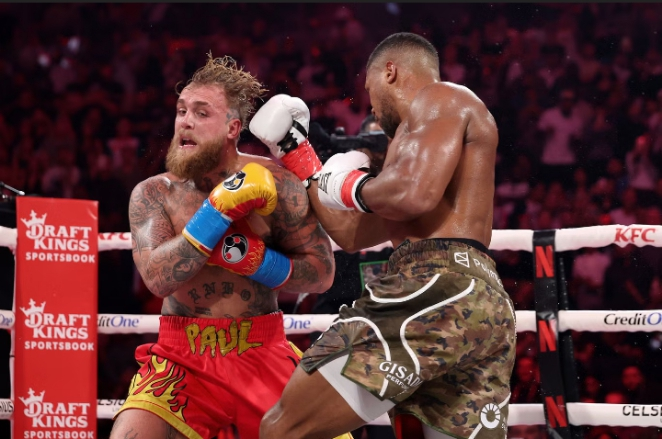
Naoya Inoue and Junto Nakatani headline a boxing event that restores sporting credibility after the controversial Anthony Joshua vs Jake Paul crossover spectacle in Saudi Arabia.
The boxing world remains divided following Anthony Joshua’s bout with Jake Paul, a commercially successful event that many fans felt lacked competitive authenticity.
While the spectacle attracted casual viewers, traditionalists were left frustrated by a mismatch that prioritised entertainment value over elite sporting standards.
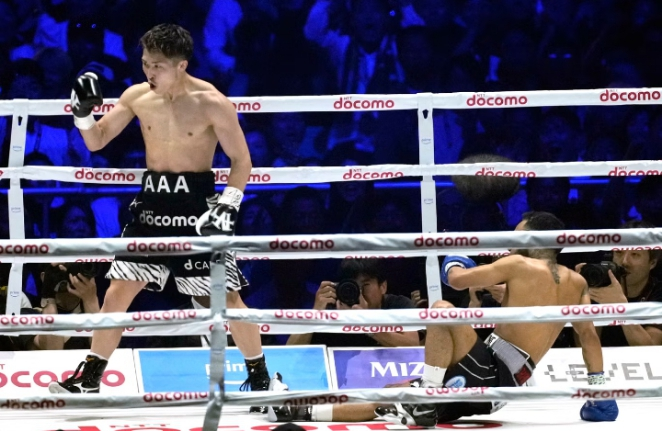
Fortunately, boxing offers a timely correction as Naoya Inoue and Junto Nakatani prepare to compete on the same Riyadh card this weekend.
The Japanese duo represent everything purists crave: technical excellence, relentless discipline, and a shared ambition rooted in championship legacy rather than social media hype.
Inoue enters the event as one of the most complete fighters of his generation, holding undisputed super-bantamweight titles with devastating consistency.
Nicknamed “The Monster,” Inoue combines speed, timing, and knockout power in a manner rarely seen across lower weight divisions.
His opponent, Alan Picasso, arrives unbeaten and determined, yet widely viewed as an underdog against Inoue’s ruthless precision and championship experience.
Earlier on the same card, Junto Nakatani makes his super-bantamweight debut against Sebastian Hernandez Reyes, another unbeaten fighter seeking a career-defining upset.
Nakatani’s rise through multiple weight classes has been methodical, showcasing adaptability, ring intelligence, and finishing instincts that elevate him among boxing’s elite.
Together, Inoue and Nakatani provide a refreshing counterbalance to crossover boxing, reinforcing why elite matchups still matter deeply within the sport.
The Riyadh event is being quietly positioned as a possible launchpad toward a long-anticipated all-Japanese superfight in 2026.
An Inoue vs Nakatani showdown would pit a two-weight undisputed champion against a three-division world champion at their respective peaks.
Such a bout promises technical intrigue, strategic adjustments, and genuine uncertainty, qualities absent from celebrity-driven exhibitions.
However, history warns against assuming future blockbusters before current challenges are completed inside the ring.
Boxing’s unpredictability has repeatedly derailed carefully marketed plans, often on shared cards designed to manufacture inevitable clashes.
Anthony Joshua and Deontay Wilder famously saw their long-awaited collision evaporate after mixed results on the same event in 2023.
More recently, Devin Haney and Ryan Garcia’s rematch ambitions collapsed after contrasting performances earlier this year.
These cautionary tales underline why Inoue and Nakatani must first overcome credible, motivated opponents this weekend.
Inoue has shown flashes of vulnerability, having been dropped in two of his last five bouts despite ultimately prevailing.
Such moments remind observers that even pound-for-pound greats are not immune to disruption, especially against hungry challengers.
Nakatani faces his own uncertainties, adjusting to a higher weight class while confronting an opponent with a formidable knockout ratio.
Sebastian Hernandez Reyes holds an impressive finishing record, making him a dangerous test for Nakatani’s super-bantamweight transition.
Physically, Nakatani may benefit from filling out naturally at the higher weight, potentially preserving power while improving durability.
Inoue, by contrast, has already settled comfortably at super-bantamweight after conquering multiple lower divisions earlier in his career.
Beyond the ring, the event exists within a broader conversation surrounding Saudi Arabia’s growing influence in global boxing.
Critics argue that high-profile fight cards serve as sportswashing tools amid ongoing concerns about human rights records.
Supporters counter that elite fighters deserve the financial backing and global exposure these events provide.
That tension mirrors debates surrounding Joshua vs Paul, where commercial success clashed with questions of sporting legitimacy.
Unlike that crossover bout, however, Inoue and Nakatani offer substance that transcends marketing narratives.
Their inclusion elevates the card from spectacle toward legitimacy, delivering elite competition that respects boxing’s traditions.
For fans disillusioned by celebrity boxing, Saturday’s event represents an opportunity to reconnect with the sport’s highest standards.
It blends technical mastery, meaningful stakes, and future implications without sacrificing competitive integrity.
Whether or not an Inoue vs Nakatani showdown materialises next year, this event stands as a reminder of boxing’s enduring appeal.
At its best, boxing thrives on skill, courage, and uncertainty, qualities embodied by both Japanese champions.
In a crowded sporting landscape chasing viral moments, Inoue and Nakatani quietly reaffirm why boxing remains compelling when excellence leads the way.
Read also: Premier League team news: Man Utd, Arsenal, Liverpool face challenges ahead of festive fixtures
About The Author