The National Hajj Commission of Nigeria (NAHCON) has plunged into uncertainty following the resignation of its Chairman, Prof. Abdullahi Usman, amid ongoing controversies and internal disputes within the agency.
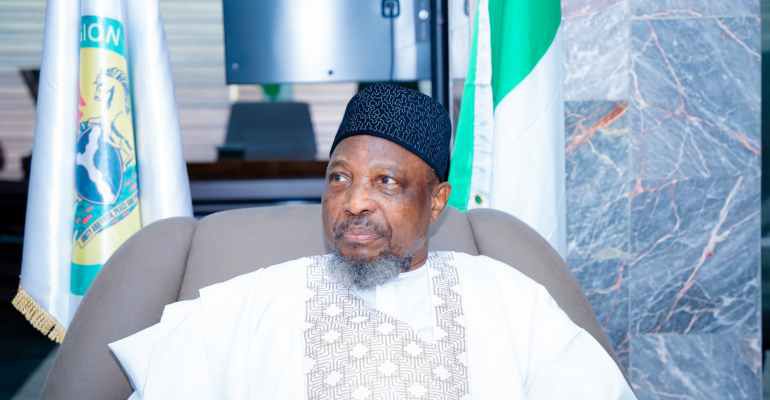
The development has reignited concerns over the preparedness of Nigeria’s Hajj operations, scheduled in about four months.
Experts warn that the leadership vacuum could affect administrative efficiency and stakeholder confidence in the critical religious exercise.
The resignation was confirmed late Monday night by Prof. Usman’s media assistant, Ahmed Muazu, who declined to provide further details on the reasons behind the decision.
“Yes, the chairman has resigned. That’s all I can confirm for now,” Muazu said in a brief message to journalists.
Despite the limited official statement, insiders indicate that months of internal disagreements and allegations of mismanagement contributed to the chairman’s departure.
Prof. Usman, appointed in 2024 by President Bola Tinubu, succeeded Jalal Arabi, who was dismissed while under investigation for alleged misappropriation of funds allocated for the 2024 Hajj operations.
The leadership transition was intended to restore credibility and ensure smooth coordination of Nigeria’s Hajj activities.
However, Prof. Usman’s tenure was soon overshadowed by administrative controversies and disputes among senior officials, leading to what analysts now describe as a NAHCON leadership crisis.
His first major assignment—the coordination of the 2025 Hajj—faced immediate challenges. Allegations of financial irregularities and lapses in administrative oversight emerged, drawing criticism from stakeholders and members of the Hajj community.
Reports indicate that some commissioners within NAHCON disagreed with decisions taken by the chairman, causing tension and deepening divisions in the agency.
The internal disputes were further complicated by concerns over accountability, planning delays, and transparency in fund utilization.
In January 2026, the situation reached a tipping point when several commissioners formally submitted a petition to President Tinubu expressing a vote of no confidence in Prof. Usman.
The petition accused the chairman of poor leadership and administrative failures, intensifying the ongoing internal disputes and highlighting gaps in organizational management.
Observers say the NAHCON leadership crisis has now become a focal point for public and governmental attention, as stakeholders demand decisive action to safeguard the integrity of the upcoming Hajj.
Efforts to resolve the disputes included a high-level reconciliation meeting convened by Vice President Kashim Shettima about two weeks ago.
The session brought together key Hajj stakeholders, senior officials, and representatives of the commission.
Despite these attempts at mediation, tensions persisted, underscoring the depth of disagreements that had been simmering within NAHCON for months.
Analysts note that the inability to achieve consensus within the agency contributed significantly to Prof. Usman’s decision to resign.
The resignation has now cast serious uncertainty over the leadership and direction of NAHCON, particularly as the 2026 Hajj operations approach.
Preparations for the annual pilgrimage involve intricate logistics, including flight arrangements, accommodation management, and coordination with Saudi authorities.
Experts warn that any disruption in leadership could impact these processes, potentially affecting thousands of Nigerian pilgrims.
In reaction to the news, some stakeholders have called for swift action to appoint a competent successor to Prof. Usman.
Religious groups and Hajj travel operators emphasize the importance of restoring confidence and stability within the commission to ensure a smooth pilgrimage.
Meanwhile, political observers note that President Tinubu faces pressure to resolve the NAHCON leadership crisis promptly, balancing administrative competence with stakeholder expectations.
Prof. Usman’s tenure, though brief, was marked by both ambitious reforms and significant challenges.
While he sought to improve administrative structures and streamline Hajj processes, internal opposition and allegations of mismanagement overshadowed these efforts.
Commentators suggest that the NAHCON leadership crisis reflects deeper structural and governance issues within the commission that require long-term solutions beyond a change in personnel.
As Nigeria prepares for the 2026 Hajj, the focus now shifts to the government’s next steps in stabilizing NAHCON.
With the pilgrimage set to commence in a few months, stakeholders are monitoring developments closely, hoping that the leadership vacuum does not impede critical arrangements.
The commission’s ability to function efficiently during this period will be crucial to preventing disruption and maintaining public trust.
Prof. Usman’s resignation, therefore, is not merely a personnel change; it underscores systemic challenges within NAHCON and highlights the urgent need for transparency, accountability, and collaborative governance.
Analysts say that addressing the ongoing internal disputes will be essential to restoring the commission’s credibility and ensuring successful Hajj operations in 2026.
The NAHCON leadership crisis, now amplified by the chairman’s exit, serves as a reminder of the complex administrative and political dynamics surrounding Nigeria’s Hajj management.
As the government seeks a replacement, attention will remain on the commission’s ability to navigate these challenges and deliver a seamless pilgrimage for Nigerian faithful.
Ireport247news
About The Author