Traditional rulers urge the Federal Government to improve welfare in Trans Niger Pipeline communities to ensure peace, security, and sustainable oil operations.
Traditional rulers of host communities along the Trans Niger Pipeline (TNP) have called on the Federal Government to give urgent attention to the welfare and development of their people.
They emphasized that improving living conditions in the oil-producing areas is the only sustainable way to guarantee peace, security, and the smooth operation of the Trans Niger Pipeline network.
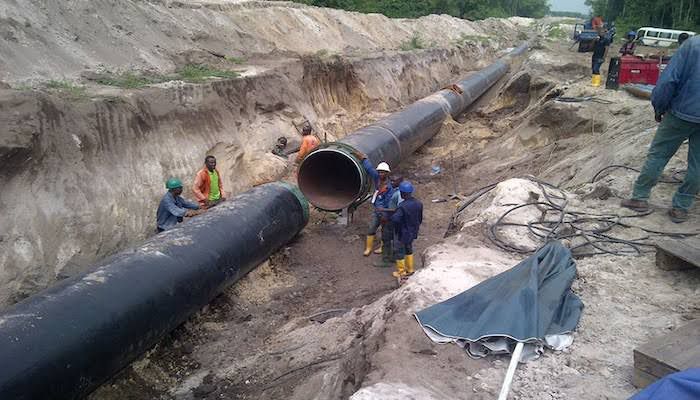
The appeal was made during a stakeholders’ engagement meeting organized in Port Harcourt by Pipeline Infrastructure Nigeria Limited (PINL), operators of the pipeline spanning Rivers, Abia, and Imo States.
While commending the government for the recent increase in oil output resulting from PINL’s efficiency, the monarchs lamented that the progress has not reflected in the lives of the host communities. They urged the Federal Government to translate oil revenues into visible development projects that directly benefit the people.
His Majesty, Eze Sergeant Awuse, the Paramount Ruler of Emohua in Rivers State, stressed that peace and productivity in oil-bearing regions depend largely on government commitment to the people’s welfare.
“No amount of talk or dramatization will bring peace if the government ignores the suffering of our people,” Eze Awuse declared.
“The well-being of our people must be taken seriously. The oil from our land should bring us development, not despair.”
He further urged the Federal Government to empower traditional rulers and provide them with the necessary resources to perform their duties effectively.
According to him, traditional institutions remain critical in maintaining order, resolving local disputes, and fostering cooperation between oil companies and their host communities.
Adding his voice, King Samuel Nnee, Coordinator of the Supreme Council of Ogoni Traditional Rulers, lamented that despite their contributions to national wealth, host communities continue to suffer neglect and underdevelopment.
He noted that traditional leaders often face unfair criticism whenever there is unrest or vandalism, even though such crises are fueled by frustration among unemployed youths.
“It has not been easy for traditional rulers,” King Nnee said.
“Whenever there is a problem, the government blames us. But our youths are angry because they see no opportunities. Many of them are educated but jobless.
“The government must create meaningful programs to lift our people out of poverty and hopelessness.”
He emphasized that addressing the welfare needs of the host communities would not only improve livelihoods but also enhance security around the Trans Niger Pipeline, reducing the risk of vandalism and oil theft.
Comrade Legborsi Yamaabana, Coordinator of the Coalition of Niger Delta Ethnic Youth Leaders, commended Pipeline Infrastructure Nigeria Limited for its open and inclusive community relations model.
He said the company’s monthly engagement meetings with traditional rulers and local stakeholders have promoted transparency and improved understanding among all parties.
“Our youths appreciate PINL’s approach,” Yamaabana noted.
“Their consistent engagement helps to reduce tension and build mutual trust. We call on other oil companies to adopt similar strategies, as dialogue remains the best way to achieve peace and progress.”
He further appealed for government-backed initiatives to create jobs, promote vocational training, and empower the youths of the Niger Delta to contribute meaningfully to the economy.
The traditional rulers collectively called for an integrated development plan that addresses critical needs such as good roads, quality healthcare, education, clean water, and electricity for host communities.
They urged the Nigerian National Petroleum Company Limited (NNPCL) and the Ministry of Niger Delta Affairs to collaborate with local stakeholders in implementing community-driven development projects.
They also demanded that government and oil companies ensure more local participation in contracts and employment opportunities to enhance community ownership and cooperation.
According to them, visible development and social inclusion are vital to sustaining peace and protecting the Trans Niger Pipeline infrastructure.
The monarchs agreed that empowering traditional rulers is central to maintaining long-term stability in the oil-producing areas.
They argued that traditional institutions, being closest to the grassroots, have the moral authority to mediate between the government, companies, and the people.
Eze Awuse emphasized that “traditional institutions are the backbone of our communities. If the government strengthens them, peace will naturally follow. We want collaboration, not confrontation. Let our people benefit from the resources extracted from their land.”
At the close of the meeting, participants reaffirmed their commitment to protecting the Trans Niger Pipeline and supporting government initiatives for national growth.
However, they cautioned that without fair treatment and visible development in the host communities, peace will remain fragile.
They urged the Federal Government, oil companies, and community leaders to work together to promote inclusive growth, job creation, and transparent management of oil revenues.
Such cooperation, they said, would ensure that both the people and the nation benefit equally from the region’s resources.
The meeting ended with renewed optimism and a pledge from both the monarchs and youth representatives to sustain dialogue and partnership with the government and oil companies.
They insisted that the only lasting solution to security challenges and vandalism in the Niger Delta is development, not force.
The voices of the traditional rulers and youth leaders from the host communities underscore a vital message: peace cannot thrive without justice and welfare.
For the Trans Niger Pipeline to remain safe and productive, the Federal Government must prioritize the needs of the people who protect its path.
As oil production rises, development must rise with it. Only then can the promise of peace and prosperity become a reality for the people of the Niger Delta.
More news at ireport247news
About The Author