

Migrant Channel deaths soared after UK-France deal to stop illegal crossings, according to a report that links increased fatalities to tighter border controls and changing migration routes across the English Channel between France and the United Kingdom.
New analysis shows that 17 people died or went missing in the final four months of 2023, shortly after the UK and France agreed a £460m deal to curb small boat crossings under then-prime minister Rishi Sunak and French president Emmanuel Macron.
Researchers say the following year saw a dramatic rise, with 83 people recorded dead or missing in 22 incidents, marking the deadliest year on record for Channel crossings involving migrants.
In 2025, another 29 people died or went missing in 20 fatal incidents, indicating that the trend of rising deaths has continued despite ongoing efforts to reduce crossings.
The report, produced by the University of Bristol and Border Forensics, suggests that increased policing and surveillance in northern France may have unintentionally pushed migrants into more dangerous situations at sea.
Travis Van Isacker, a research fellow at the Centre for Sociodigital Futures, said that “these distinct but entangled border policing practices have had the cumulative effect of creating more dangerous circumstances for migrants”.
He also stated that “state policies to prevent small boat crossings” have contributed to the growing number of deaths in the Channel.

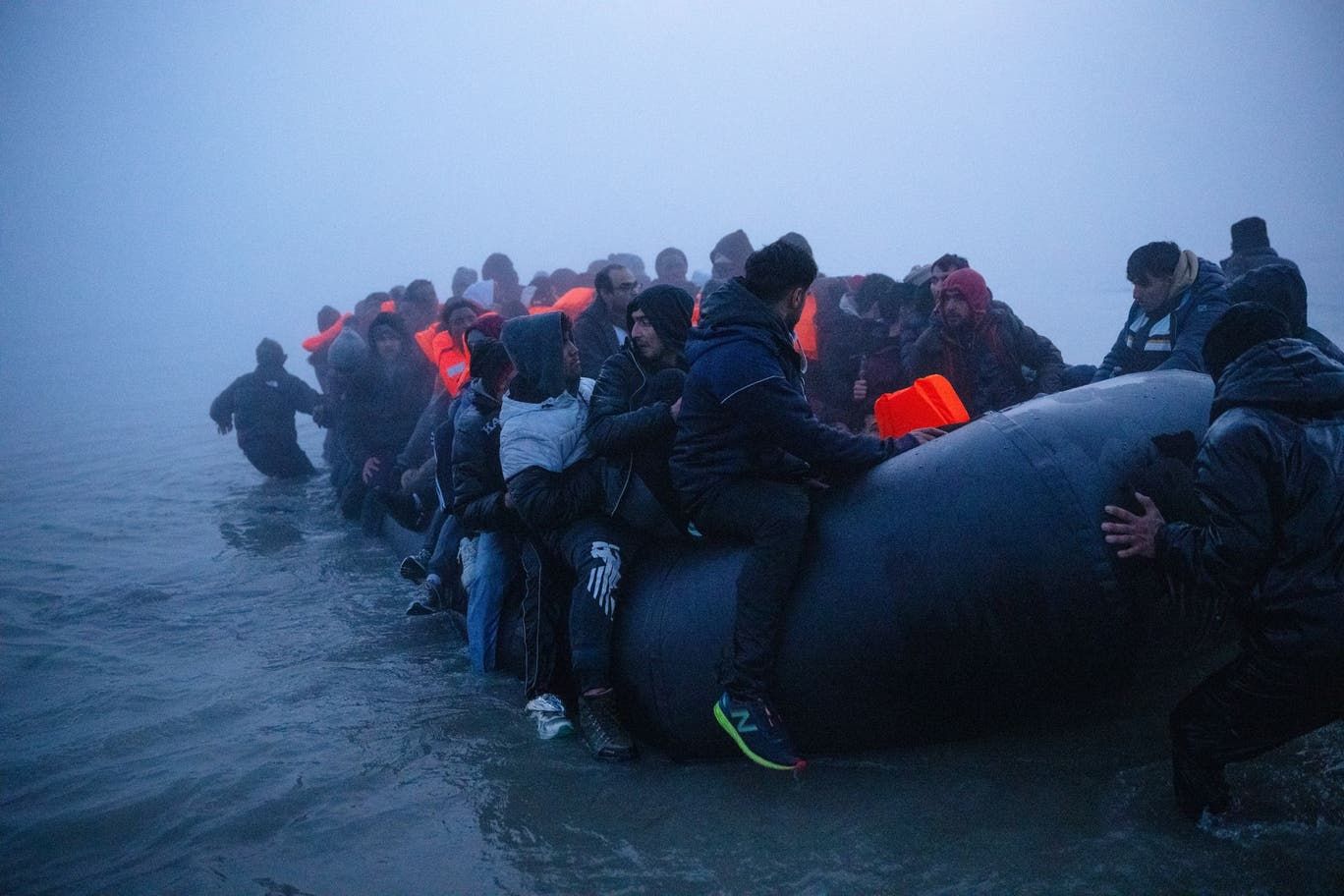
According to the findings, greater enforcement has led smugglers to adopt more hazardous methods, including overcrowding dinghies and launching boats from riskier locations further along the coast.
In some cases, more than 100 people have been packed into a single small boat, making them unstable and increasing the likelihood of accidents at sea.
The report highlights that deaths are now occurring closer to French shores, rather than in the middle of the Channel, suggesting that many migrants are in danger even before fully setting out on their journey.
One tragic case involved Wudase, a 24-year-old Eritrean woman who died in 2023 after being crushed and asphyxiated when around 80 people attempted to board a single dinghy near Bleriot-Plage.
Authorities and researchers say overcrowding, poor-quality boats, and last-minute rushes to board vessels all contribute to the rising risk of fatal incidents.
Officials have also noted that increased police patrols and stricter controls on equipment such as inflatable boats have reduced safer, independent crossings, pushing more migrants towards smugglers.
This shift has encouraged the use of so-called “taxi boats”, which attempt to pick up migrants at sea, a practice described as even more dangerous than launching from beaches.
French authorities have also taken more aggressive measures, including intercepting vessels and preventing boats from setting off, sometimes by damaging them before departure.
Read also: Oil prices fall, Asian shares gain after Trump claims progress in Iran talks
Former Border Force director general Tony Smith said overcrowding remains the main cause of deaths, noting that overloaded boats are vulnerable to capsizing even in relatively calm waters.
He explained that many of these dinghies are already low in the water before they depart, and that even a small wave can lead to people falling overboard.
Smith also pointed out that smugglers are highly adaptable, often shifting routes across different parts of the coastline, including areas beyond France such as Belgium.
He suggested that stronger international cooperation, including joint UK-France patrols, could help reduce the number of deaths at sea.
The data used in the report combines official figures with records from migrant rights groups and researchers who track deaths and disappearances along migration routes.
A Home Office spokesperson said crossing the Channel in small boats is unsafe and reiterated that the government is working with France to tackle illegal crossings and reduce fatalities.
Officials also maintain that ongoing reforms are aimed at removing incentives for illegal migration while strengthening border enforcement and saving lives.
Despite these efforts, researchers warn that the current approach may be unintentionally increasing risks for migrants rather than reducing them.
The report concludes that without coordinated policy changes, overcrowding, enforcement pressure, and dangerous smuggling practices are likely to continue driving fatalities in the Channel.

About The Author
