

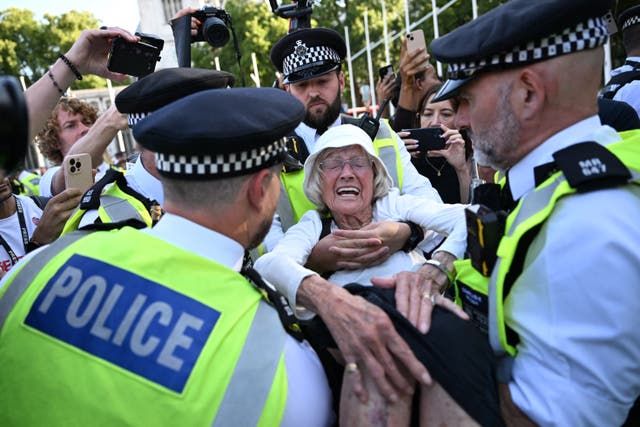
The Metropolitan Police has confirmed that arrests of Palestine Action protesters will resume, even after a ruling by the High Court found the government’s ban on the activist group unlawful.
The decision reflects a complex legal situation in which the court questioned the legality of banning Palestine Action but allowed the restriction to remain temporarily while the government pursues an appeal. As a result, police say they are required to continue enforcing the law as it currently stands, even if that law may later be overturned.
Deputy Assistant Commissioner James Harman explained that the ruling does not immediately invalidate the ban. Instead, it delays the full effect of the judgment until the appeal process is concluded, which could take several months. During this period, supporting Palestine Action remains a criminal offence, and officers are expected to act accordingly.
This legal grey area has sparked widespread debate. Authorities argue that consistent enforcement is essential to uphold the rule of law. Critics, however, say continuing arrests under a legally challenged ban risks undermining confidence in the justice system and could infringe on civil liberties.
More than 2,700 people have already been arrested since the group was banned last year. Many of these cases involve protesters displaying placards with messages expressing support for Palestine Action, often during organised demonstrations. These protests have drawn attention both within the UK and internationally, highlighting tensions between activism and legal restrictions.
The uncertainty has also affected the court system. Hundreds of related cases have been put on hold, with Chief Magistrate Paul Goldspring previously ruling that trials should be delayed until the appeal outcome is known. This has left many defendants in limbo, facing charges but unable to proceed through the legal process.
The UK government is continuing its appeal in an effort to restore full legal backing for the ban. Officials maintain that proscribing the group is necessary for national security and public safety. Under current law, belonging to or expressing support for a banned organisation can result in severe penalties, including prison sentences of up to 14 years.
Police have emphasised that their role is not to interpret future legal outcomes but to enforce existing laws. Harman stated that officers must act “consistently and without fear or favour,” regardless of ongoing legal or political debates. This position has been defended by those who believe law enforcement must remain neutral and predictable.
Civil liberties groups and campaigners have raised concerns that the approach could discourage lawful protest and restrict freedom of expression. They argue that the High Court’s ruling should carry more immediate weight in shaping enforcement decisions, even if the formal legal process is not yet complete.
Despite the risks, protest activity linked to Palestine Action continues. Demonstrators insist their actions are motivated by humanitarian concerns and political beliefs, and they argue that expressing such views should not be criminalised. Organisers have indicated that protests will persist, framing the issue as part of a broader struggle over rights and freedoms.
The situation also has wider political implications. It highlights ongoing tensions in the UK over how to balance national security with the right to protest. It raises questions about how laws should be enforced during periods of legal uncertainty and whether temporary rulings should influence policing decisions.
For now, the key factor is the pending appeal. Until a final decision is reached, the ban remains legally enforceable, and arrests are expected to continue.
Read also: Trump Iran war analysis shows peace claims clash with troop buildup
The eventual outcome will determine not only the future of Palestine Action but also how similar cases are handled in the future.
The case is being closely watched as a potential precedent for the relationship between courts, government policy, and police enforcement. It underscores the challenges of navigating legal ambiguity while maintaining public order and protecting fundamental rights.
Read more: Ireport247news
About The Author
