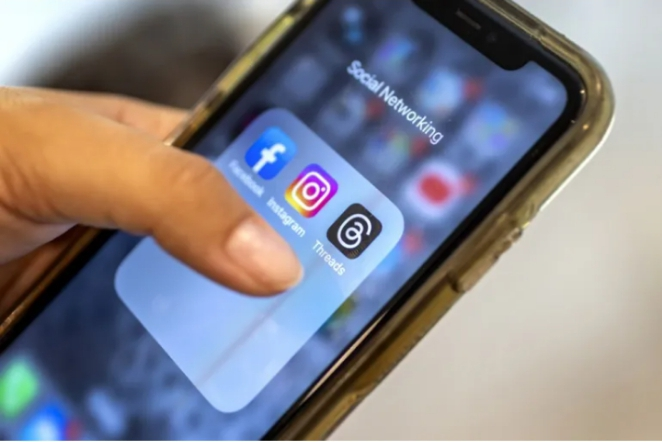
Meta will block Australians under 16 from accessing Instagram and Facebook starting December 4, ahead of Canberra enforcing its new social media law, raising privacy and mental health concerns.
The tech giant announced that it will remove accounts of teenagers aged 13 to 15, warning that “soon, you’ll no longer be able to use Facebook or Instagram” in Australia.
Meta’s move comes as the Australian government plans to enforce fines of up to 49.5 million Australian Dollars (US$32 million) for social media companies that fail to comply with the new law.
According to government figures, around 350,000 Instagram users and 150,000 Facebook accounts in Australia are operated by individuals aged between 13 and 15, a significant portion of the teenage population.
The company has begun notifying affected users that they will lose access, stating that once they turn 16, they will be allowed to return to the platforms, restoring accounts previously blocked.
“You’ll no longer be able to use Facebook, and your profile won’t be visible to you or others,” Meta said in a message to young Australians, adding clarity on how the ban will operate.
The ban is not limited to Facebook and Instagram. The Australian government has confirmed that other platforms, including Reddit, Snapchat, TikTok, X, and YouTube, will also face restrictions for under-16 users.
Critics have raised concerns about the rushed nature of the law, arguing that it does not adequately address issues surrounding privacy, digital literacy, or the mental health of young people.
Leo Puglisi, 18, journalist and founder of 6 News Australia, told a senate inquiry that teenagers are “deeply concerned” about losing access to news and political information on social media.
Puglisi emphasized that social media is an essential news source for many young people, and blocking access could hinder their ability to stay informed about current events and civic matters.
Australian Senator David Shoebridge also warned that an estimated 2.4 million young Australians may be barred from social media accounts just as school holidays begin, potentially isolating them from friends and news.
Shoebridge expressed concerns that restricting social media access could have negative consequences for mental health and privacy, suggesting that young people may struggle to communicate and engage online responsibly.
John Pane, from Electronic Frontiers Australia, told the senate inquiry that while the legislation seeks to prevent exposure to unsuitable content, it introduces new systemic risks to data security and personal privacy.
Pane warned that requiring under-16s to verify their age by recording videos of themselves may increase data stores held by big tech companies, amplifying cyber risks and potential misuse of personal information.
The law also raises concerns about enforcement, as most Australians under 16 do not yet have official government identification, making age verification on digital platforms potentially intrusive and complex.
Globally, other countries are monitoring Australia’s approach to social media restrictions for minors, considering whether similar measures could be implemented to address risks associated with online platforms.
In New Zealand, Prime Minister Christopher Luxon has signaled intentions to introduce legislation to restrict children’s social media usage, mirroring Australia’s minimum age requirements and safety-focused measures.
Indonesia is preparing legislation aimed at protecting minors from “physical, mental, or moral perils” online, reflecting growing regional concern about the effects of social media on young people’s well-being.
In Europe, the Dutch government has advised parents to forbid children under 15 from using popular apps like TikTok and Snapchat, prioritizing safety and mental health over unrestricted access.
Advocates for young people’s rights argue that social media is a primary source of communication, news, and social engagement, suggesting that overly restrictive laws may unintentionally limit opportunities for learning and connection.
Some experts stress the importance of balancing safety with access, noting that social media also offers educational resources, peer support, and platforms for civic engagement for teenagers and young adults.
Meta has indicated that it will comply fully with the new Australian rules, while working on technological measures to block under-16s efficiently and notify users in advance of the restrictions.
For families, parents, and guardians, these changes may require conversations about online safety, digital responsibility, and alternative ways for teenagers to access news and social interaction safely offline.
The move highlights the ongoing global debate around children’s access to social media, privacy concerns, and the responsibilities of tech companies to both protect and inform younger users responsibly.
Australia’s new law and Meta’s pre-emptive actions may serve as a template for other nations considering similar restrictions, potentially influencing international norms around digital access for minors.
As the December 4 deadline approaches, Meta plans to implement account removals gradually, ensuring that users understand the new rules, and that platforms comply without sudden disruptions to teenage users’ access.
Meta’s announcement has sparked conversations among educators, parents, and policymakers about digital literacy programs, the importance of media access for teenagers, and the role of social media in modern education and social life.
While the debate continues, the focus remains on balancing safety, privacy, and access to information, as governments, tech companies, and society weigh the pros and cons of restricting social media for minors.
Meta’s upcoming restrictions mark a significant moment in social media governance, emphasizing the growing responsibilities of tech companies and governments in protecting young users while navigating privacy, access, and digital rights.
About The Author