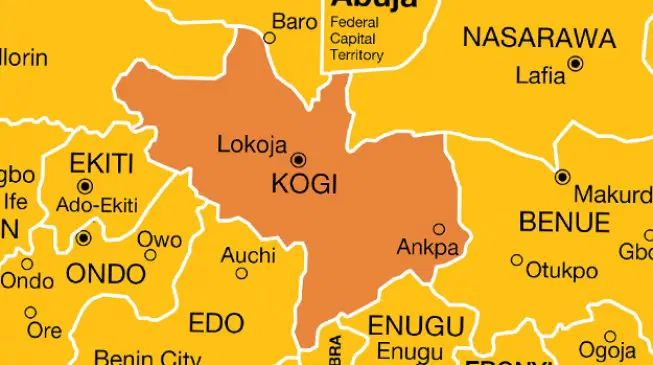
Fresh violence has erupted in Kogi State following a deadly confrontation between suspected herdsmen and local farmers in Ejule-Ojebe community, Ibaji Local Government Area.
The clash has left at least five people dead, several others injured, and an unknown number missing, according to residents.
The crisis, which unfolded over the weekend, is believed to have stemmed from a lingering dispute tied to the destruction of farmland and crops — a recurring source of tension between herders and peasant farmers in the area.
What initially appeared to be an isolated killing quickly escalated into wider unrest that gripped the agrarian community for two consecutive days.
Residents said the trouble began on Saturday when a farmer was reportedly attacked and killed while heading to his farm.
Community members alleged that the assailants were suspected herdsmen, and that the killing may have been connected to earlier disagreements over grazing activities and damaged crops.
News of the incident spread rapidly across Ejule-Ojebe, triggering outrage among villagers. Youths and local vigilantes reportedly mobilised in search of those believed to be responsible.
The search operation, however, soon degenerated into a broader confrontation, marking the beginning of what many now describe as one of the most troubling episodes of Kogi violence in recent months.
During the height of the unrest, more bodies were discovered. According to a resident identified as Omachonu, the corpse of a woman was found along a narrow farm path while locals were trailing the suspected attackers.
By Sunday, two additional lifeless bodies had been recovered in different parts of the community, intensifying fear and confusion.
The death of a fifth victim, identified as Suleiman, has left many residents unsettled.
Reports indicate that he was pursued from the embattled Ejule-Ojebe community to a village near the Ibaji-Idah border.
He was reportedly attacked shortly after returning from his farm. The motive and circumstances surrounding his death remain unclear, adding another layer of uncertainty to the already tense situation in Kogi.
As the violence spiraled, panic swept through the community. Families began fleeing their homes in large numbers, seeking refuge in neighbouring towns and villages perceived to be safer.
Women and children were seen relocating with essential belongings, while community leaders struggled to calm frayed nerves.
Several households are still searching for missing relatives. While five deaths have been officially confirmed by local sources, residents fear the casualty figure could rise as more information becomes available.
Some injured victims are said to be receiving treatment at nearby health facilities, although the full extent of injuries has not yet been verified.
The unrest also triggered a movement of herdsmen away from the troubled area.
By Monday, many had reportedly vacated parts of Ibaji and relocated toward Oforachi, Ikpokawo, and the Odolu axis of Igala-Mela/Odolu Local Government Area.
Observers believe the relocation was a precautionary measure aimed at preventing retaliatory attacks as tensions continued to mount across Kogi.
The Deputy Speaker of the Kogi State House of Assembly, Rt. Hon. Comfort Ojoma Nwuchiola Egwaba, who represents Ibaji State Constituency, confirmed the tragic development.
She described the situation as deeply unfortunate and acknowledged the loss of lives resulting from the clash.
According to her, efforts are underway to restore calm and prevent further escalation of the Ibaji crisis.
Community stakeholders have called for urgent intervention by security agencies to stabilise the region.
They also stressed the need for long-term solutions to the persistent farmer-herder conflict that has repeatedly disrupted rural life.
Many residents argue that unresolved grazing disputes and weak conflict-resolution mechanisms continue to fuel instability.
The latest herdsmen clash underscores broader concerns about rural security and agricultural sustainability.
Ejule-Ojebe, like many farming settlements, depends heavily on crop production for survival.
Prolonged unrest not only threatens lives but also disrupts farming activities, food supply chains, and local commerce.
The tragic episode adds to growing security concerns in Kogi, where communal disputes and resource-based conflicts have occasionally erupted into violence. I
About The Author