Omoyele Sowore arrest in Abuja sparks outrage as police detain the human rights activist after court appearance, raising fresh concerns over human rights in Nigeria.
The Omoyele Sowore arrest in Abuja has once again reignited national debate over human rights and freedom of expression in Nigeria.
The outspoken activist and former presidential candidate was apprehended by police officers shortly after leaving the Federal High Court, where he had appeared for a scheduled hearing on Thursday.
Eyewitnesses confirmed that the Omoyele Sowore arrest occurred moments after he was informed that Justice Emeka Nwite, the presiding judge in his ongoing case, would not be sitting.
Sowore was about to depart the court premises when a police officer approached him, stating that he was under arrest on the direct orders of the Commissioner of Police, Federal Capital Territory (FCT).
According to reports, the arrest was executed following an order allegedly issued by the FCT Police Commissioner, who instructed officers to apprehend the activist immediately.
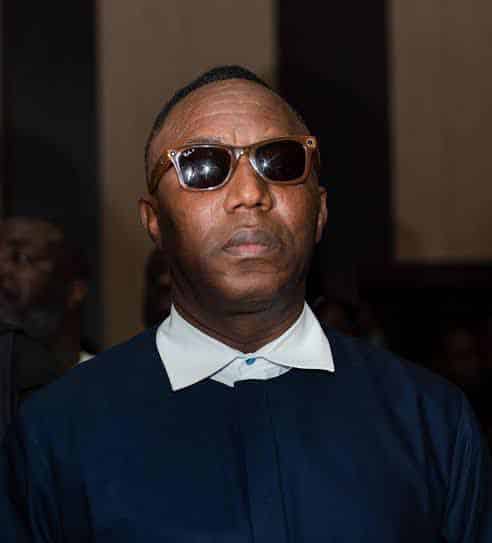
Sowore, known for his resilience and fearlessness, was said to have calmly questioned the officers before being led away into a waiting vehicle surrounded by armed personnel.
Members of his legal team, led by the respected human rights lawyer Tope Temokun, confronted the officers and demanded to know the reason for the sudden detention.
Despite their intervention, the police maintained that they were merely acting on “direct instruction” from the Commissioner of Police and refused to offer further clarification.
This latest Omoyele Sowore arrest has triggered strong criticism from pro-democracy groups and civil society organizations across Nigeria. Many activists have described it as another clear example of intimidation targeted at dissenting voices, especially those who challenge the political establishment.
Sowore, the publisher of Sahara Reporters, has long been recognized for his fearless journalism and activism. He rose to national prominence in the late 1990s as a student union leader at the University of Lagos, where he led numerous protests against government corruption and mismanagement.
Over the years, he has become one of the most consistent critics of injustice and oppression in Nigeria’s political system.
In 2019, Sowore was arrested by the Department of State Services (DSS) after organizing the #RevolutionNow movement — a campaign calling for political reform and good governance.
His arrest at that time attracted widespread international condemnation, with global rights organizations such as Amnesty International and Human Rights Watch demanding his immediate release.
Legal experts have expressed concern that the Omoyele Sowore arrest once again highlights the misuse of state power against opposition voices.
According to a senior member of the Nigerian Bar Association (NBA), the repeated arrests of the activist are a violation of his constitutional rights.
“This arrest has no legal foundation,” the lawyer said.
“The Nigerian Constitution guarantees every citizen the right to free speech and peaceful movement. Repeatedly arresting Omoyele Sowore undermines both democracy and the rule of law.”
Online reactions to the Omoyele Sowore arrest have also been swift. Social media platforms such as X (formerly Twitter) have been flooded with hashtags like #FreeSowore and #OmoyeleSoworeArrest, with many Nigerians expressing outrage over the incident.
Users argue that such arrests only deepen the fear that the country’s democratic space is shrinking under increasing authoritarian tendencies.
A social commentator wrote: “The arrest of Omoyele Sowore is not just about one man. It’s about every Nigerian’s right to speak truth to power without fear of persecution.”
Human rights groups have called on the National Human Rights Commission (NHRC) and the Nigerian Police Force to provide a full explanation regarding the arrest.
Some activists have also demanded the immediate release of Sowore and warned that continued harassment of government critics could provoke public unrest.
Meanwhile, spokespersons for the FCT Police Command have declined to comment in detail on the incident, saying only that the police “acted within the scope of the law.”
However, the lack of transparency surrounding the arrest has fueled suspicion among observers and further angered civil society organizations.
Political analysts believe the Omoyele Sowore arrest exposes the deep tension between Nigeria’s security agencies and civic activists.
They argue that suppressing critical voices will only damage the government’s credibility both locally and internationally. Some warn that such actions could deter foreign investors who view political instability and repression as major risks.
Over the years, Sowore has continued to push for reforms in governance, transparency, and social justice. His commitment to speaking truth to power has earned him admiration among Nigeria’s youth, many of whom see him as a symbol of resistance against corruption and inequality.
Despite repeated arrests, he has remained steadfast in his demand for a better Nigeria.
In response to the recent Omoyele Sowore arrest, several advocacy groups have vowed to hold peaceful demonstrations in Abuja and other parts of the country. They insist that Sowore’s detention is politically motivated and demand his unconditional release.
A joint statement by the Coalition for Civic Freedom (CCF) and Concerned Citizens Forum (CCF) reads:
“The Omoyele Sowore arrest marks another dark moment for democracy in Nigeria. We urge the authorities to respect fundamental human rights and immediately release him. No nation can claim to be democratic while silencing its citizens.”
As of press time, efforts to reach the FCT Commissioner of Police for an official comment proved unsuccessful.
Legal representatives for Sowore confirmed that they are making arrangements to secure his release and may consider legal action against the police for unlawful detention.
The Omoyele Sowore arrest has once again brought to the fore questions about Nigeria’s democratic integrity. Analysts warn that unless the government prioritizes justice and human rights, the country risks eroding public confidence in its institutions.
For Sowore, the latest arrest may only strengthen his resolve to continue advocating for change — a mission he has pursued for over two decades, regardless of intimidation, imprisonment, or threats.
More news at ireport247news
About The Author