As Republican-led states accelerate controversial redistricting efforts, Democrats remain split over their response. Hakeem Jeffries is stepping forward to guide the party’s approach in this intensifying national fight.
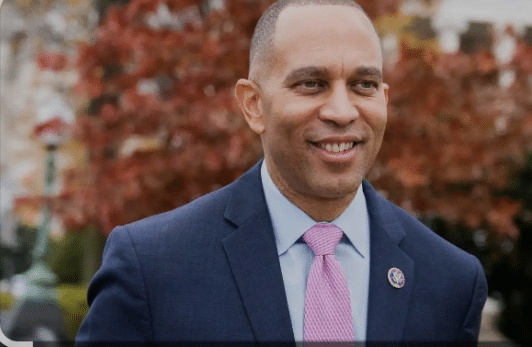
The House minority leader Hakeem Jeffries is scheduled to visit Illinois today, a move widely interpreted as a signal that Democrats intend to counter the GOP’s aggressive push to redraw electoral boundaries.
Republican states have moved rapidly since early October, unveiling new congressional maps critics say are designed to entrench conservative dominance through selective boundary engineering. Democrats are weighing strategic and legal countermeasures.
In Virginia, the Democratic House speaker recently called a special session on redistricting, marking the first formal step by a blue-state legislature to reassert control over the redistricting narrative before the next election cycle.
Party insiders say Jeffries’ visit to Illinois is more than symbolic—it represents a blueprint for a coordinated Democratic counter-offensive aimed at ensuring fair representation across competitive districts nationwide.
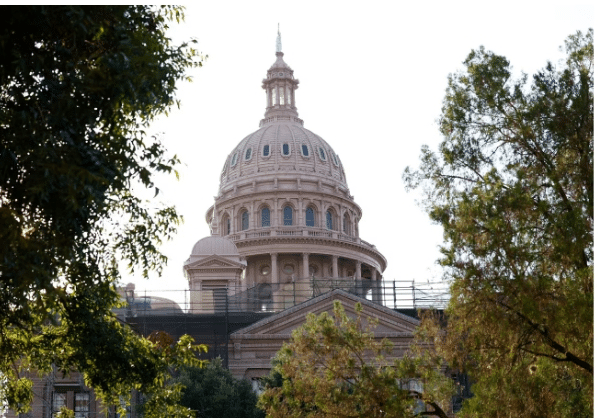
The redistricting efforts sweeping Republican-controlled states such as Texas, Florida, and Georgia could significantly alter the national congressional balance. Democrats fear the resulting maps could dilute urban and minority voter strength.
Hakeem Jeffries has framed his position around fairness and constitutional integrity, arguing that “democracy is weakened when partisan lines determine outcomes instead of voters determining leadership.” His Illinois trip amplifies that message.
While Illinois remains a blue stronghold, analysts suggest that Jeffries’ focus there highlights its symbolic value. The state’s congressional boundaries are often seen as a model for balancing urban and rural representation.
Democratic strategists view this moment as a test of party unity. Some leaders urge coordinated redistricting responses across blue states; others prefer focusing on court challenges rather than drawing counter-maps.
Jeffries has maintained that doing nothing would be politically reckless. “Republican states are moving fast,” he told aides last week, “and we must not let them set the tone unopposed.”
The national Democratic strategy appears to hinge on timing—when to act and how aggressively. Many worry that premature moves could provoke lawsuits or alienate independent voters ahead of 2026.
At the same time, the party’s legal teams are monitoring redistricting lawsuits in Alabama and North Carolina, cases that could shape national precedent on race, representation, and gerrymandering standards.
Jeffries’ Illinois visit is also expected to include meetings with local election boards and civil-rights advocates. Sources say he will emphasize coalition-building between grassroots organizations and national leadership.
In Washington, Democratic committee heads have begun drafting proposals for federal oversight mechanisms, citing the need for transparency and consistency in how state maps are drawn and approved.
Some observers believe that Jeffries’ growing involvement reflects his broader ambition to project leadership beyond the House minority role, positioning himself as a defender of democratic institutions nationwide.
Republican leaders, however, dismiss these concerns as political theater. They argue that their redistricting efforts merely align district boundaries with population shifts recorded in the most recent census.
Still, voting-rights groups have warned that minority-heavy districts in Republican states are being systematically divided. The Brennan Center for Justice recently identified several new maps as “racially regressive.”
Jeffries’ team has cited such findings to justify more proactive engagement by Democratic-run states, calling for what aides describe as a “principled redistricting response” grounded in fairness and equal representation.
As the redistricting efforts continue, Illinois Democrats are reportedly reviewing whether to make minor boundary adjustments to counterbalance potential Republican advantages in neighboring states.
Virginia’s special session, convened by Democratic House Speaker Don Scott, could set a precedent for other states. If successful, similar sessions might follow in California and New York before year’s end.
Insiders say Jeffries has privately urged governors and legislative leaders to synchronize their approaches to avoid legal contradictions and public confusion about Democratic intent on redistricting.
The party’s communications team is simultaneously preparing a national messaging campaign. It will stress that Democrats support “voter-driven maps,” contrasting them with what they term “Republican-engineered political grids.”
Polls show public concern about gerrymandering is growing. Nearly 63% of Americans in a recent survey said they prefer independent commissions over partisan legislatures drawing congressional boundaries.
Jeffries plans to use these numbers to reinforce his appeal for bipartisan reforms while positioning Democrats as defenders of democracy rather than participants in partisan manipulation.
Political scientists argue that the redistricting battle will shape more than maps—it could influence voter turnout, representation of emerging communities, and ultimately control of the U.S. House.
In Illinois, Jeffries will meet with Governor J.B. Pritzker and state party officials. Reports suggest they will discuss resource allocation for potential legal challenges and coalition mobilization efforts.
The Illinois stop forms part of a broader national tour that includes future visits to Michigan, Pennsylvania, and Wisconsin—all key states where district realignments could tip congressional outcomes.
Jeffries’ itinerary underscores his belief that redistricting must be addressed at both the local and national levels. He wants Democrats to view the issue as central to protecting democratic participation.
Analysts note that his strategic communication skills—measured, persuasive, and rooted in constitutional framing—have helped unify factions within the Democratic caucus that were previously skeptical of redistricting activism.
Meanwhile, Republican leaders insist their actions are within legal boundaries. They point to judicial rulings affirming that population-based redistricting is not inherently partisan if it adheres to census standards.
However, Democrats counter that these rulings are being misinterpreted, emphasizing that the cumulative effect of multiple Republican maps undermines fair competition and entrenches one-party dominance.
Civil-rights lawyers expect several lawsuits in coming months, with Jeffries’ office likely coordinating amicus briefs supporting challenges to GOP-drawn maps viewed as discriminatory or manipulative.
For now, Jeffries remains the visible face of Democratic resistance—a role that has elevated his profile and drawn comparisons to earlier reformist leaders within Congress.
He has also used the platform to push for broader electoral reforms, including federal safeguards for voting access, transparency in campaign funding, and clearer standards for redistricting oversight.
Party strategists believe his involvement will boost Democratic fundraising and grassroots engagement by framing redistricting as a moral and civic issue rather than a purely political one.
As Jeffries travels through Illinois, his speeches are expected to focus on fairness, unity, and resilience. Observers expect him to emphasize how collective action can protect democratic integrity for future generations.
Political forecasters suggest that the coming months will determine whether Democrats can transform concern into coordinated strategy—or if internal hesitation will hand Republicans a decisive structural advantage.
What remains clear is that Hakeem Jeffries has chosen to lead this fight personally, blending legal activism, political organization, and public persuasion into a single message of democratic defense.
If successful, his campaign could redefine the Democratic strategy for redistricting, offering a blueprint for how blue states respond to redrawn political realities in an increasingly divided United States.
About The Author