
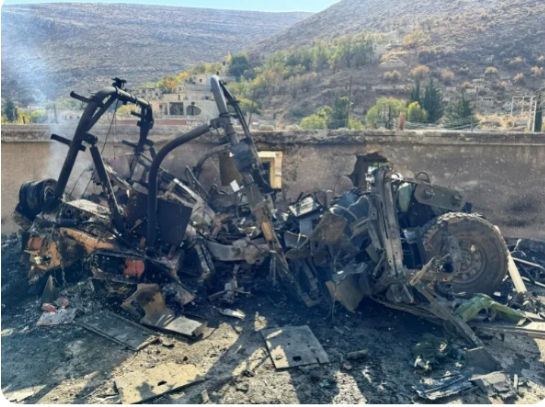
Following the recent extrajudicial killings in Jenin, Israel launched attacks in southern Syria and Gaza today, causing multiple casualties and heightening tensions across the region.
At least 13 Syrians were killed in Beit Jinn airstrikes, with dozens more injured, according to local authorities. Residents described the attacks as indiscriminate and devastating to civilians.
Witness Osama Bin Javaid said, “Israeli forces came without warning, destroying homes and equipment. Families had no time to evacuate; the devastation is total and shocking.”
In Gaza, Israeli artillery targeted the Bani Suheila municipality near Khan Younis, killing at least one Palestinian and injuring others, as reported by local health officials and witnesses.
Human rights advocates condemned the attacks as human rights violations, noting that women and children were among the most affected by Israel’s military operations today.
Neve Gordon, a professor of international law, stated, “These attacks following Jenin killings show a pattern of impunity. Civilians are being targeted, and accountability is nowhere in sight.”
Syrian authorities called the Beit Jinn airstrikes a “war crime” and demanded immediate cessation of attacks, stressing that local residents had not engaged in hostilities against Israel.
Residents of Beit Jinn said, “We live in fear. Our homes were flattened, and children are traumatized. The attacks are completely unjustified,” reflecting anger and despair.
In Gaza, families reported destruction of homes, infrastructure, and public services, intensifying an ongoing humanitarian crisis and forcing many to seek temporary shelter with relatives.
Ahmad Alhendawi from Save the Children warned, “Children are being denied school and safety. Conflict escalation after Jenin killings worsens the vulnerability of Gaza’s youth and families.”
Israeli authorities claimed the attacks targeted fighters linked to hostile groups. Critics argue these operations are disproportionate, striking residential areas and causing unnecessary civilian casualties.
The military also reported injuries among its forces during Beit Jinn airstrikes, highlighting the volatility of operations near Syrian frontlines and the dangers of ongoing conflicts.
UN officials criticized Israel, noting, “These attacks are destabilizing southern Syria and Gaza. Civilians must be protected under international law, and violations cannot be ignored,” stressing urgent accountability.
The escalation follows extrajudicial killings in Jenin, where Israeli forces shot two Palestinians attempting to surrender. Attacks in Syria and Gaza are widely seen as retaliation.
Local journalists documented widespread damage in southern Syria, with destroyed homes, schools, and clinics. Reporter Ali Ahmed al-Najjar said, “The scale of destruction is unprecedented in this area in recent years.”
Humanitarian agencies warn of rising displacement. Palestinian displacement in Gaza is worsening as families lose homes and livelihoods, while in Syria, residents struggle to recover from repeated airstrikes.
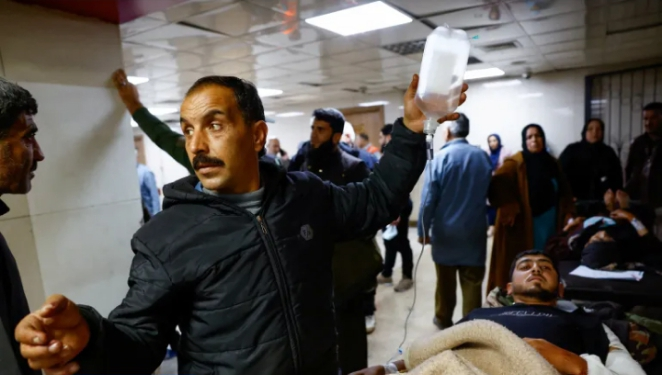
Medical workers report overwhelmed hospitals. “We are running out of supplies and space for the wounded. Every day brings more casualties,” said a doctor in southern Gaza.
International law experts stress that targeting civilians constitutes a violation of the Geneva Conventions. Gordon added, “These attacks may qualify as war crimes and must be investigated by impartial authorities.”
Residents in Gaza described nights of fear and trauma, with children unable to sleep or attend school. “The airstrikes are constant, and life feels impossible,” said community leader Fatima Abu Saleh.
Israel’s actions in Beit Jinn airstrikes and Gaza reflect a broader strategy to project power following internal events in Jenin, sending a signal to local and regional actors.
UN Deputy Special Envoy Najat Rochdi condemned the Syria strikes as “grave and unacceptable violations of sovereignty, worsening an already fragile environment, and putting civilians at tremendous risk.”
Eyewitnesses in both Gaza and Syria reported blocked roads, destroyed infrastructure, and emergency evacuations, leaving thousands without access to basic necessities.
The attacks today underscore a growing cycle of violence. Analysts warn that repeated military operations following incidents like Jenin killings deepen resentment and prolong instability in the region.
Palestinian rights groups highlighted ongoing human rights violations, stating civilians are systematically targeted, education is disrupted, and healthcare systems collapse under military pressure.
International observers call for restraint. “These attacks must stop. Parties must adhere to international humanitarian law and protect civilians,” emphasized UN spokesperson Stéphane Dujarric.
Eyewitness testimony from Beit Jinn paints a harrowing picture: families trapped under rubble, children crying for lost parents, and homes reduced to ruins after Israeli bombings.
In Gaza, emergency shelters are filling rapidly. Aid organizations are providing food, water, and medical care for residents affected by today’s attacks, further straining resources.
The escalation after Jenin killings raises questions about accountability. Analysts note, “Patterns of extrajudicial killings followed by strikes in Syria and Gaza indicate systematic impunity and disregard for civilian life.”
Local residents insist the areas targeted were not involved in hostilities. “We have never fired at Israel, yet our homes are destroyed. Nothing justifies this,” said a Syrian villager from Beit Jinn.
The international community has begun calling for investigations into the attacks. Observers emphasize that both Beit Jinn airstrikes and Gaza shelling must be scrutinized to prevent further civilian casualties.
Humanitarian organizations are increasingly concerned about Palestinian displacement, warning that repeated attacks force families into overcrowded shelters, leaving children and the elderly particularly vulnerable.
Journalists covering Gaza report that even after explosions subside, fear remains. Residents recount trauma, disrupted routines, and uncertainty, with many fearing the next attack could come at any moment.
The attacks highlight the human cost of regional conflicts and retaliatory strategies following extrajudicial killings in Jenin, emphasizing the need for international oversight and humanitarian protections.
UN agencies and NGOs continue delivering aid but warn that without ceasefire agreements, civilians in Gaza and Syria will continue suffering disproportionately during military escalations.
Eyewitness accounts from Beit Jinn show families salvaging possessions from destroyed homes. “We have lost everything, yet we try to survive. The world must see what is happening here,” said Ali Khoury.
The attacks also raise broader geopolitical concerns, as tensions between Israel, Syria, and Gaza-based factions could destabilize the wider region if escalations continue unchecked.
Global advocacy groups continue pressing for immediate protection of civilians. “Accountability and international law enforcement are the only ways to prevent further massacres,” said B’Tselem spokesperson Hanna Safadi.
Medical teams in Gaza report injuries mounting daily, with hospitals overwhelmed. “We cannot keep up with the wounded; every day brings new trauma to children and families,” said a nurse.
The attacks today demonstrate a direct link between internal operations in Jenin and broader regional military actions, revealing the interconnected nature of ongoing conflict dynamics in Israel, Gaza, and Syria.
UN representatives emphasized that attacks like Beit Jinn airstrikes and Gaza shelling violate international norms. “Civilians must be spared, humanitarian aid must reach them, and perpetrators held accountable,” they stressed.
Eyewitnesses in both conflict zones underscore the human toll: families separated, homes destroyed, children traumatized, and communities destabilized by the relentless escalation following Jenin killings.

As violence escalates, international monitoring is critical to ensure compliance with humanitarian laws and prevent further human rights violations, protect civilians, and facilitate reconstruction for affected populations.
About the Author




