

Iran war live updates show rising tensions as the Islamic Revolutionary Guard Corps warns of retaliation beyond the Middle East while the United States pushes a deadline over the Strait of Hormuz.
The Islamic Revolutionary Guard Corps, commonly known as the IRGC, issued a stern warning that any escalation by the United States would provoke a response targeting global energy routes.
Officials stated that oil and gas flows could be disrupted for years if Washington crosses what Tehran describes as red lines involving civilian infrastructure or strategic economic facilities.
This declaration marks one of the strongest threats issued during the current crisis, suggesting Iran is prepared to expand confrontation beyond the Middle East into wider global economic systems.
The Strait of Hormuz remains central to the standoff, with the United States demanding its full reopening as a key condition tied to ongoing diplomatic and military pressure.
Iran has resisted these demands, arguing that security conditions and compensation for damages must be addressed before any meaningful reopening of the strategic maritime corridor can occur.
US President Donald Trump intensified rhetoric by warning that failure to comply could result in devastating consequences, using language that heightened fears of imminent large-scale military escalation.
Trump’s statement that an entire civilisation could be at risk drew global attention, prompting concerns among international observers about the potential for rapid deterioration into broader conflict.
The deadline imposed by Washington has added urgency, with only hours remaining before potential action, increasing anxiety across financial markets and diplomatic channels worldwide.
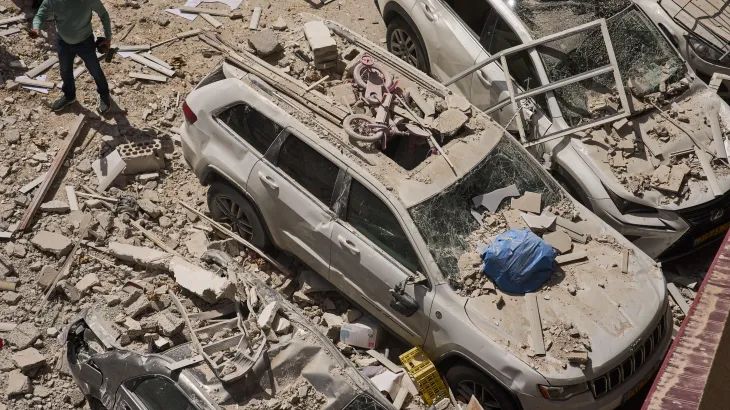
Meanwhile, a reported strike on a rail bridge in Kashan has added to tensions, with casualties reported and infrastructure damage raising fears of further escalation inside Iran.
The attack followed warnings issued to civilians to avoid transportation networks, highlighting the growing risks faced by ordinary people as military and strategic targets expand.
Iranian authorities condemned the strike, describing it as an attack on civilian infrastructure and signaling that such incidents could justify broader retaliation against perceived aggressors.
Israel’s role in the unfolding crisis remains closely watched, as previous warnings about avoiding transport systems appear to align with targeted disruptions across Iranian logistics networks.
Analysts suggest that infrastructure strikes are designed to weaken internal mobility and economic resilience, potentially limiting Iran’s ability to sustain prolonged conflict scenarios.
Iran’s leadership has responded by emphasizing resilience and warning that retaliation will not be limited to regional actors but could involve broader global strategic interests.
Energy markets have reacted nervously to the developments, with concerns that any disruption in the Strait of Hormuz could significantly impact global oil and gas supplies.
The waterway is one of the most critical energy transit routes in the world, handling a significant portion of international petroleum exports, making it a focal point in geopolitical tensions.
Diplomatic efforts continue behind the scenes, with intermediaries attempting to bridge gaps between Washington and Tehran, though progress appears limited amid escalating rhetoric from both sides.
Iran’s response to ceasefire proposals has been described as significant but insufficient by US officials, indicating that negotiations remain fragile and far from resolution.
Regional allies of the United States are also monitoring developments closely, given the potential for conflict spillover into neighboring countries and strategic partnerships across the Middle East.
Military readiness levels have reportedly increased on multiple sides, reflecting the seriousness of the situation and the possibility that diplomatic channels may not prevent further escalation.
Iran’s warnings about targeting global energy supplies represent a strategic shift, emphasizing economic warfare alongside traditional military responses to perceived threats.
Experts note that such threats aim to deter direct intervention by raising the potential global cost of conflict, particularly for countries heavily dependent on energy imports.
At the same time, the United States maintains that freedom of navigation through the Strait of Hormuz is non-negotiable, framing its demands as essential to global economic stability.
The confrontation underscores longstanding tensions between Iran and the United States, rooted in geopolitical rivalry, sanctions, and conflicting regional interests spanning decades.
Public reactions within Iran reflect a mixture of defiance and concern, as citizens face uncertainty over safety, economic stability, and the potential for prolonged conflict.
Similarly, global audiences are closely following developments, with widespread concern about the humanitarian and economic consequences of further escalation in the region.
The situation has also prompted renewed calls for international mediation, with several countries urging restraint and emphasizing the importance of dialogue over ռազմական confrontation.
Iran’s insistence on defending its sovereignty remains central to its position, with officials repeatedly stating that any aggression will be met with proportionate or greater responses.
Meanwhile, the United States continues to apply pressure through both military positioning and diplomatic messaging, seeking to compel compliance with its strategic objectives.
The coming hours are seen as critical, as the deadline approaches and decisions made by key actors could determine whether tensions escalate into direct confrontation.
Observers warn that miscalculations or unintended incidents could rapidly spiral into broader conflict, given the high stakes and heightened alert levels currently in place.
The role of allies and regional powers may also prove निर्णive, as their involvement could either contain or amplify the crisis depending on strategic alignments.
Economic implications extend beyond energy markets, with potential disruptions affecting global trade routes, supply chains, and financial stability in interconnected economies.
Humanitarian concerns are equally pressing, as infrastructure damage and military actions risk impacting civilian populations and essential services within affected areas.
International organisations have urged all parties to prioritise civilian safety and adhere to established norms governing conflict and the protection of non-combatants.
Read also: Resident doctors strike NHS leaves patients waiting in pain, warns Streeting
Despite escalating rhetoric, there remains cautious optimism that diplomatic interventions could still avert worst-case scenarios if compromises are reached in time.
However, the current trajectory suggests that tensions are intensifying, with both sides reinforcing positions rather than signaling readiness for immediate de-escalation.
The evolving situation continues to dominate global headlines, reflecting its significance not only for the Middle East but for international security and economic stability.
Ultimately, Iran war live updates highlight a volatile moment where strategic decisions, military calculations, and diplomatic efforts intersect with potentially far-reaching consequences worldwide.
About The Author
