

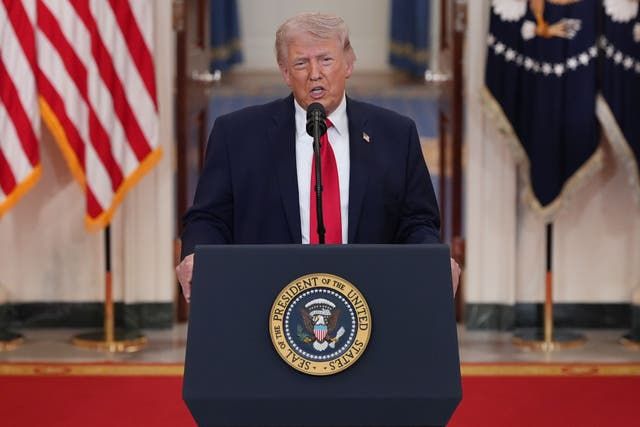
The Iran-US war escalation has entered a dangerous and unpredictable phase, with Donald Trump signaling that American military operations may soon wind down while Iran insists the conflict will continue until its adversaries are forced into total surrender.
Iranian military spokesperson Ebrahim Zolfaqari delivered one of the most hardline statements since the conflict began, declaring that the war would persist until the United States and its allies face permanent humiliation and defeat. His remarks underline Tehran’s refusal to consider compromise.
This sharply contrasts with Trump’s messaging, which has shifted between projecting imminent victory and suggesting a near-term withdrawal. The inconsistency has created uncertainty among allies and raised questions about the true state of the conflict.
In a televised national address, Trump claimed that core military objectives were nearing completion. However, he did not define those objectives, leaving analysts questioning whether the United States has achieved its strategic goals.
He praised joint operations with Israel, describing them as decisive and highly effective. The campaign, referred to as Operation Epic Fury, has reportedly targeted Iranian military infrastructure and strategic installations.
Despite these claims, observers note that Iran retains significant operational capabilities, including missile systems, naval forces, and regional influence through allied groups. This raises doubts about whether the conflict can end quickly.
Iran’s leadership has responded with defiance, framing the war as a defense of national sovereignty against foreign aggression. Officials have emphasized resilience and unity as key themes in public messaging.
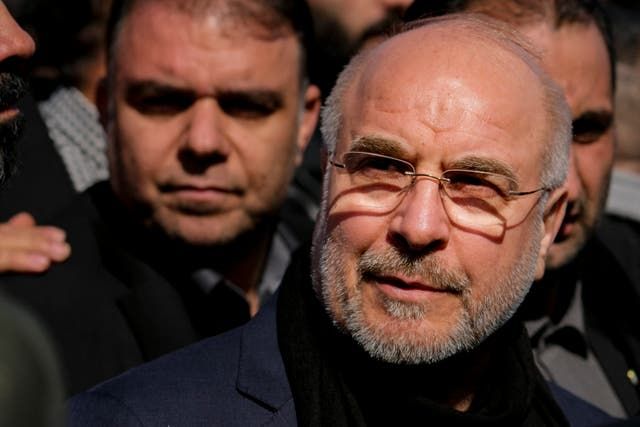
Parliamentary speaker Mohammad Bagher Ghalibaf reinforced this stance, claiming that millions of citizens have mobilized in support of the armed forces. He described the conflict as a national struggle requiring long-term commitment.
According to his statements, increased enlistment reflects widespread public support for continued resistance. While difficult to independently verify, such claims are intended to project strength and stability.
Beyond rhetoric, the Iran-US war escalation is having major consequences for global energy markets, particularly through disruptions in the Strait of Hormuz. This narrow waterway is one of the most strategically important routes for oil transport.
A significant portion of global oil shipments passes through the strait, making any disruption a serious concern for international economic stability. Even minor interruptions can trigger sharp price increases.
Reports indicate that Iran has introduced a system requiring foreign tankers to pay fees in exchange for safe passage. These payments may be made using alternative currencies or digital methods.
This development highlights Iran’s ability to use its geographic position as leverage. By controlling access to the strait, Tehran can influence global markets and apply pressure on rival economies.
The introduction of escorted routes and controlled access suggests a shift toward a more structured system of maritime control. This effectively places part of global oil transit under Iranian oversight.
Western governments have responded by increasing diplomatic efforts aimed at restoring free navigation and stabilizing energy markets. However, progress has been limited.
The United Kingdom has taken a leading role in these efforts, criticizing Iran’s actions and calling for coordinated international intervention. European allies are also involved in ongoing discussions.
France and Germany are among the countries working to find a solution that ensures safe passage while avoiding further military escalation.
The situation remains fragile, with a high risk of miscalculation. Military forces operating in close proximity increase the chances of unintended incidents that could escalate quickly.
Signs of broader instability are already visible. In northern Iraq, a suspected drone strike targeted an oil facility near Erbil, demonstrating how the conflict is spreading beyond its original boundaries.
Such developments highlight the growing risk of a wider regional conflict involving multiple actors and strategic interests.
Key military positions are also drawing attention. One such location is Qeshm Island, believed to host underground missile systems capable of targeting ships in the Strait of Hormuz.
The island is considered a critical component of Iran’s defensive and offensive capabilities. Its infrastructure could play a decisive role in controlling maritime access.
Any attempt to neutralize such positions would carry significant risks, potentially triggering a more intense phase of the conflict.
At the same time, political pressure is increasing within the United States and allied countries. Leaders are facing growing scrutiny over the objectives and duration of the war.
Critics argue that the lack of clear goals makes it difficult to justify continued military involvement. Public confidence may weaken if uncertainty persists.
Economic effects are becoming more visible, with rising fuel prices reflecting disruptions in supply and increased market volatility.
These impacts demonstrate how the Iran-US war escalation extends beyond military operations, affecting global economies and everyday life.
Trump has attempted to reassure the public by emphasizing economic resilience, arguing that the United States can withstand the pressures created by the conflict.
However, analysts warn that prolonged instability in the Strait of Hormuz could lead to sustained disruptions with long-term consequences.
Iran, meanwhile, appears prepared for a prolonged confrontation. Its leadership continues to signal that it is willing to endure pressure to achieve strategic objectives.
This difference in approach complicates efforts to reach a resolution. While the United States hints at withdrawal, Iran shows no sign of reducing its demands.
The gap between these positions increases the likelihood of continued confrontation rather than a negotiated settlement.
As the Iran-US war escalation continues, the international community faces the challenge of preventing further escalation while seeking diplomatic solutions.
Read more here:Trump Iran war address claims conflict nearing end amid global economic strain
The coming weeks will be critical in determining whether tensions ease or intensify, with significant implications for regional stability and global markets.