Nigeria’s electoral umpire, the Independent National Electoral Commission, has officially rolled out the timetable for the 2027 general elections, signaling the formal commencement of preparations for another nationwide democratic exercise.
The announcement fixes February 20, 2027, for presidential and National Assembly elections, while governorship and state Houses of Assembly polls are slated for March 6, 2027.
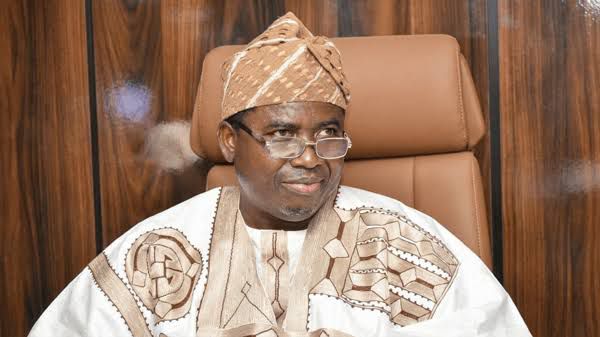
The Chairman of INEC, Prof. Joash Amupitan, disclosed the schedule during a press briefing in Abuja, explaining that the early declaration aligns strictly with constitutional and statutory provisions.
According to him, the law requires the commission to publish a notice of election not later than 360 days before the date fixed for the polls.
By unveiling the dates well ahead of time, INEC has activated the legal and administrative framework for the 2027 contests.
The elections will cover key national and subnational offices. Nigerians will elect a President and Vice President, members of the Senate and House of Representatives, as well as Governors and Deputy Governors in most states.
However, governorship elections will not take place in Anambra, Bayelsa, Edo, Ekiti, Imo, Kogi, Ondo, and Osun due to their off-cycle electoral arrangements. Legislative elections into the State Houses of Assembly will also be conducted where applicable.
INEC emphasized that its decision is rooted in the 1999 Constitution (as amended) and the Electoral Act, 2022.
The chairman noted that the tenure of the President, Vice President, Governors, and Deputy Governors—except those in off-cycle states—will expire on May 28, 2027. Meanwhile, the mandates of members of the National and State Assemblies will lapse on June 8, 2027.
Constitutional provisions require that elections be conducted not earlier than 150 days and not later than 30 days before the expiration of current office holders’ terms. The chosen February and March dates fall squarely within that window.
Beyond announcing the election days, INEC has also published a detailed timetable outlining the sequence of pre-election activities.
Political parties are expected to conduct their primaries within the timeframe stipulated by law. The submission of nomination forms by parties will open and close within clearly defined dates.
INEC warned that it will strictly enforce compliance, stressing that failure to meet deadlines could attract sanctions as provided by law.
Campaign activities will begin on the legally approved date and must end 24 hours before Election Day.
The commission reminded parties and candidates that adherence to campaign finance rules, codes of conduct, and other regulatory provisions is mandatory.
According to the chairman, transparent enforcement of these guidelines is critical to safeguarding the credibility of the electoral process.
Addressing concerns over the pending Electoral Amendment Bill before the National Assembly, INEC clarified that it remains bound by the current legal framework until any amendments are formally enacted.
While expressing readiness to adopt reforms that may strengthen election management, the commission maintained that it cannot delay preparations in anticipation of legislative changes.
Any postponement in operational planning, it warned, could create logistical setbacks.
The early release of the timetable has been interpreted by observers as a proactive move aimed at reducing uncertainty.
By clearly mapping out deadlines for primaries, nominations, campaigns, and polling dates, INEC is providing political actors and voters with ample time to prepare.
The commission said it has already circulated the schedule to political parties and stakeholders and uploaded it to its official website to ensure transparency.
INEC further described the 2027 general elections as a shared national responsibility.
The chairman called on government institutions, security agencies, civil society organizations, the media, political actors, and the electorate to collaborate in ensuring peaceful and credible polls.
He stressed that successful elections depend not only on administrative efficiency but also on the commitment of all stakeholders to uphold democratic principles.
Security agencies are expected to play a pivotal role in maintaining order before, during, and after the elections.
Civil society groups and election observers will likely intensify voter education and monitoring efforts, while political parties begin internal consultations and strategic alignments ahead of their primaries.
For voters, the early timetable offers clarity and sufficient time to update their registration details where necessary.
Analysts believe the structured approach adopted by INEC could enhance public confidence in the electoral system, particularly amid debates surrounding electoral reforms.
By adhering strictly to constitutional timelines, the commission seeks to reinforce its independence and institutional credibility.
As preparations gather momentum, attention will gradually shift to party primaries, coalition talks, and campaign strategies.
The coming months are expected to witness heightened political activity across the federation. However, INEC has reiterated that compliance with statutory timelines remains non-negotiable.
With the countdown to 2027 officially underway, Nigeria’s democratic landscape is entering another crucial phase.
The timetable announcement marks the first major milestone in what will be a multi-stage process culminating in the election of leaders at both national and state levels.
Ireport247news
About The Author