Indonesian authorities resumed the Indonesia landslide rescue efforts on Sunday to find around 80 people missing after a deadly landslide killed 10 residents in West Java.
The landslide struck Pasirlangu village early Saturday morning, sweeping through homes and forcing terrified residents to flee. Authorities paused operations overnight due to heavy rain and dangerous terrain conditions.
“We had to stop overnight because conditions were too risky for our teams,” said mission coordinator Ade Dian Permana, explaining the pause before rescue efforts resumed Sunday morning.
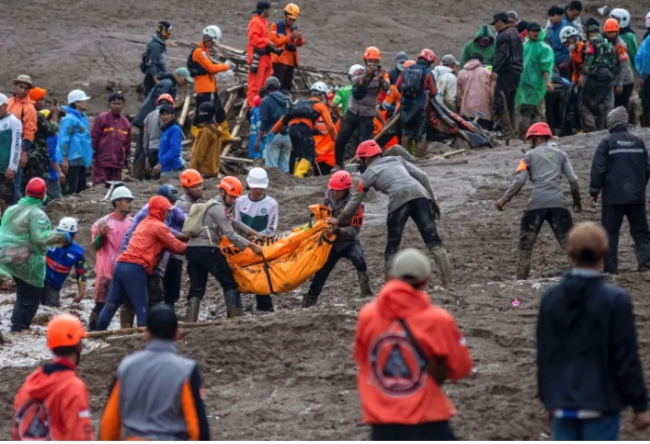
Rescuers worked alongside the military, police, and local volunteers to manually excavate mud-covered homes. Drones and canine units were deployed to search for trapped or missing villagers.
Kompas TV reported that unstable terrain and continuous rainfall prevented the use of heavy machinery, slowing recovery operations and leaving rescuers dependent on careful manual digging throughout the area.
Resident Dedi Kurniawan, 36, described the terrifying event, saying, “Sometimes we have only small floods from nearby rivers, but this time it came down from the forest.”
Authorities warned that the ground remained unstable, and further landslides could occur. Residents were urged to stay away from affected areas until the search operations concluded safely.
Floods were reported in several areas across West Java, including Jakarta, forcing residents to relocate to higher ground or unaffected areas for their safety.
The landslide is one of many disasters occurring in Indonesia’s rainy season, typically running from October to March, which often brings heavy rains and widespread flooding.
Last year, tropical storms and monsoon rains triggered floods and landslides on Sumatra island, killing approximately 1,200 people and displacing over 240,000 residents from their homes.
Environmental experts and government officials have repeatedly cited deforestation as a key factor, noting that forest loss accelerates mudflows into villages during extreme rainfall events.
“The loss of forest cover worsens flooding and landslides, making villages extremely vulnerable during heavy rainfall,” said a spokesperson for Indonesia’s national disaster agency on Sunday.
West Java’s mayor highlighted the difficult terrain, warning that rescuers faced steep hills, unstable mud, and debris that complicated access to the most affected areas.
Rescue teams worked tirelessly, often manually, moving debris and using ropes to reach homes partially buried in mud, showing courage and determination in hazardous conditions.
Some residents described narrowly escaping the landslide, recounting how sudden mudflows from hills engulfed their properties and forced them to flee to safer ground immediately.
Authorities have urged all residents in surrounding villages to remain vigilant, as further rainfall could trigger additional landslides or floods during the ongoing rainy season.
Drones provided aerial views of the disaster area, helping teams identify likely locations of trapped villagers and plan their approach in the treacherous terrain effectively.
Canine units played a critical role in locating victims hidden under debris, assisting rescue teams in reaching people quickly despite unstable mud and blocked pathways.
Rescue efforts resumed after a night of heavy rain, showing the determination of authorities to find missing villagers despite ongoing challenges and unpredictable weather conditions.
The disaster has highlighted Indonesia’s vulnerability to climate-related events, exacerbated by deforestation, urban expansion, and poorly maintained river systems across the archipelago.
Recent extreme weather events have repeatedly caused landslides and floods, making preparation and early warning systems vital to prevent large-scale casualties in West Java and other provinces.
This month, torrential rains caused a flash flood on Siau island, killing at least 16 people and demonstrating the recurring risks faced by Indonesian communities during monsoon seasons.
Villagers said this landslide was unprecedented in Pasirlangu, with many homes destroyed, leaving families homeless and causing significant psychological trauma among residents who survived the disaster.
The government has previously filed lawsuits against companies responsible for deforestation and environmental damage, seeking damages exceeding $200 million following deadly floods on Sumatra.
Heavy rainfall has also disrupted transportation and communication networks in West Java, slowing the arrival of rescue teams, aid, and emergency supplies to affected areas.
Local volunteers and residents joined military personnel to provide food, water, and temporary shelter for those evacuated, highlighting the importance of community response during disasters.
The national disaster agency emphasized that every available resource was being deployed, including specialized equipment, personnel, and technical expertise, to improve the chances of rescuing missing villagers.
Officials cautioned against venturing into landslide-hit areas, citing the risk of further mudslides, landslides, or sudden flooding as heavy rains continued across West Java.
Social media posts showed destroyed houses, muddy streets, and villagers being rescued from partially buried buildings, drawing national attention to the tragedy and humanitarian need.
Authorities continue to monitor rainfall levels and weather forecasts closely, preparing for potential secondary disasters that could threaten both residents and ongoing rescue operations.
“Safety of both rescuers and residents remains our highest priority while continuing the Indonesia landslide rescue operation,” said Ade Dian Permana during Sunday’s update on recovery efforts.
The Indonesian Red Cross and other NGOs have also mobilized to support victims, providing medical assistance, clean water, and psychological care for those affected by the landslide.
The combination of heavy rainfall, unstable terrain, and forest loss has contributed to the severity of this disaster, demonstrating the complex interplay of natural and human factors.
Meteorologists reported that this region of West Java is likely to experience more intense rainfall throughout the season, requiring ongoing vigilance from authorities and residents alike.
Survivors described dramatic escapes, with families clinging to trees or climbing nearby hills as mud and debris engulfed their homes within minutes.
Authorities emphasized that community awareness and early warnings can significantly reduce casualties in future landslides, encouraging residents to heed evacuation notices promptly.
Some local schools and community centers have been converted into temporary shelters, providing displaced residents with food, water, and medical support while rescue operations continue.
Efforts to clear debris are slow, with rescuers manually moving heavy logs, rocks, and mud from collapsed houses to reach possible survivors beneath the debris.
Experts have warned that ongoing deforestation in West Java and surrounding areas increases the risk of similar landslides during future rainy seasons, calling for stronger environmental protections.
The disaster has also raised questions about urban planning, as villages situated near steep slopes and deforested hills are particularly vulnerable to mudslides during extreme rainfall.
Families of the missing have expressed anxiety and hope, gathering at the disaster site and providing authorities with information on last-known locations of relatives during the landslide.
Search teams work in shifts, ensuring continuous efforts despite challenging weather conditions, with authorities coordinating military, police, and volunteer teams in the hazardous terrain.
Indonesia’s national disaster agency has stated that the goal remains to find every missing person, while minimizing additional risks to both rescuers and residents during operations.
The Pasirlangu landslide serves as a reminder of the ongoing dangers posed by Indonesia’s monsoon rains, deforestation, and rapidly changing climate patterns across the archipelago.
The local government has pledged to provide long-term support for affected communities, including rebuilding homes, infrastructure, and implementing early warning systems for future landslides.
Residents and rescuers remain united in the face of adversity, displaying resilience, courage, and determination as the Indonesia landslide rescue continues into its second day.
Authorities are also investigating whether land use practices, including logging and construction, contributed to the sudden landslide, emphasizing accountability alongside rescue efforts.
International organizations have offered technical assistance and support, providing expertise in disaster management, rapid response, and recovery planning for affected regions.
The West Java landslide underscores the importance of integrating environmental conservation, urban planning, and disaster preparedness to reduce the impact of future natural disasters.
As rescue operations continue, authorities have called for prayers, solidarity, and community cooperation to support both victims and responders amid the ongoing emergency situation.
The tragic event highlights the fragility of communities located near forests and steep terrain, emphasizing how human and natural factors combine to amplify disaster risks.
Read also: US military homeland focus reshapes China strategy, allies support
Officials have reiterated that monitoring, early warning, and evacuation plans are crucial to saving lives during Indonesia’s rainy season, as extreme weather events are expected to continue.
Efforts to locate the missing will continue until all individuals are accounted for, with authorities using every available resource, including drones, canine units, and manual excavation teams.
Families of victims have appealed for calm and cooperation, while local authorities and volunteers work tirelessly to navigate dangerous terrain and assist the injured and displaced.
Environmentalists have called for stricter regulations to prevent deforestation and preserve Indonesia’s forest cover, which is vital for preventing mudslides and minimizing landslide damage.
As the Indonesia landslide rescue operation progresses, the nation watches closely, hoping for the safe recovery of missing villagers and learning important lessons for future disaster preparedness.