Hereditary peers will leave the House of Lords before the next King’s Speech as the House approved the final draft of the House of Lords (Hereditary Peers) Bill, ending centuries of tradition.
The Bill marks a historic moment in British politics, formally removing all hereditary peers from the red benches and ensuring no inherited titles grant automatic access to Parliament from this session onward.
Since 1999, 92 hereditary peers held seats in the House of Lords, participating in debates and voting in parliamentary lobbies, but the new legislation reduces their presence effectively to zero, closing a long-standing loophole.
The departure will occur by the end of the current parliamentary session this spring, with peers who have not received life peerages losing their automatic right to sit in the upper chamber permanently.
Baroness Smith of Basildon, the Lords Leader, stressed the Bill reflects a principle agreed over 25 years ago: no one should hold seats in Parliament purely by inherited status.
She noted that reform has stagnated over decades, leaving hereditary peers in place, while government and opposition teams discussed allocating a number of life peerages to preserve valuable experience in committees.
Currently, 84 hereditary peers sit in the House, with 42 taking the Conservative whip and 31 serving as independent crossbenchers, all of whom will be affected once the Bill comes into effect later this year.
The Lord Speaker expressed gratitude to hereditary peers for their service, highlighting their contributions to debate, scrutiny, and maintaining institutional memory throughout decades of legislative work.
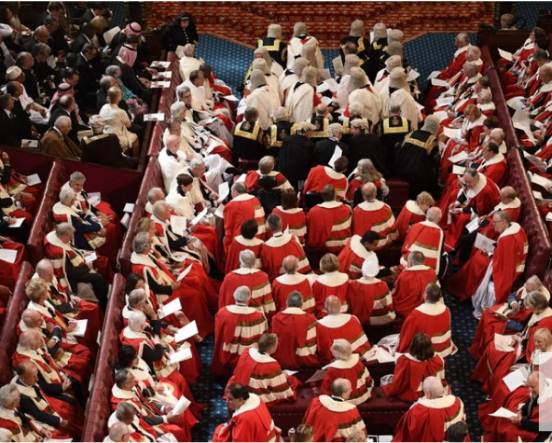
Lord Forsyth of Drumlean also acknowledged their service, emphasizing that the constitutional change is not a criticism of individual peers but a recognition of evolving parliamentary norms in modern Britain.
Lord True, Conservative shadow leader in the Lords, called the Bill a “bitter pill” for many colleagues, noting April will be difficult for departing peers, while encouraging mutual respect for differing views on reform.
He reflected on centuries of parliamentary contributions by hereditary peers, including reforms such as the first Reform Act and Catholic emancipation, praising their overall commitment to the nation despite some historical flaws.
The Earl of Devon, a crossbench hereditary peer, described the upcoming removal as a loss of an “essential ancient thread” in the constitutional fabric, underscoring their symbolic and practical role in the governance of the country.
Lord Hamilton of Epsom warned that the House may be left with inexperienced political appointees and donors, highlighting concerns about the impact on expertise and parliamentary effectiveness once hereditary peers depart.
Liberal Democrat Lord Newby expressed relief that the reform has finally arrived, calling the removal of hereditary peers “long overdue” and essential to modernizing the democratic legitimacy of the House of Lords.
Life peerages will be allocated to maintain institutional knowledge, particularly for those previously active on committees or holding frontbench responsibilities, ensuring some continuity in legislative oversight even after hereditary peers exit.
The Bill formalizes the long-discussed reform of the House of Lords, signaling a clear shift toward merit-based membership and ending centuries of tradition where birthright determined parliamentary authority.
As the next King’s Speech approaches, the House of Lords will transition into a body composed entirely of life peers, reflecting a modern approach to governance and parliamentary accountability in the UK.
The reform is part of broader efforts to modernize the British parliamentary system, balancing historical legacy with democratic principles, and reducing reliance on inherited privilege as a determinant of political power.
Baroness Smith emphasized that the Bill is about principle, not individuals, aiming to honor the service of departing peers while ensuring that future parliamentary membership is determined by merit and appointment processes.
The legislative change has sparked reflection on the centuries-long contributions of hereditary peers, who participated in landmark reforms including slave trade abolition, political enfranchisement, and social policy developments throughout British history.
Lord True concluded by urging members to remember and respect the service of departing peers, noting that despite disagreements, their role in shaping parliamentary debates and legislation has been invaluable over the years.
The House of Lords (Hereditary Peers) Bill is expected to pass into law shortly, formalizing the end of hereditary peerage in Parliament and redefining the upper chamber as a body grounded in appointment rather than inheritance.
This reform is widely viewed as a significant milestone in constitutional change, ensuring the House of Lords aligns with modern democratic values while maintaining the expertise and functionality needed to review legislation effectively.
With hereditary peers leaving, discussions continue on how to preserve institutional memory, ensure committee effectiveness, and maintain non-partisan experience in the upper chamber, reflecting ongoing evolution of the British parliamentary system.
Parliamentarians from across parties have acknowledged the historic nature of this change, emphasizing the importance of balancing tradition with progress and celebrating the contributions of hereditary peers as the House transitions fully to life peers.
The Bill also addresses longstanding debates on representation, ensuring that membership of the House of Lords reflects appointment by merit rather than birthright, reinforcing democratic legitimacy while preserving legislative scrutiny capabilities.
Experts suggest that the removal of hereditary peers could prompt future reforms, including the potential restructuring of committee systems and reconsideration of life peer appointments to optimize legislative oversight in the upper chamber.
Read also: Switzerland bus fire deaths investigated as possible deliberate act after multiple fatalities
The transition will conclude before the next King’s Speech, marking a symbolic and practical end to centuries of hereditary peerage influence, ushering in a more modern, meritocratic era in the House of Lords.
This historic reform is expected to reshape political dynamics, emphasizing expertise and appointed service over inherited status, while still recognizing and honoring the contributions of departing hereditary peers to Britain’s constitutional heritage.
About The Author