The ongoing conflict between Israel and Gaza entered another tense chapter as Hamas to handover more bodies to Israel under the terms of a fragile ceasefire agreement.
The announcement came as international observers and mediators expressed concern that continued violations of the ceasefire could derail broader efforts to stabilize the region and maintain peace.
Officials confirmed that the handover will involve remains recovered from areas devastated by heavy Israeli bombardments during the war that began in October 2023, claiming thousands of lives.
This move, according to Hamas representatives, reflects their “commitment to the humanitarian clauses” of the truce despite ongoing Israeli military operations across Gaza’s north and south.
The Israel Defense Forces (IDF) said the remains would be received under strict supervision, with medical teams conducting DNA verification to confirm the identities of the deceased captives.
Palestinian media reported that the exchange is part of a U.S.-brokered arrangement requiring reciprocal actions by both sides, including the return of Palestinian bodies held in Israeli custody.
Since the start of the ceasefire, Hamas to handover more bodies to Israel has become a recurring headline reflecting ongoing coordination despite deep mutual hostility and persistent violations on the ground.
Officials on both sides acknowledge the logistical and emotional difficulty of these handovers, which often take place under tense conditions and with limited trust between the parties.
An Israeli security spokesperson noted, “Every recovered body carries the weight of tragedy, but each return is also a step toward humanitarian accountability and closure for the families.”
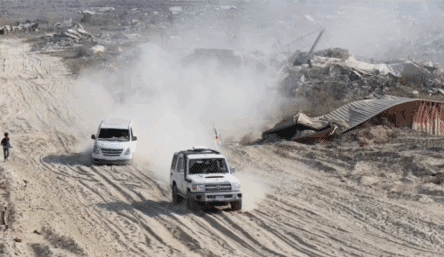
In Gaza City, witnesses described Red Cross vehicles escorted by Hamas fighters approaching designated handover zones within areas vacated by Israeli troops under the ceasefire provisions.
The International Committee of the Red Cross has played a central role in facilitating these transfers, emphasizing neutrality and the need to protect humanitarian principles amid political disputes.
Observers say the latest exchange demonstrates that even minimal cooperation remains possible in a conflict that has otherwise been defined by devastation, siege, and mutual suspicion.
According to Gaza’s Health Ministry, more than 69,000 Palestinians have been killed and over 170,000 injured since October 2023, while thousands remain missing under the rubble.
The Israeli government maintains that operations in Gaza are aimed at dismantling Hamas’s military capabilities following the October 7, 2023 attacks that killed more than 1,100 people in Israel.
Despite these justifications, critics argue that Israel’s actions have disproportionately targeted civilians and infrastructure, raising repeated allegations of war crimes and excessive use of force.
The humanitarian situation in Gaza remains dire. Aid agencies report acute shortages of food, clean water, and medical supplies, describing conditions as “beyond catastrophic.”
United Nations officials have urged both sides to adhere strictly to the ceasefire terms, warning that renewed hostilities could trigger “uncontrollable regional escalation.”
As Hamas to handover more bodies to Israel, mediators see a small but meaningful signal of restraint, though they caution against overestimating its impact without sustained commitment to peace.
Egypt and Qatar, both instrumental in the original truce, continue to engage behind the scenes, urging restraint and pressing Israel to ease its restrictions on humanitarian aid deliveries.
“Every life returned, every ceasefire extended, is a reminder that dialogue—however fragile—remains the only path out of this endless cycle,” said one regional diplomat.
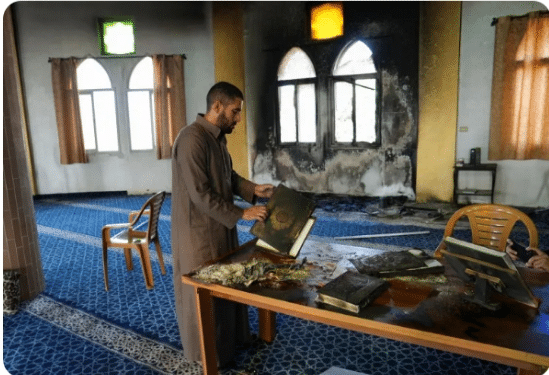
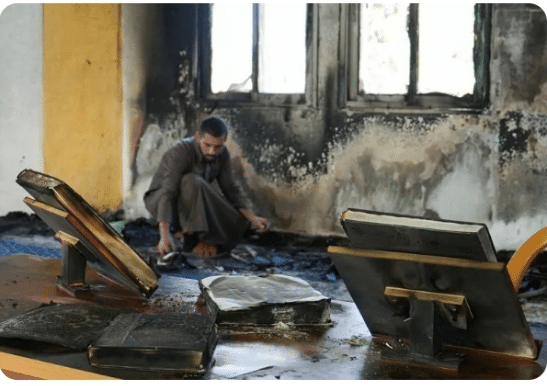
Israeli settlers have meanwhile intensified attacks in the occupied West Bank, burning property and clashing with Palestinian residents, raising fears of broader unrest beyond Gaza.
Rights groups say that impunity for settler violence remains high, and local Palestinians describe living in “constant fear” amid raids and road closures enforced by Israeli troops.
The Israeli government has vowed to crack down on settler extremism, but Palestinian officials dismiss such promises as “empty gestures” that fail to protect vulnerable communities.
Amid these developments, Hamas to handover more bodies to Israel has symbolic significance for families who have waited months for confirmation about their loved ones’ fate.
For many Israelis, the process provides emotional relief and a degree of closure, though it also revives deep national trauma tied to the events of October 7 and beyond.
In contrast, Palestinians see the repatriation of their own dead from Israeli custody as an assertion of dignity and resistance in the face of overwhelming loss and occupation.
“The handover of bodies isn’t just about the dead,” said a Gaza-based political analyst. “It’s about who controls the narrative of humanity in this war.”
Israeli Prime Ministerial sources framed the exchanges as “humanitarian obligations, not negotiations,” while reiterating that military operations would continue until “Hamas’s infrastructure is dismantled completely.”
In practice, both sides have used the truce’s humanitarian clauses to project moral legitimacy, even as fighting, airstrikes, and raids continue intermittently across multiple fronts.
International experts suggest that sustained cooperation in recovering and returning bodies could serve as a rare foundation for rebuilding minimal channels of communication.
“Trust doesn’t begin with treaties; it begins with actions,” said a former UN envoy familiar with Middle East negotiations. “Even symbolic exchanges can ease the climate of hostility.”
As Hamas to handover more bodies to Israel, global attention remains fixed on whether both sides can sustain these limited humanitarian measures amid mounting domestic and political pressures.
In southern Lebanon, Israeli strikes have continued against Hezbollah positions, raising fears that the conflict could widen, undermining the fragile calm in Gaza.
Regional observers warn that without accountability and de-escalation, even successful body exchanges will not prevent another spiral of violence between Israel and armed Palestinian factions.
In Jerusalem, public opinion remains divided. Some view the return of the dead as sacred duty; others question the concessions made in the process of recovering remains.
For Palestinians in Gaza and the West Bank, however, the emphasis is on survival. Many view these exchanges as reminders of the human cost behind every political calculation.
“The smell of rubble and the sound of drones never stop,” said a displaced woman in Khan Younis. “Even the dead don’t rest in peace here.”
The process of recovering bodies is often perilous. Search teams navigate unexploded ordnance, destroyed buildings, and shifting frontlines in an environment described as “an open graveyard.”
Despite this, Hamas officials insist the process will continue as long as conditions permit, arguing that “every body returned is a moral victory over dehumanization.”
Meanwhile, Israel’s military leadership warns that Hamas could be using the humanitarian process to regroup or conceal tactical movements under the guise of coordination.
Such mutual suspicions highlight why ceasefires in Gaza rarely hold. Each side interprets compliance through its own lens of security and resistance.
Analysts note that Hamas to handover more bodies to Israel encapsulates the contradictions of this war: the coexistence of humanitarian gestures and relentless violence.
In the long term, observers say that real stability will depend not on symbolic exchanges but on addressing the underlying causes—occupation, blockade, and mutual distrust.
For now, though, the body handovers represent one of the few ongoing points of coordination between two entities otherwise locked in existential confrontation.
International pressure is mounting for a durable peace framework. Yet diplomats privately concede that without political will, even humanitarian cooperation could soon collapse.
Still, each exchange serves as a fleeting reminder that amidst war, fragments of humanity endure. “Even enemies can recognize loss,” said one humanitarian worker on the ground.
As the convoy carrying the latest remains crosses the “yellow line” near Gaza City, silence replaces gunfire—for a moment—marking another uneasy milestone in this enduring conflict.
Whether Hamas to handover more bodies to Israel becomes a step toward reconciliation or another pause before renewed violence remains uncertain, but the world continues to watch closely.
About The Author