Hamas returns another Israeli captive’s body via the International Committee of the Red Cross on Wednesday, signaling partial progress under the fragile United States-brokered ceasefire agreement.
The return of bodies has long been a central issue in the ceasefire agreement, with Israel accusing Hamas of violating the deal by delaying complete transfers.
Hamas explained that widespread destruction in Gaza and Israeli restrictions on machinery complicated recovery, slowing the retrieval of bodies from heavily damaged neighborhoods like Shujayea.
Israeli Prime Minister Netanyahu’s office confirmed the transfer, leaving six captives’ bodies still in Gaza and intensifying tension while delaying commitments to allow humanitarian aid into the territory.
Aid organizations warn that the fragile truce has not translated into sufficient deliveries, with food, medicine, and fuel far below daily quotas agreed under the ceasefire agreement.
United Nations World Food Programme spokesperson Abeer Etefa called the situation a “race against time,” emphasizing that winter months will worsen hunger for displaced Palestinians in Gaza.
Norwegian Refugee Council reported 23 requests for shelter materials, including tents and blankets, were rejected by Israeli authorities, leaving families highly vulnerable to winter rains and freezing temperatures.
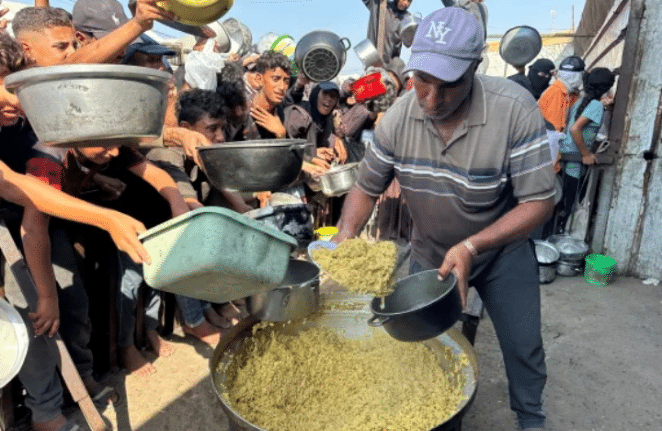
Thousands of displaced Palestinians now rely on local community kitchens, with individuals like Abdel Majid al-Zaity describing the daily struggle to feed nine children amid severe shortages.
Hind Hijazy, a mother of six, said the truce feels like a sham, as the siege continues to restrict essential food and supplies despite promises of humanitarian access.
Gaza health authorities reported Israeli fire killed a Palestinian collecting firewood, while two others near central Gaza were also targeted, raising questions about ceasefire enforcement and civilian safety.
International observers continue to urge swift, unimpeded access for humanitarian organizations, highlighting the persistent gap between ceasefire promises and practical relief reaching displaced Palestinians.
Palestinian officials called on the international community to pressure Israel to honor commitments under the ceasefire agreement, warning that aid shortages threaten the survival of thousands of residents.
Community kitchens, once temporary solutions, now serve as critical lifelines for families across the Gaza Strip, feeding thousands amid destruction, displacement, and ongoing restrictions on humanitarian deliveries.
The Egyptian Red Crescent and UN teams coordinated body retrieval in Shujayea, illustrating the complex international involvement required to enforce ceasefire obligations and humanitarian law in Gaza.
Hamas said the returned body was recovered after four days of digging through rubble, in a neighborhood that had been under Israeli military control for months.
UN officials emphasize urgent expansion of aid corridors, arguing that 145 trucks entering daily are only a fraction of the 600 trucks mandated under the ceasefire agreement.
Abeer Etefa warned that without immediate increase in aid shipments, winter conditions will worsen malnutrition, particularly among children and elderly displaced Palestinians living in tents or damaged homes.
Angelita Caredda of the Norwegian Refugee Council said, “Gaza should be receiving a surge of shelter materials by now, yet only a fraction has entered, leaving families exposed to risk.”
Palestinians report daily life remains a struggle, despite the ceasefire, with many queuing for hours at community kitchens to obtain basic food for families and neighbors alike.
Al-Zaity explained, “Life is difficult for us. We own nothing, have no work, and rely entirely on these kitchens. They are the only reason my children eat today.”
Hind Hijazy said the ceasefire has not improved access to essential goods: “They say there is a truce, but the siege remains, so life remains unbearable for my family.”
Israeli military officials claimed two Palestinians crossed the yellow line near Israeli positions, justifying retaliatory strikes and raising fear among civilians despite the ceasefire agreement.
UN Secretary-General Antonio Guterres stressed that any Gaza stabilization force must have international legitimacy and operate with unimpeded humanitarian access to prevent famine and maintain fragile peace.
The return of bodies, while symbolically significant, does not ease the broader humanitarian crisis, leaving families to contend with destroyed homes and limited access to food and medicine.
Aid workers warn that winter rains will exacerbate vulnerabilities, noting that inadequate shelter and ongoing blockade conditions leave families exposed to cold, disease, and further displacement.
Community kitchens serve thousands daily, yet shortages remain severe, forcing Palestinians to ration food and prioritize feeding children while the elderly go hungry in overcrowded shelters.
Displaced families express frustration at the slow pace of aid delivery, pointing to a “truce in name only,” as obstacles prevent meaningful relief from reaching Gaza’s population.
Hamas has appealed to international organizations to intervene, calling on Israel to allow heavy machinery, equipment, and additional aid to reach areas devastated during years of conflict.
Israeli authorities argue that security concerns prevent the free flow of materials, citing risks of weapons smuggling and continued hostilities as reasons for limiting aid truck entries.
Observers warn that balancing military security with humanitarian necessity must be addressed quickly to avoid worsening suffering among Gaza’s already vulnerable residents.
The presence of destroyed buildings, rubble, and displacement camps underscores the immense challenge faced by humanitarian agencies trying to deliver aid and restore essential services.
Humanitarian leaders insist that without immediate international pressure and cooperation from Israel, winter conditions will worsen, putting tens of thousands of Palestinians at risk of disease and starvation.
Gaza residents report a growing sense of despair, as many feel trapped between ongoing restrictions, insufficient aid, and psychological trauma from conflict and loss of family members.
Hamas returns another Israeli captive’s body highlights both a political milestone and the ongoing human suffering caused by delays in compliance with ceasefire and aid agreements.
Efforts to expand humanitarian access, including additional truck convoys, temporary shelters, and mobile food distributions, remain critical to preventing further deterioration of health and living conditions.
Aid groups continue to call for full and unimpeded access, arguing that short-term measures like soup kitchens cannot replace comprehensive aid for the displaced Palestinian population.

The ongoing blockade, coupled with limited winter preparations, threatens to deepen the humanitarian crisis, leaving thousands exposed to extreme cold, hunger, and disease without adequate support.
Despite the body return signaling a small step toward compliance, humanitarian needs remain urgent, highlighting the fragility of the ceasefire and the immense challenges still facing Gaza residents.
For now, displaced Palestinians rely on local community kitchens, international advocacy, and whatever minimal aid reaches them, awaiting a future where political agreements translate into tangible relief.