

Guinea-Bissau deposed president Umaro Sissoco Embalo has reportedly arrived in Congo’s Brazzaville, deepening regional uncertainty as leaders question motives behind the sudden military takeover unsettling West Africa.
Officials close to him insisted his relocation was strictly “for safety,” while adding that chaos in Bissau had “created an unpredictable climate no former leader could ignore.”
Congolese government sources confirmed his arrival in Brazzaville, stressing his presence posed “no political risk,” and that Congo was maintaining neutrality despite regional diplomatic tensions intensifying.
Embalo had initially fled to Senegal, with aides describing the journey as “a necessary escape,” following the military announcement claiming they had taken full control Wednesday.
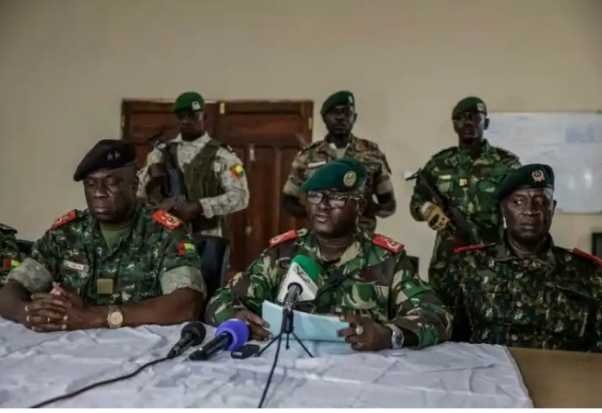
Witnesses in Bissau described the hours leading to the takeover as “chaotic and frightening,” with uncertainty spiraling ahead of provisional results expected from the presidential election.
Rumours have circulated that the military acted with Embalo’s knowledge, but his allies dismissed speculation as “baseless gossip,” accusing political opponents of fueling conspiracy narratives.
The coup sparked immediate international condemnation, with regional blocs warning that constitutional order must return quickly to prevent the nation from sliding deeper into instability and democratic decline.
Senegal’s Prime Minister Ousmane Sonko condemned the events as a “sham,” insisting the electoral commission must “declare the rightful winner without military interference of any kind.”
Diplomats argued that Guinea-Bissau’s current environment revealed fractures long hidden within its political structures, now exposed by what analysts call an “improvised and opportunistic power grab.”
Many of the new military leaders had served closely under Embalo, complicating the political narrative and prompting speculation that internal rivalries may have shaped the unfolding crisis.
General Horta Inta-A, appointed transitional president, previously enjoyed strong ties to Embalo, leading observers to question whether this transition represents reform or merely repackaged influence.
Ilidio Vieira Te, the newly appointed prime minister, also served as finance minister under Embalo, further reinforcing the web of political continuity critics say undermines democratic change.
On Saturday, Inta-A announced a 28-member transitional government dominated by loyalists, prompting opposition figures to warn that “the coup is a reshuffling disguised as reform.”
Opposition party PAIGC accused heavily armed militia groups of invading their headquarters, calling the raid an “attack on stability, democracy and the rule of law” in Guinea-Bissau.
PAIGC had already been barred from presenting a candidate in Sunday’s election, a move civil rights groups labeled a “calculated suppression strategy targeting competitive democratic participation.”
Both Embalo and his challenger Fernando Dias had declared victory prematurely, fueling tensions and mistrust ahead of the official results, which never came due to the military takeover.
The absence of results has created mounting frustration, with citizens demanding transparency and clarity as fears grow that political uncertainty could trigger prolonged national volatility.
Observers noted that Guinea-Bissau’s long history of coups continues haunting its political development, with each episode deepening civilian distrust toward military involvement in governance.
Regional leaders urged restraint, citing concerns that escalating power struggles might spill beyond Guinea-Bissau, affecting already fragile political dynamics across the broader West African region.
A statement from ECOWAS expressed “deep concern,” urging quick restoration of constitutional order and emphasizing that democratic mandates must prevail regardless of internal political disputes.
Analysts warn that failure to stabilize the situation could embolden other military factions across the region, where political tensions and election-related disputes remain common.
Embalo’s current silence has puzzled observers, with several suggesting he may be negotiating conditions for return or seeking guarantees before commenting publicly on unfolding events.
His aides insist he remains “determined to see Guinea-Bissau return to stability,” though critics dismiss such claims as political posturing designed to shape favourable narratives.
Civil society groups warned that political elites must avoid fueling divisions, with leaders emphasizing that “any attempt to manipulate public sentiment during this crisis would be irresponsible.”
International rights organisations have demanded independent investigations into the militia raid on PAIGC headquarters, describing the incident as “a blatant intimidation tactic unacceptable in any democracy.”
Diplomatic sources revealed that several foreign missions in Bissau have increased security, anticipating potential unrest as political actors position themselves for the uncertain transition ahead.
The African Union called for calm, urging the transitional authorities to prioritize national unity, uphold human rights, and ensure inclusive dialogue involving all political stakeholders.
Residents in Bissau expressed fear that essential services might deteriorate, noting that past coups significantly disrupted governance and public welfare, worsening everyday hardships for many families.
Experts warn that prolonged political paralysis could destabilize Guinea-Bissau’s economy, already vulnerable due to heavy reliance on agriculture, limited diversification, and persistent governance challenges.
A senior regional analyst argued that “stability will depend on transparent electoral processes,” stressing that Guinea-Bissau cannot afford repeated cycles of disputed leadership transitions.
Meanwhile, Senegal continues to monitor developments closely, given its shared borders and history of diplomatic engagement with Guinea-Bissau during previous political crises.
Sonko reiterated Senegal’s stance, stating, “We expect the electoral process to continue transparently,” emphasizing regional expectations for legitimacy and constitutional accountability.
Several political commentators believe the crisis could reshape alliances, suggesting that Embalo’s connections within the military may influence the transitional government’s long-term direction.
However, opposition groups warned that any attempt to cement military dominance would trigger “consistent resistance,” hinting at possible civil disobedience campaigns if democratic restoration stalls.
International observers urged that the transitional government set a clear timetable for elections, describing this as essential for rebuilding trust and preventing further political deterioration.
Guinea-Bissau’s youth groups, often vocal during political unrest, demanded inclusion in national dialogue, arguing that “the future cannot be decided without those who will inherit it.”
Religious leaders called for peace, urging citizens to avoid violence, emphasizing that unity must prevail over political ambitions during such a delicate and destabilizing period.
Diplomats hope Congo’s hosting of Embalo might facilitate mediation efforts, creating neutral ground for negotiations aimed at avoiding deeper fracturing within Guinea-Bissau’s political landscape.
A senior Congolese official stated, “Congo believes in peaceful resolutions,” highlighting hopes that diplomatic engagement could ease tensions and establish a foundation for transitional stability.
Human rights advocates remain concerned about reports of arbitrary arrests, demanding strict monitoring of the transitional government’s actions to avoid abuses commonly associated with coup environments.
Several analysts argue that Guinea-Bissau’s institutions require substantial reforms, stressing that stability will remain elusive until systemic weaknesses and governance gaps are fully addressed.
For now, uncertainty persists, with conflicting narratives shaping public perception and leaving many citizens unsure whose interests the transitional authorities genuinely represent.
The coming weeks will determine whether Guinea-Bissau transitions peacefully toward democratic renewal or remains trapped in cycles of instability influenced by military dominance.
Regional actors and international partners continue to monitor unfolding developments, hoping that dialogue, transparency, and commitment to constitutional principles will guide the country’s next chapter.
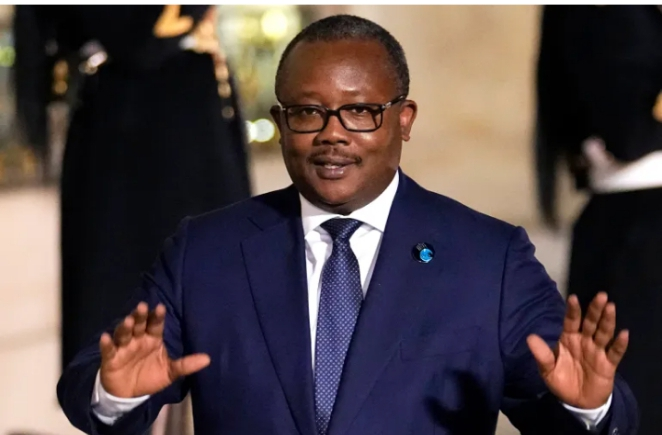
As diplomatic negotiations evolve, the fate of Guinea-Bissau deposed president Embalo may play a central role in determining whether reconciliation or prolonged fragmentation defines the nation’s future.
Ultimately, Guinea-Bissau stands at a pivotal crossroads, with choices made now potentially shaping its democratic trajectory for years, highlighting the urgency of inclusive and accountable leadership.
About The Author


